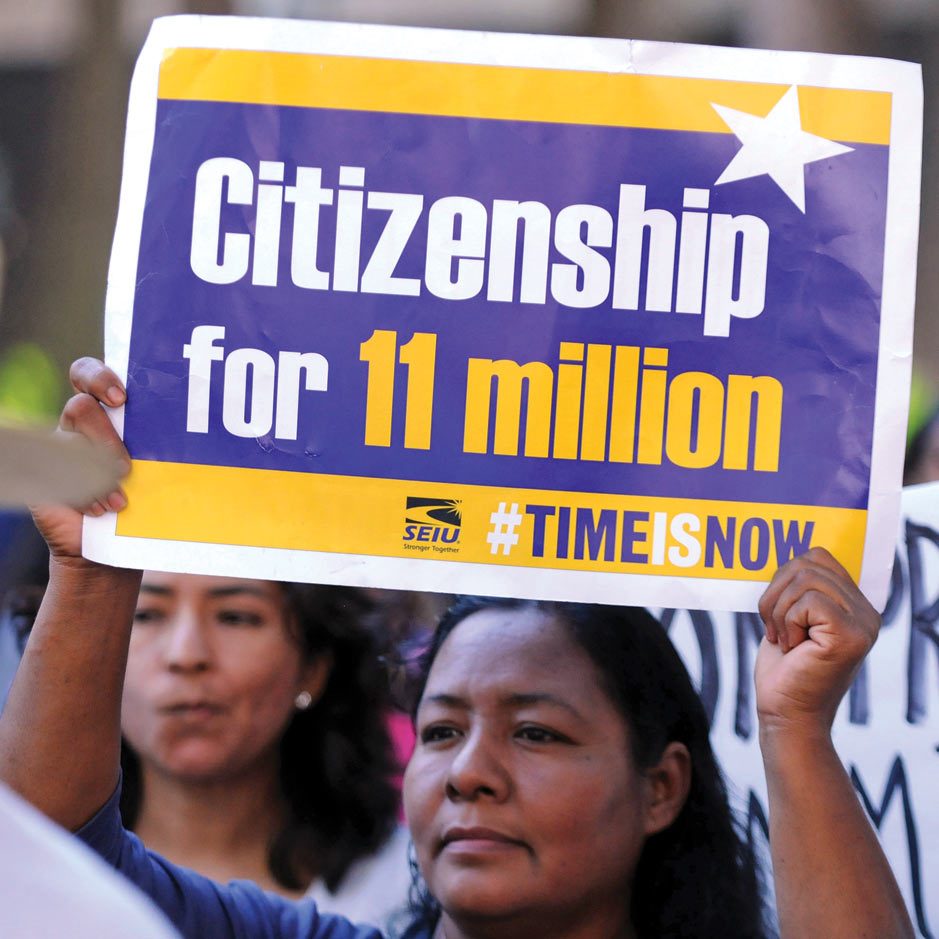
Last month, the House Republican leadership released its guiding principles on immigration reform. While mostly boilerplate, the document suggests that the House GOP envisions a bill similar to last year’s Senate compromise spearheaded by Marco Rubio: enhanced border security in exchange for legalization of the illegal immigrant population; more visas for the highly skilled and permits for temporary guest workers; and a rationalization of the immigration process. The main difference is that the Senate bill offers a special path to citizenship for the entire illegal population, while the House principles offer it only to immigrants brought here illegally as children.
This difference is intended to mollify conservatives who warn that the Senate bill would pad the voting rolls with millions of new Latino Democrats. But that fear is overblown. Of the 11 million or so people in the country illegally, Pew reports that only 9 million are Latino, and not all of them would become citizens. The Latino turnout rate, moreover, was only 48 percent in 2012, and the bloc broke for Democrats 71-27. So the best case for Democrats is that they would net about 2 million more new voters than Republicans starting in 2028.