

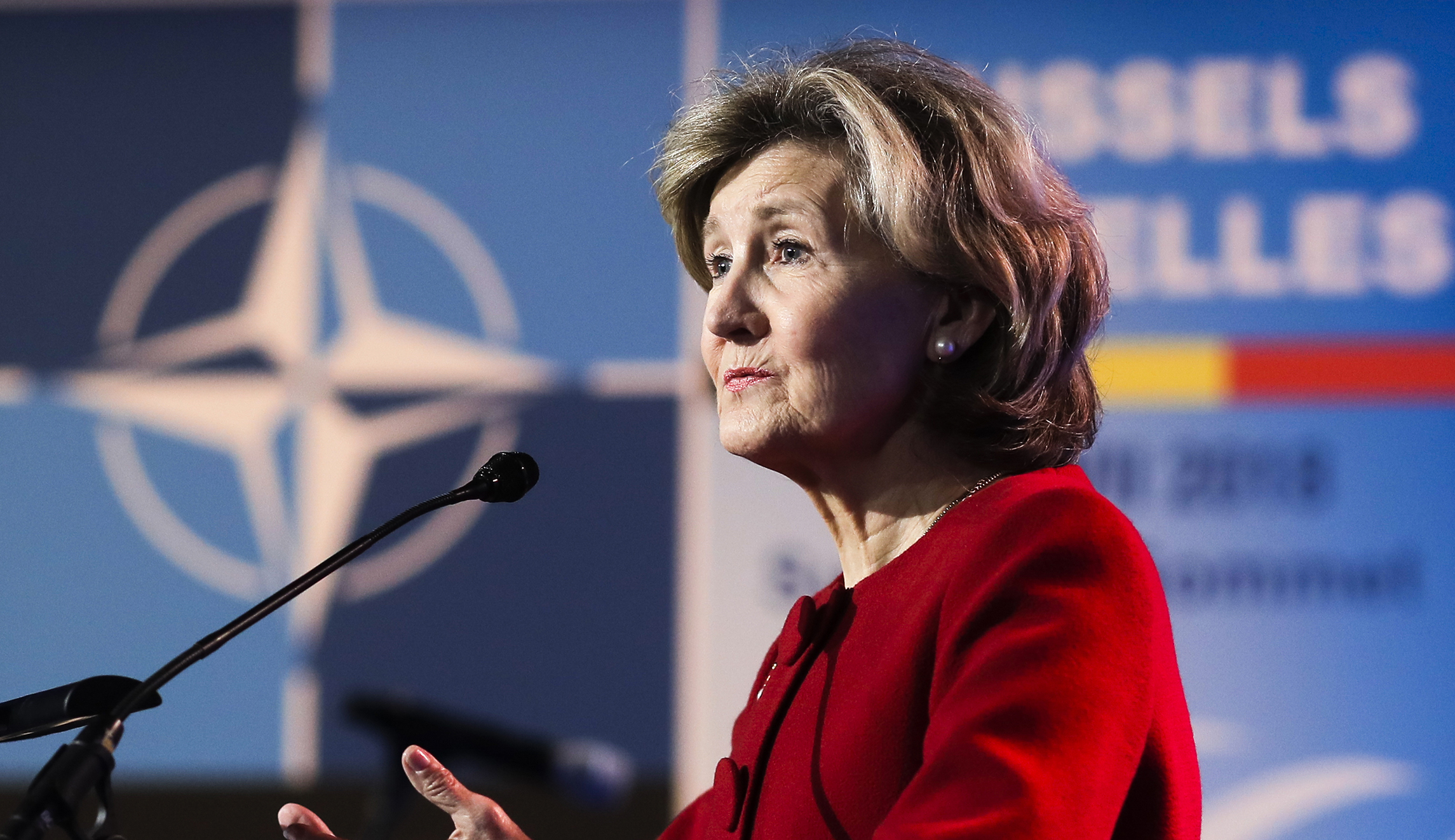
China’s 5G network threatens Western military networks, the U.S. permanent representative to the North Atlantic Treaty Organization said last week.
“We’re very concerned with the 5G and control of communications networks, and we’re dealing with that at NATO,” said Kay Bailey Hutchison at a Heritage Foundation talk on Thursday. “We’ve been hampered because we haven’t got the capability to control 5G networks even in our own countries, much less many of the other countries.”
Recommended Stories



Protecting sensitive communications from the 5G threat is a priority the alliance is studying, the ambassador said, but European Union laws and new technology could also help protect the alliance.
As the world leader in 5G technology, the Chinese telecommunications company Huawei has been under heavy scrutiny by American lawmakers and the Trump administration, who fear the Chinese government may use Huawei technology to spy on government activities.
Hutchison said the threat extends across the NATO alliance.
“We need to be looking very carefully at China,” Hutchison warned before describing the Asian power’s military buildup in the North Atlantic, namely its strategic control of two-thirds of the world’s largest ports and both ends of the Panama Canal, as comparable to their near monopoly on 5G technology. “China has got ahead in the 5G capabilities, and they’ve undercut other competitors so much that they were able to really put many companies out of the business.”
In January, the United Kingdom gave the green light for 5G network development by Huawei despite President Trump’s heavy lobbying against the move. The open door could expose a major NATO partner’s sensitive communications to infiltration.
Hutchison indicated Thursday that laws in the EU might still protect the continental alliance partners. “We’ve asked the EU to look at what they can do in this area, which could be very effective,” she said.
Hutchison described how EU laws are written to help protect potential infiltration from foreign adversaries: “Basically, not saying Huawei, but saying any company that can’t assure the integrity of its contract will not be able to then have a procurement opportunity in the EU.”
The representative said the United States has asked the EU to guarantee that a 5G company in breach of its contract would not be allowed to reveal data it was protecting.
Until competing telecommunications companies catch up, the alliance will be at risk, Hutchison said — unless a complimentary security technology can be developed.
“You don’t have, really, the capability to service all of the needs of all of our NATO alliance plus America,” she said of 5G competitors. “Now, we are looking at ways to find some technology that will be able to bar 5G capabilities if it is found that data is being breached or artificial intelligence is being used through 5G.”
The representative said the technologies are only in the “beginning stages.” Until then, the alliance is studying options and waiting for more trusted competitors to catch up.
Until then, the Chinese 5G threat to NATO remains.
“We also need to be clear-eyed about risks from some of their behavior and make sure that we are deterring any kind of risk that we would have [from] a belligerent China in the future,” she said.
