

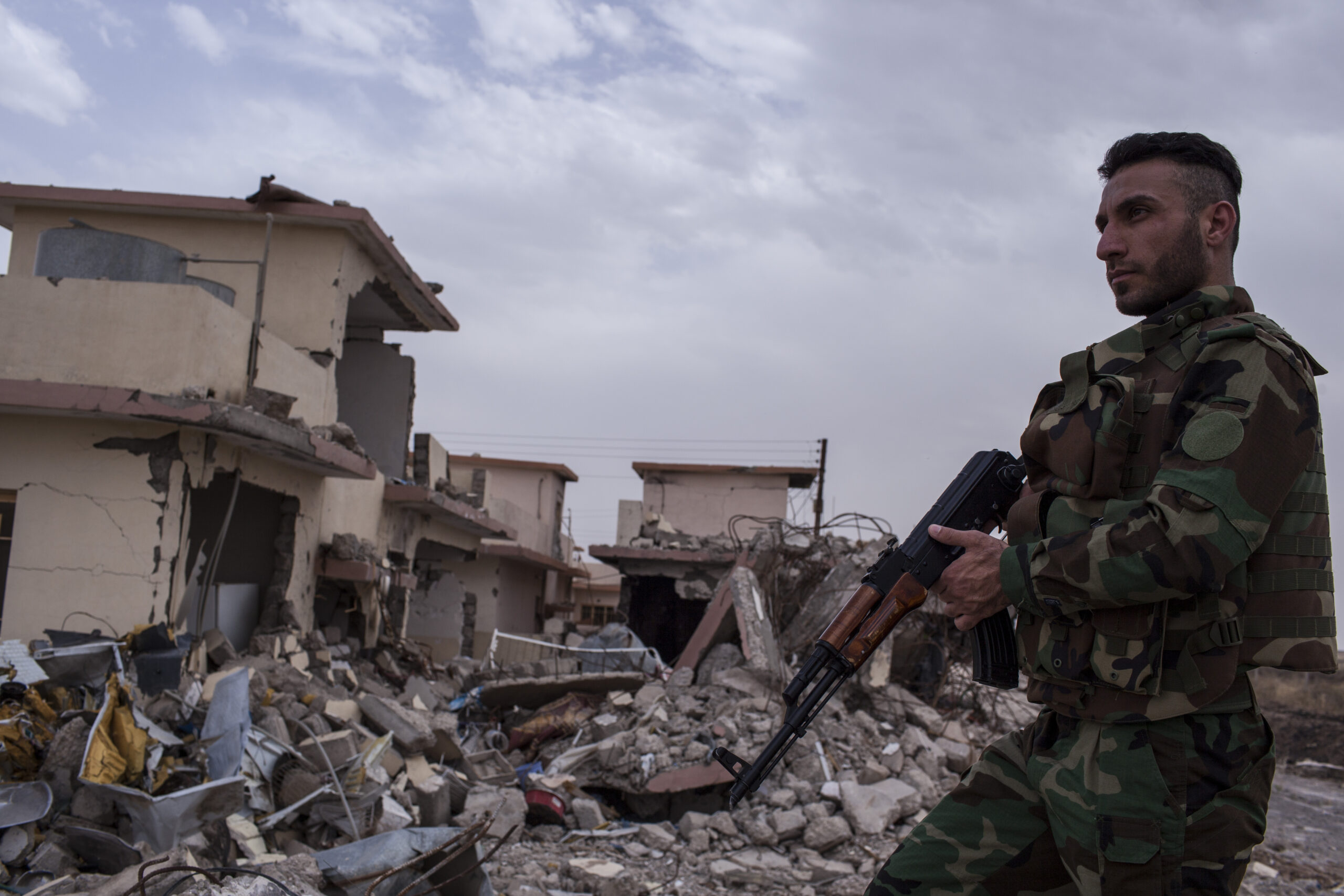
NINEVEH PROVINCE, IRAQ – The trenches of the Western Front in World War I stretched for nearly 1,000 kilometers, from Belgium through France to the borders of Switzerland. Between the trenches lay a vast “No Man’s Land,” and attempts to cross it invited fire from highly tenable defensive positions. This did not deter generals from sending millions of men across it. Millions of casualties were thus incurred by both sides, until new technology — in particular, the tank — permitted a resumption of offensive warfare.
In northern Iraq, a century later, a thousand-kilometer front separates the so-called Islamic State (ISIS) from predominantly Shia and Kurdish Iraq. The trenches, sandbags and fixed defensive positions provide an unmistakable resemblance to World War I. Here, too, tactics are dictated by technology (or the limitations thereof), favoring defensive rather than offensive operations. Thus rumors of the liberation of Mosul ring hollow, absent the introduction of some military technology to alter the defensive advantage.
Stay informed.Stay ahead.
Join Washington Examiner for unlimited access to the news, analysis, and commentary that matter most.
Already a member? Log in
