

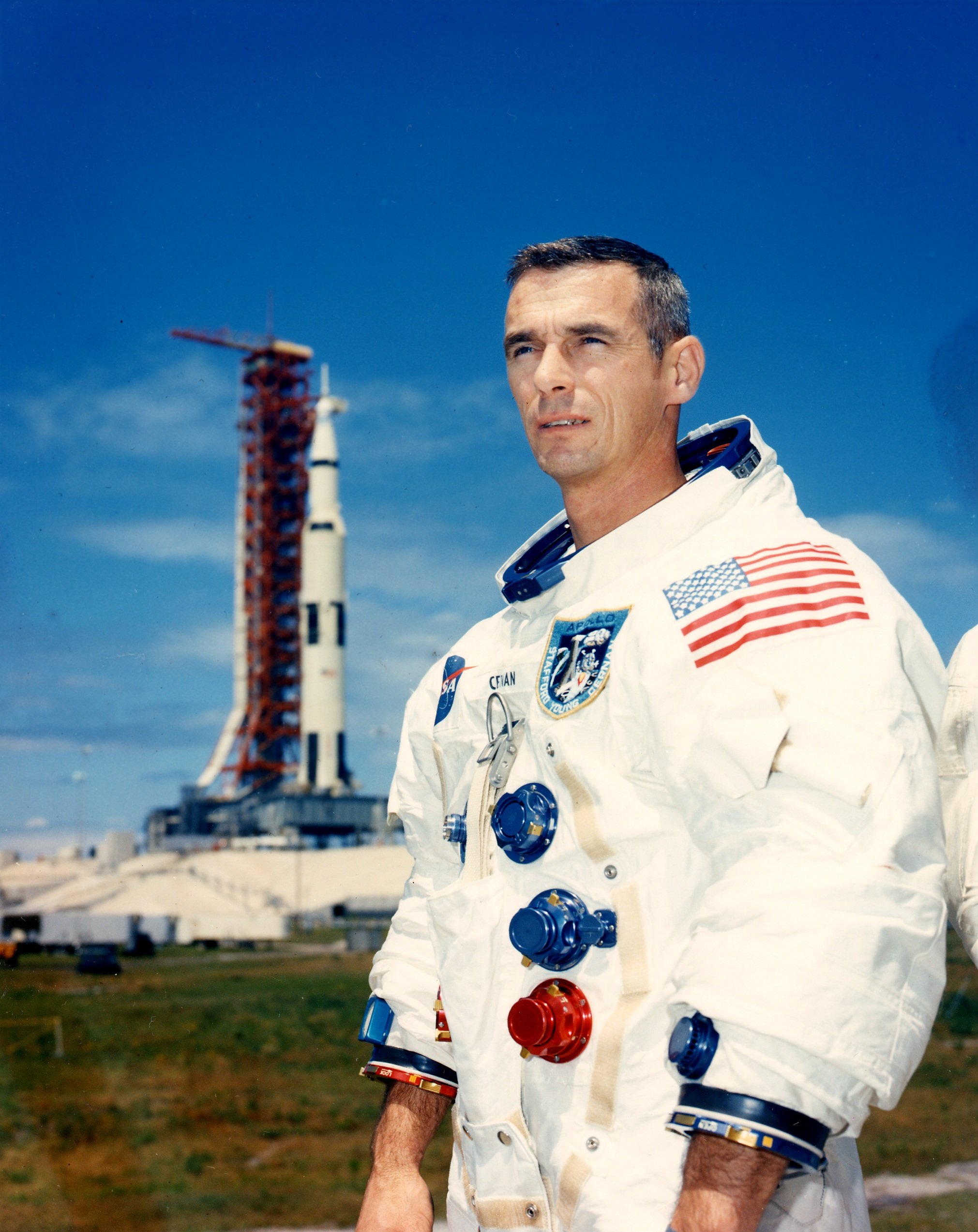
For a lot of obvious reasons, the U.S. is filled with space enthusiasts. Most space enthusiasts, you’ll find, have a favorite mission. For many, it’s Mercury-Atlas 6, John Glenn’s orbital flight. For many it’s Gemini 4, when Ed Young made the first American Spacewalk, or Gemini 6, the first ever space rendezvous. For most, perhaps, it’s Apollo 11. Apollo 13 has it’s own cult following, as does STS-1, the first Space Shuttle flight. For me, it’s Apollo 17.
Apollo 17 was the perfect moon landing. Needless to say, the Apollo program was remarkably successful—7 attempted moon landings, 6 successes, and no fatalities after the tragic launch-pad fire that killed the crew of Apollo 1. The Apollo program was the greatest engineering feat in history, the greatest feat of exploration and arguably the greatest feat of science. Nonetheless, every one of the moon mission was either nearly aborted due to a critical malfunction (Apollos 11, 14 and 16), or saw the near-fatality of a crewman (Apollos 12, 13 and 15). But not 17; 17 was perfect. The biggest problem Apollo 17 faced was the loss of a pair of scissors, which delayed dinner for Command Module pilot Ron Evans as he orbited 60 miles above the Lunar surface.
Stay informed.Stay ahead.
Join Washington Examiner for unlimited access to the news, analysis, and commentary that matter most.
Already a member? Log in
