

NASA astronauts landed safely back on Earth after a medical emergency forced them to head back early during a mission at the International Space Station.
NASA astronauts Zena Cardman and Mike Fincke landed off the coast of San Diego at 3:41 a.m., alongside Japanese astronaut Kimiya Yui and Russian cosmonaut Oleg Platonov. The landing marks the only time in the ISS’s 25 years that a mission has been cut short due to a medical emergency.
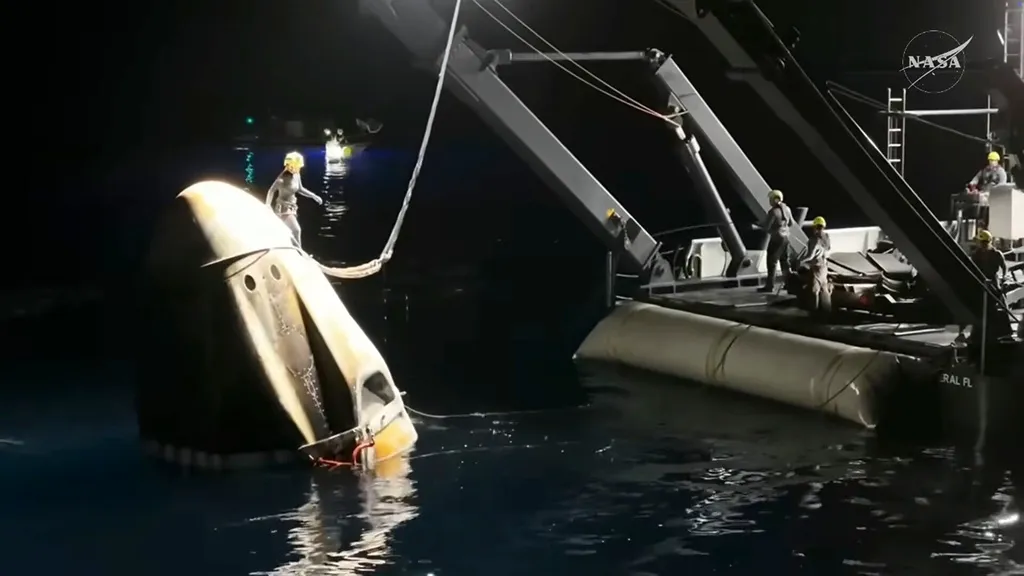
“On behalf of SpaceX and NASA, welcome home, Crew-11,” mission controllers told the four-member crew of the SpaceX Dragon capsule as it splashed down.
George Alderman, NASA’s deputy press secretary, said in a press conference after the landing that the four were in “good spirits,” and that the “crew member of concern is doing fine.”
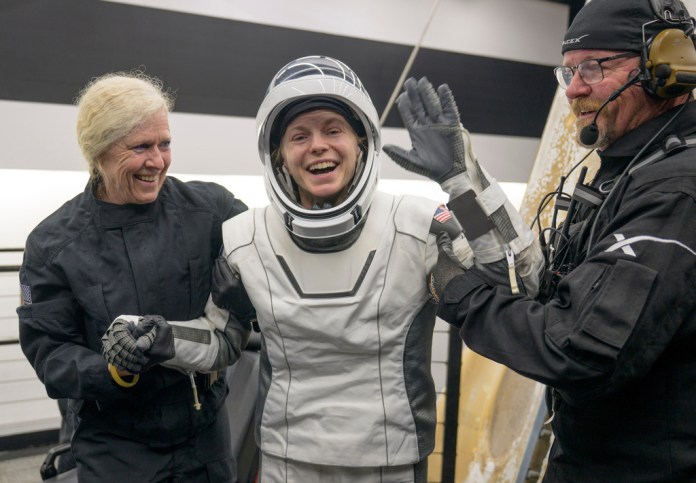
“The crew spent more than 850 hours on scientific studies, including research about loss in microgravity and the long-term storage of cryogenic fluids in space with direct applications in medical and industrial fields. This work advanced our understanding of long-duration space flight and contributed valuable research that benefits life here on Earth and further human exploration,” he added.
“To be overwhelmingly clear, crew 11 was a very successful mission,” Alderman continued, arguing that the emergency landing showcased NASA’s readiness for all contingencies.
“Space Flight will always carry some degree of uncertainty, as is the nature of exploration. Fundamentally, it’s why we’re in space to learn. It’s why NASA prepares for the unexpected, so we are ready to respond decisively and safely,” he said.
NASA, IN A RARE MOVE, CUTS SPACE STATION MISSION SHORT AFTER AN ASTRONAUT’S MEDICAL ISSUE
NASA maintained its secrecy regarding who had the medical emergency and what the medical emergency was, citing privacy concerns. Previously, NASA officials stressed that the issue wasn’t an onboard emergency — Dr. James Polk, NASA’s chief health and medical officer, said the agency was “erring on the side of caution for the crew member.”
Crew 11 arrived at the ISS in August for at least a six-month stay. NASA’s Chris Williams and Russia’s Sergei Mikaev and Sergei Kud-Sverchkov are still onboard the station, having arrived in August, and are due to return home over the summer.
