

The four Artemis II scientists participating in NASA’s record-breaking lunar flyby are doing more than just venturing beyond the moon — they are also testing how the agency’s infrastructure works in deep space.
Artemis II commander Reid Wiseman, pilot Victor Glover, and mission specialists Christina Koch and Jeremy Hansen made history on April 6 as they reached the farthest distance from Earth that humanity has ever traveled.
Now on their way home to Earth, the astronauts aboard the Orion vessel have been conducting systems and performance tests as they pave the way for future NASA astronauts to take the next step and return to the moon’s surface.
“They will conduct manual spacecraft operations and monitor automated activities; evaluate Orion’s life-support, propulsion, power, thermal, and navigation systems; perform proximity operations activities; assess habitability and crew interfaces; and participate in science activities, including lunar surface observations and human health studies, that will inform science operations on future Moon missions,” NASA news chief Cheryl Warner wrote in statement.
“They also will practice mission-critical activities, including trajectory adjustments, communications at lunar distances, and piloting Orion during key phases of flight, culminating in a re-entry and splashdown to further validate the spacecraft’s performance with crew aboard,” Warner continued.
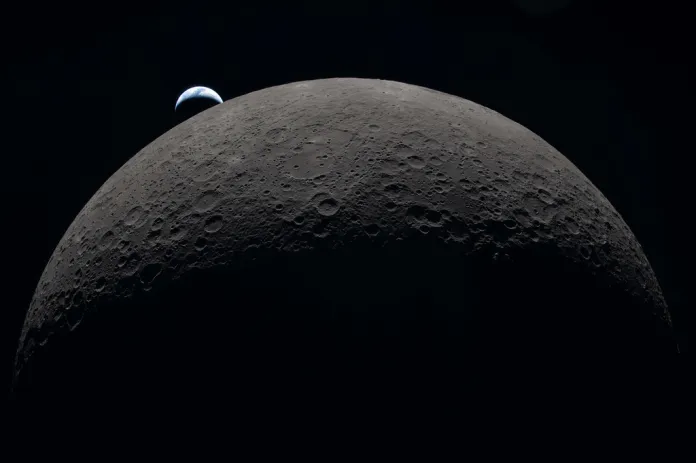
The crew has been conducting tests on the spacecraft since liftoff. Some of their day-one tests included a communications test to transmit data through light and a navigation test to use star patterns to establish Orion’s position in space.
On the second day, the crew conducted tests ranging from examining the spacecraft’s exercise equipment to checking that its life support system was correctly filtering CO2 from the ship.
As the mission coasted toward the moon on its third day, the crew continued to test star-based navigation and practice emergency medical procedures in space.
In preparation for the final Artemis IV moon-landing mission, the crew assessed the depressurization capabilities of the mission’s spacesuits for the future Artemis moonwalkers.
Still to come, the crew will simulate radiation shields to prepare for possible solar storms in future Artemis missions, test the ship’s manual pilot systems, and test how the engines work without cooling systems in place.
WHAT IS THE NASA ARTEMIS PROGRAM?
The crew has two days left in Orion until their planned April 10 return to Earth.
The next two Artemis missions, Artemis III and Artemis IV, are planned for 2027 and 2028, respectively, with the third mission to include more tests and docking simulations ahead of the final moon landing.
