NASA unveils crew for Artemis III mission

NASA announces crew for Artemis III mission

Published June 9, 2026 1:09pm ET | Updated June 9, 2026 1:09pm ET


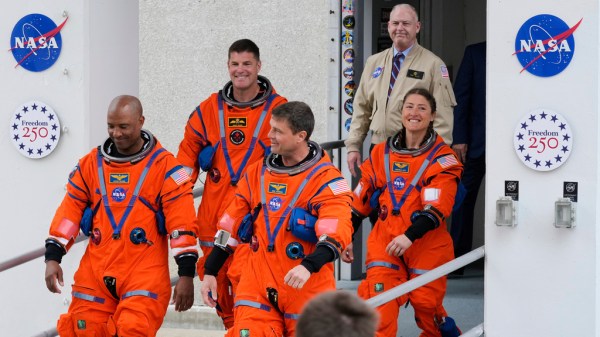
NASA announced the crew on Tuesday for its Artemis III mission, the next crewed flight in the agency’s Artemis program and a critical step toward returning astronauts to the moon later this decade.

The crew consists of Coast Guard Reserve Cmdr. Andre Douglas; Col. Frank Rubio, an Army Black Hawk helicopter pilot and family medicine physician; and Italian space station commander and Air Force Col. Luca Parmitano. The crew will be led by mission commander Randy Bresna, a two-time astronaut, former space station commander, and Marine Corps colonel.

“Artemis III is an incredibly exciting, complicated, and highly coordinated multi-launch campaign,” said Jeremy Parsons, acting Assistant Deputy Associate Administrator of NASA. “This mission is deliberately designed to take calculated risks, so that future crews will be safer and ultimately successful when we put boots on the lunar surface.”

The announcement comes just months after Artemis II successfully carried four astronauts around the moon and back to Earth in April, marking humanity’s first crewed journey beyond low-Earth orbit since the Apollo era. Building on that mission, Artemis III is scheduled to launch in 2027 and will test key systems and operations needed before astronauts attempt a lunar landing on Artemis IV in 2028.

The Artemis III crew will launch aboard NASA’s Orion spacecraft atop the Space Launch System rocket and spend more than a week in low-Earth orbit conducting rendezvous and docking operations with commercial lunar landers developed by SpaceX and Blue Origin. The mission is designed to validate technologies and procedures required for future lunar surface missions.

The flight is expected to include docking with one or both commercial landers, in-space testing of the docked vehicles, evaluations of life-support, communications, and propulsion systems, and testing of NASA’s new Exploration Extravehicular Activity, or xEVA, spacesuits. NASA officials have said additional mission objectives will be finalized following reviews with the agency’s industry partners.

A diagram showing the different Artemis missions and their purposes. (Grace Hagerman/Washington Examiner)

“While this is a mission to Earth orbit, it is an important stepping stone to successfully landing on the Moon with Artemis IV,” Parsons said in a news release. “Artemis III is one of the most highly complex missions NASA has undertaken.

“For the first time, NASA will coordinate a launch campaign involving multiple spacecraft integrating new capabilities into Artemis operations. We’re integrating more partners and interrelated operations into this mission by design, which will help us learn how Orion, the crew, and ground teams all interact together with hardware and teams from both lander providers before we send astronauts to the Moon’s surface and build a Moon Base there.”

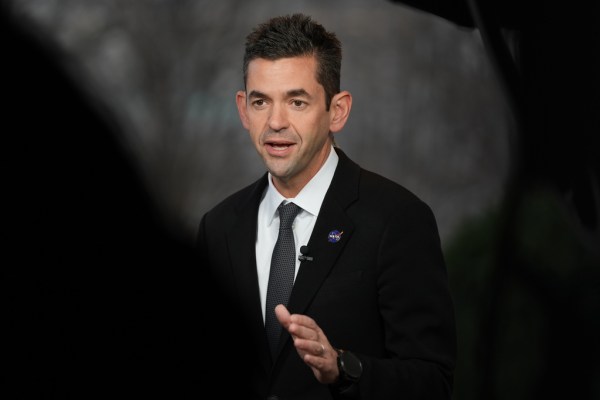
NASA Administrator Jared Isaacman said the revised mission architecture is intended to increase the pace of exploration while reducing risk ahead of future lunar landings.

“NASA must standardize its approach, increase flight rate safely, and execute on the president’s national space policy,” Isaacman said. “With credible competition from our greatest geopolitical adversary increasing by the day, we need to move faster, eliminate delays, and achieve our objectives.”

WHAT IS THE NASA ARTEMIS PROGRAM?

“Standardizing vehicle configuration, increasing flight rate, and progressing through objectives in a logical, phased approach is how we achieved the near-impossible in 1969, and it is how we will do it again,” Isaacman continued.

Meanwhile, work on Artemis III hardware continues ahead of next year’s launch. NASA said design and fabrication of a new spacer component is progressing at Marshall Space Flight Center in Huntsville, Alabama. Engineers are machining material for the spacer’s barrel section and upper and lower rings in preparation for welding operations.