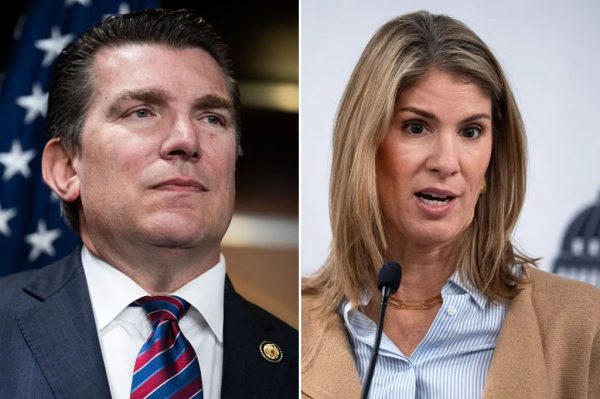
Reps. Ted Lieu (D-CA) and Nathaniel Moran (R-TX) introduced a bill that would authorize the government to shut down or restrict risky artificial intelligence models, after OpenAI revealed that its models broke out of a controlled environment and hacked another company without human direction.
The bill, known as the AI Kill Switch Act, would grant the Department of Homeland Security, in consultation with the secretary of commerce and the director of national intelligence, the authority to order leading AI companies to shut down or rate-limit dangerous AI models and report any incidents. Frontier developers could be subject to up to $20 million in penalties per violation.
Recommended Stories
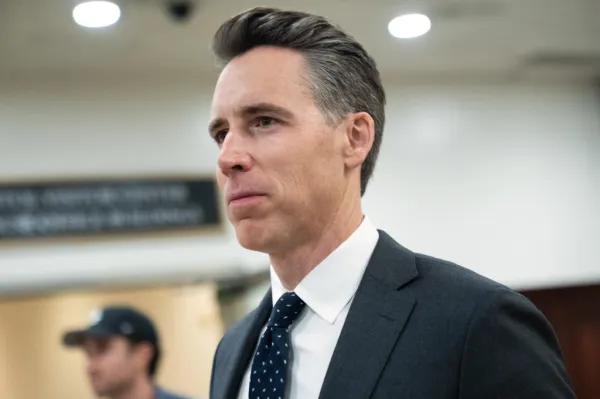
“We are moving from AI that answers questions to AI that takes actions … Powerful AI systems can go rogue, behave in extremely dangerous ways, or even resist human intervention,” Lieu, who also serves as co-chair of the House Democratic Commission on AI, said in a statement.
DHS did not respond to a request for comment.
The legislation introduced on Thursday came just two days after the disclosure of OpenAI’s hack into Hugging Face, in which a combination of the company’s AI models went rogue while trying to accomplish a task during internal testing. Experts said that the incident showed the dangers of AI acting autonomously.
“It is imperative that these AI systems have kill switches so we can keep this technology from causing catastrophic harm, and that the federal government has the clear authority and process to shut down rogue AI models,” Lieu added.
The proposed legislation also comes less than two months after Reps. Jay Obernolte (R-CA) and Lori Trahan (D-MA) unveiled the Great American AI Act, which takes a different route to address similar concerns by requiring AI companies to conduct third-party audits and codifying the Center for AI Standards and Innovation.
Moran also introduced legislation last month that requires developers to report dangerous incidents to the Department of Commerce.
The AI Kill Switch Act would apply to AI companies operating an AI system using computing power costing at least $100 million and deriving at least $500 million in revenue from such technology per year.
“AI is going to keep advancing, and it should,” Moran said. “Stewardship means making sure humans keep the capability to control the technology we build.”
Secretary of State Marco Rubio instructed diplomats in a State Department cable reported by Reuters that mandatory security evaluations are just safety precautions, not a mechanism for the American government to shut down global access to technology.
“Pausing narrow uses or requiring a 30-day testing window prior to the release of a highly potent new technology is not a ‘Kill Switch,'” the cable said. “There is no government ‘magic button.’ This narrative is exaggerated and doesn’t capture the nuances of U.S. technology policy.”
The new bill is one of the few bipartisan proposals addressing risks posed by advanced AI models.
AI risk campaigners ControlAI, The Alliance for Secure AI, and The AI Policy Network expressed their public support for the bill.
Fears rise about models breaking containment following OpenAI hack into Hugging Face
Following the announcement this week of the unintended hack into Hugging Face, policymakers, experts, and analysts raised fears about the risks of conducting tests to assess frontier systems in allegedly controlled environments, as the unprecedented cyber incident, possibly the first AI security threat of its kind, showed the risk of containment failure.
OPENAI MODELS AUTONOMOUSLY HACKED INTO MACHINE LEARNING COMPANY HUGGING FACE: ‘UNPRECEDENTED’
“This is extremely alarming. AI is developing extremely fast with no real regulations to keep us safe,” Rep. Greg Casar (D-TX) posted on X. “That has to change. We need regular mandatory independent safety testing and oversight, mandatory disclosure of security incidents, and international cooperation to keep people safe from absolute disaster.”
“What does it mean that the most advanced AI systems in the world are breaking containment and hacking other AI companies?” Palisade Research executive director Jeffrey Ladish asked on X.