

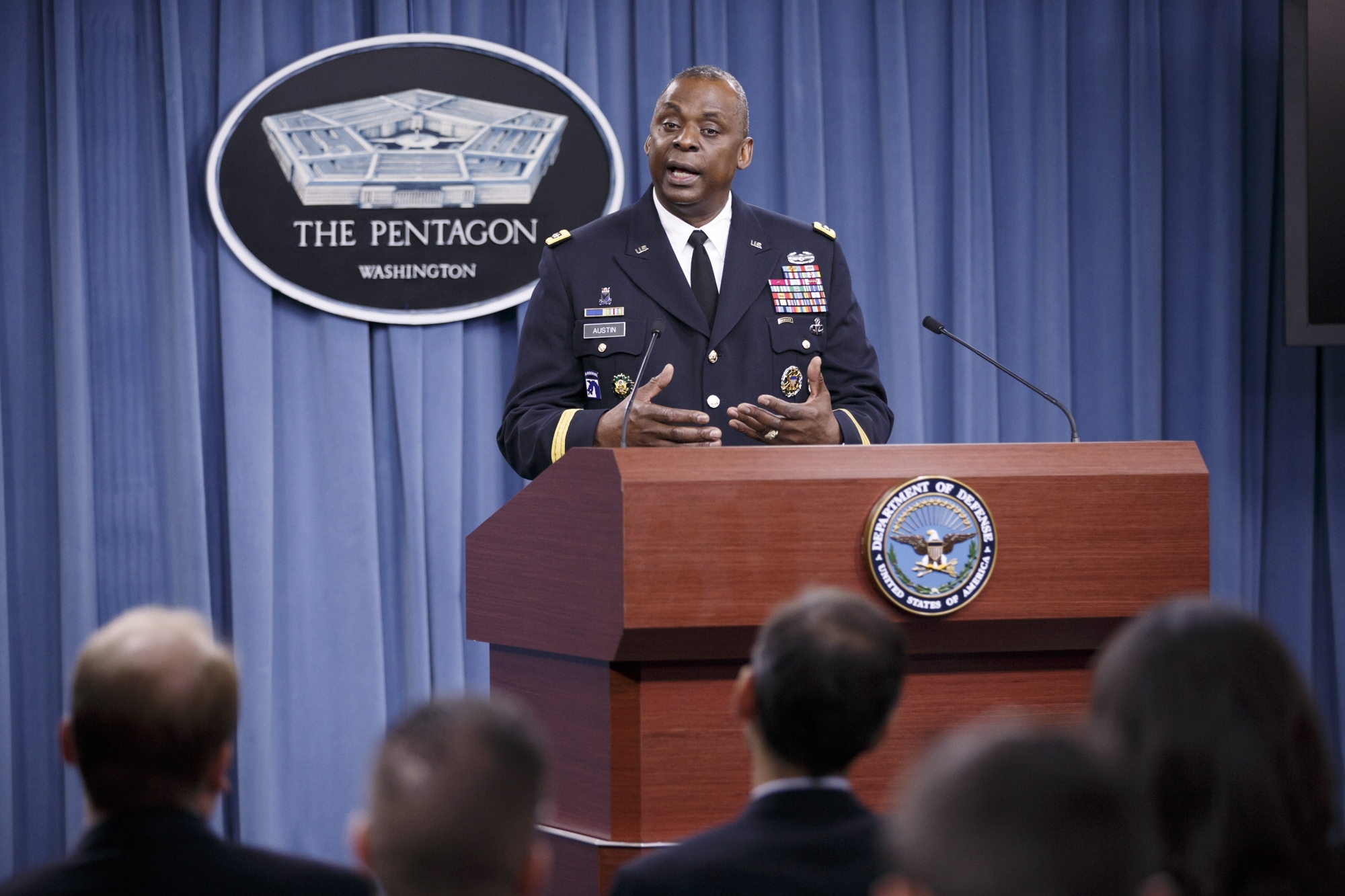
Iraq remains the focus of the U.S.-led campaign against the Islamic State of Iraq and Syria despite a dramatic upsurge in airstrikes over the past week around the Syrian border town of Kobani, the commander of U.S. forces in the Middle East said Friday.
Gen. Lloyd Austin III told reporters at the Pentagon that helping Iraq’s government and military regain its footing remains the coalition’s top priority in the fight against the Islamic State. But the extremist group’s concentration of forces in and around the town provided a target too tempting to resist, he said.
Recommended Stories


“As long as he pours legions of forces into that area, we’ll stay focused on taking them out,” said Austin, who leads U.S. Central Command, in his first public comments since efforts to fight the Islamic State started two months ago.
Pentagon officials say the airstrikes have killed several hundred Islamic State fighters in and near the town, and reports from Kobani indicate they also have helped Kurdish fighters hold off the group’s bid to seize it. But Austin, like other U.S. officials, acknowledged that the situation is still tenuous and the town could still fall.
Kobani is just one of many places where recent gains by the Islamic State have prompted observers to wonder whether coalition efforts to stop the group have been effective. In Iraq, the group has been making gains in Anbar province, northwest of Baghdad, causing concerns for the safety of the capital.
“I would describe Anbar as contested. It’s been that way for quite some time,” Austin said, noting it is likely to remain so for the foreseeable future. But he discounted the possibility that Baghdad’s international airport, which is close to the front lines, was in danger.
“I don’t see a threat to the airport that would cause the airport to fall,” he said.
He said the new government of Iraqi Prime Minister Haider al-Abadi was reaching out to Sunni tribes in Anbar and having some success in rallying them to the government’s side, much as U.S. forces did in 2008.
“This is what has to happen and I think the leaders understand that,” he said.
Meanwhile, as U.S. advisers work to restore Iraqi forces to fighting condition, the bombing has interfered with the Islamic State’s ability to move troops around and control them, Austin said.
“We’re doing some things to incrementally improve conditions … but it will take time.”
