

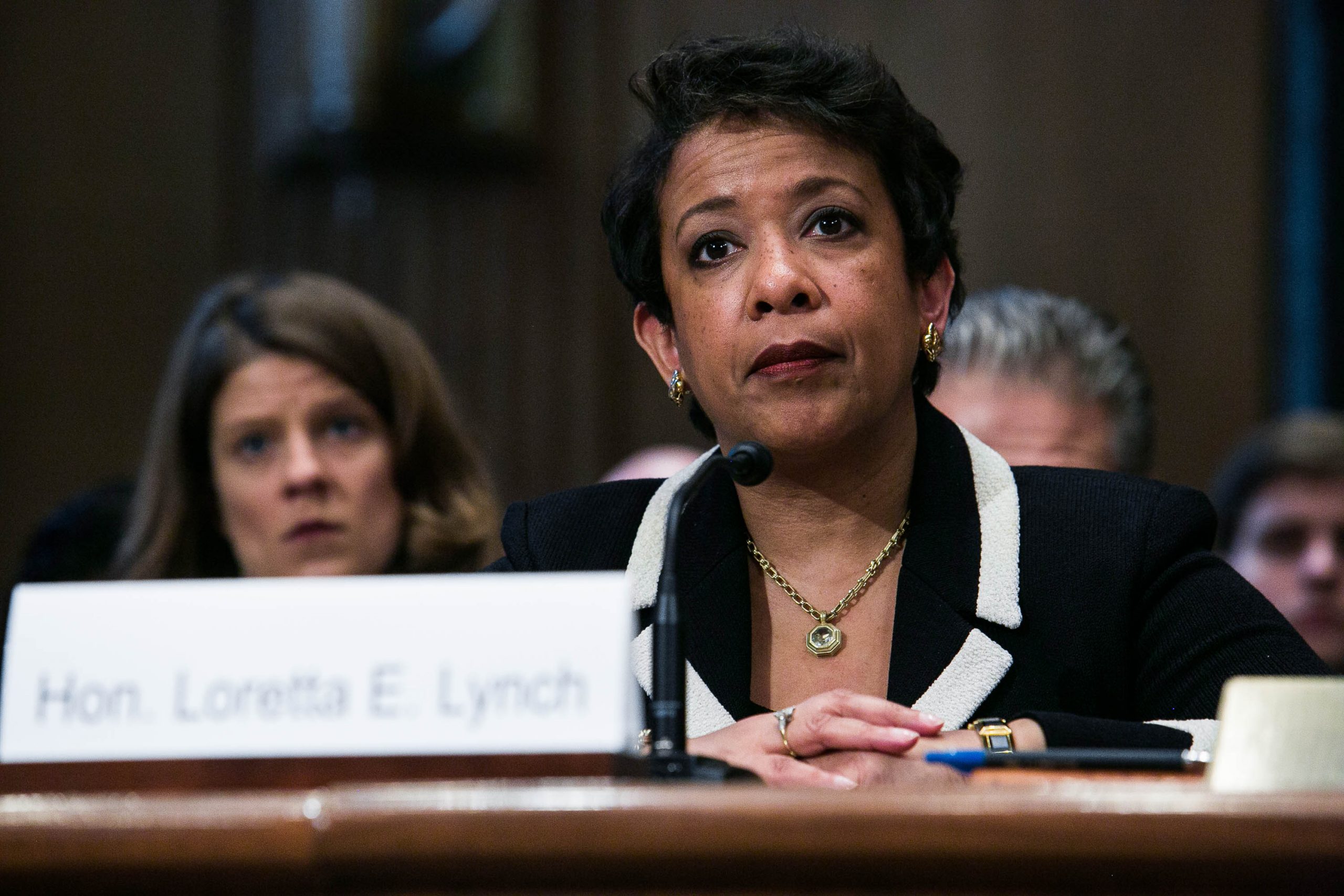
U.S. Attorney General Loretta Lynch said Friday that the rising visibility of police violence is helping to bring about change, just as it did during the civil rights movement of the 1960s.
“[W]e’re at a point now similar to 50 years ago with the civil rights movement” because of the rising visibility of police misconduct and the subsequent discussion it causes, she told CNN’s Christiane Amanpour Friday at the World Economic Forum in Davos, Switzerland.
Recommended Stories



“The televising of the police dogs and the fire hoses on young people then was a motivating factor and a wake-up call really for people within the U.S. and outside the U.S. to really face the issues of racial unrest in America,” she said in the interview, which is set to air in full Friday afternoon at 2 p.m. EST.
“Similarly, we’re at a situation where viewing these videos, viewing these incidents of misconduct, of deaths occurring — hard as they are to see — is giving an opportunity to talk about this. And frankly, it’s giving law enforcement the opportunity to step forward, to be accountable and talk about what is and is not effective policing,” she added.
Lynch, who is the second black attorney general in U.S. history, has been agressive in launching probes into police departments nationwide. Though she has held the position for less than a year, she has made police reform one of her signature goals.
The Justice Department announced last month it would investigate the Chicago Police Department in the wake of dashcam video showing a white officer shooting to death a black teen.
“A lot of the things that are talked about are visible today because, quite frankly, we have visibility into situations that we didn’t always have, the witness with the cell phone, the security camera,” Lynch told Amanpour, noting that it is a rise in documentation of the controversial incidents rather than a rise in the incidents themselves.
“I think if you talk to people who live in communities that deal with these issues all the time, they will say to you that what these videos are showing us now is what people in many minority communities have been talking about for years, and what they’ve been describing for years, but they haven’t been believed,” Lynch said.
“They have been dismissed, mainly because people don’t want to believe that law enforcement can overstep. And of course, it’s not every law enforcement officer. But when it happens, the impact that it has, the gash that it leaves, in the web of trust that we need in order for everyone to feel safe, is tremendous. And so that’s why these incidents resonate so deeply.”
According to Lynch, being black and being a prosecutor puts her in a unique position to both understand the problem and how to fix it.
“I’ve worked with police, I’ve worked with agents. I’ve also worked with communities who have dealt with these issues over the years that I’ve been involved in law enforcement. It can be done. It takes commitment from both sides,” she said. “Law enforcement has to be willing to examine its actions, its role in these events, the type of training that goes on, and frankly impose a level of first-line accountability that everyone expects from people with the type of power and responsibility that we in law enforcement have.”
