

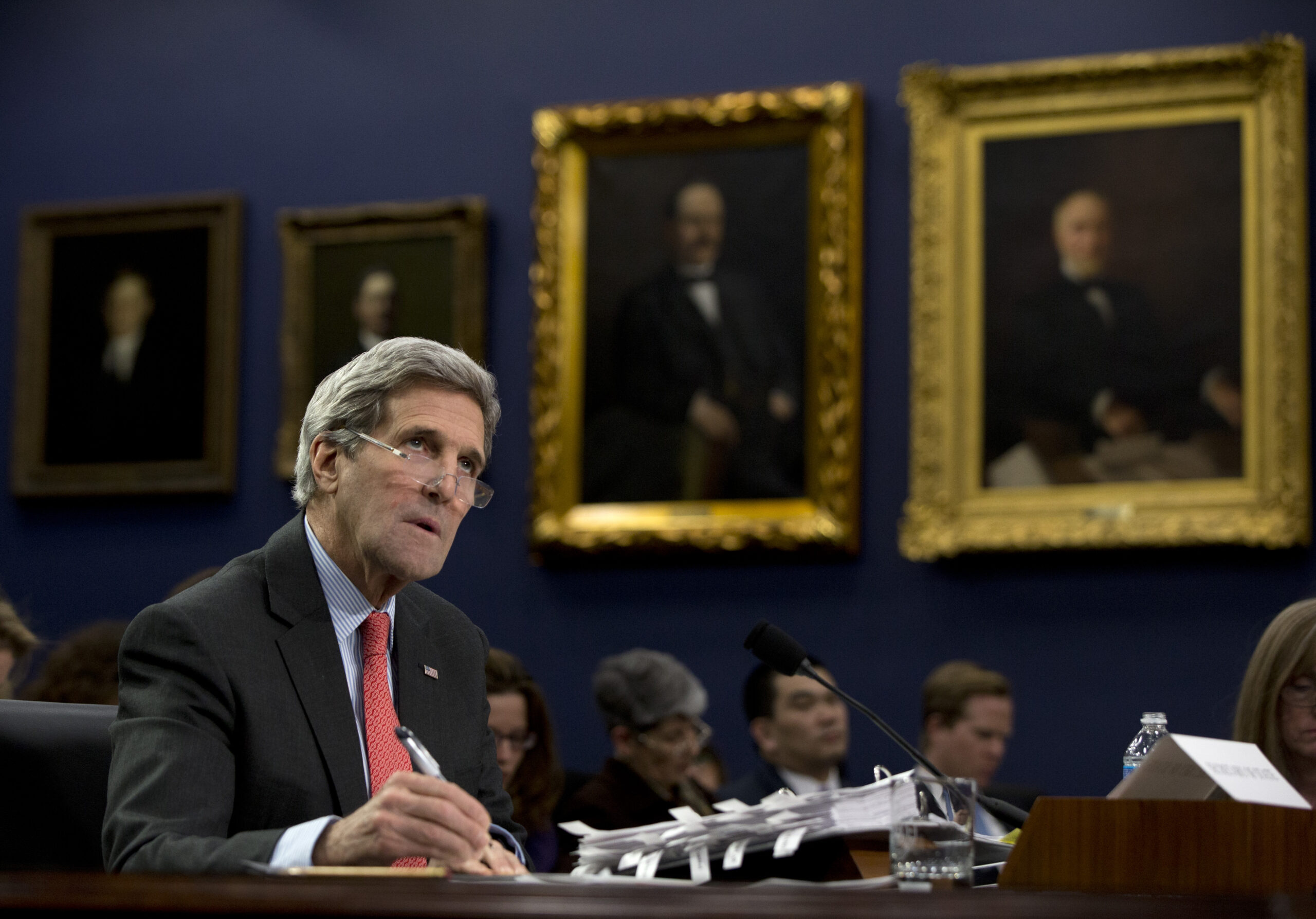
Secretary of State John Kerry became visibly irritated last week as he was forced to defend the Obama administration’s approach on Iran to skeptical lawmakers over and over again in hearings scheduled to discuss the State Department’s budget.
His message to them was clear: Butt out and leave this to us.
Recommended Stories


The administration’s refusal to engage with Congress on the issue of Tehran’s nuclear ambitions could thwart efforts to get the deal President Obama has said is one of his highest foreign policy priorities by making it impossible to give Iran’s leaders what they want the most — permanent relief from tough international sanctions that have throttled the country’s economy.
It’s all about trust: Lawmakers don’t trust the administration’s negotiating strategy and they certainly don’t trust Iran’s ruling Islamic theocracy.
And it’s not just Republicans. Many Democrats support legislation to impose new sanctions on Iran and are willing to help Republicans enact them even over a presidential veto if they’re not satisfied with what comes out of international negotiations that have been dragging on for more than a decade.
What that means as Kerry prepares to depart Monday for a new round of talks with his Iranian counterpart, Foreign Minister Mohammad Javad Zarif, is that Obama needs Iran’s help to reach a deal acceptable to Congress and save his top foreign policy priority.
“The American people do not want the Iranian terror state to have nuclear weapons or hidden nuclear capabilities. A bad nuclear deal with Iran will endanger the security of the United States, Israel and our Arabian Gulf allies,” said Sen. Mark Kirk, R-Ill., co-author of the bipartisan sanctions bill, who is working to line up a veto-proof majority for passage in both chambers.
Administration officials contend that they have kept Congress fully informed of the progress of the talks, which are expected to wrap up by June 30. They also blame Israeli Prime Minister Benjamin Netanyahu, who is scheduled to speak about Iran to a joint meeting of Congress on Tuesday, for spreading partisan discord about the negotiations in collaboration with House Speaker John Boehner, who invited the Jewish state’s leader to speak.
Kerry, in his appearances before the Senate Foreign Relations Committee on Tuesday and the House Foreign Affairs Committee on Wednesday, also blamed the administration of former President George W. Bush for not enforcing its stated determination that Iran would not be allowed to enrich uranium.
“Iran has already mastered the fuel cycle, folks,” Kerry told House members. “They did that a number of years ago, when President George W. Bush was president, in 2003, the Bush administration policy was no enrichment. … And Iran went from 164 centrifuges to 19,000 that are installed, and there’s claims of some others being out there, which we’re going at. So they’ve learned how to enrich.”
But when senators asked about news reports that negotiators were considering a deal that would not prevent Iran from building a nuclear weapon — which the administration continues to insist it will not be allowed to do — Kerry told them: “I’m not going to go into the details of where we are and what we’re doing.”
When asked if the administration planned to seek congressional approval of the deal, Kerry said no.
“I believe this falls squarely within the executive power of the president of the United States in his conduct of foreign policy,” he told senators.
“They have no intention of seeking Congress’ input on this in any significant way,” Mark Dubowitz, executive director of the Foundation for the Defense of Democracies. “Essentially the message they will send to Congress is we will completely sideline you when it comes to Iran.”
Though sanctions against Iran are enacted into law, Obama could use executive orders and national security waivers to offer relief to Tehran as a part of any deal.
But lawmakers already are moving to close that loophole. Bipartisan legislation introduced Friday in the Senate would require Obama to submit any deal with Iran for congressional approval within five days of signing, and bar him from suspending sanctions for 60 days while lawmakers consider it. If Congress rejects the deal, there would be no sanctions relief at all.
The legislation also would require the administration to review Iran’s compliance with any agreement every 90 days, backed by a threat of renewed sanctions.
Among the bill’s co-sponsors is Democrat Tim Kaine of Virginia, one of four senators who plan to boycott Netanyahu’s speech in support of the administration’s position that it’s inappropriate.
“I believe Congress should weigh in on the content of the deal given the centrality of the congressional sanctions to the entire negotiation and the significant security interests involved,” he said.
The White House has already threatened that Obama would veto the bill.
“It is disappointing that the president feels he is the only one who speaks for the citizens of our country,” said Foreign Relations Committee Chairman Bob Corker, R-Tenn., another co-sponsor of the legislation.
“Congress put these sanctions in place and helped bring Iran to the table with the administration working against the effort the whole way. As a result, Congress should decide whether a final nuclear deal with Iran is appropriate enough to have the congressionally mandated sanctions removed.”
