
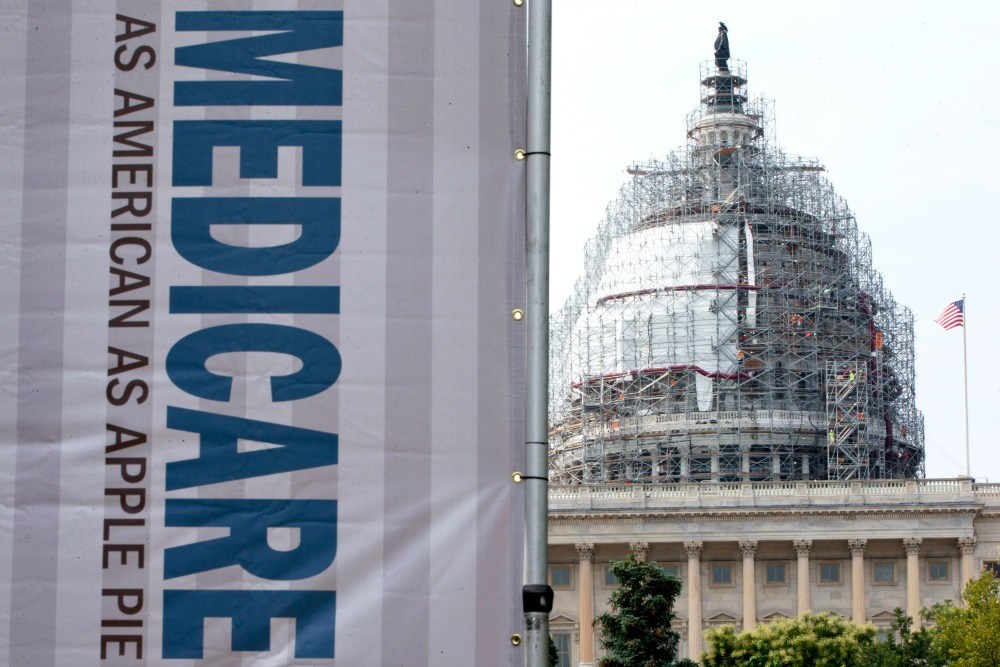
As if Congress didn’t have enough deadlines to beat by the end of the year, forestalling a dramatic rise in Medicare costs has suddenly been added to Capitol Hill’s “to-do” list.
House and Senate lawmakers returned from recess last week to face critical unfinished business, including a vote to raise the nation’s $18.1 trillion borrowing limit before the Treasury runs out of money on Nov. 3.
Real journalism.Trusted by millions.
Unlimited access to in-depth reporting, expert analysis, and the stories that shape our country.
Already a member? Log in
Lawmakers must also act on a measure to reauthorize the Highway Trust Fund that keeps surface transportation projects humming. A Dec. 11 deadline on the budget is also nearing. It will require House and Senate lawmakers to strike a deal with President Obama on the fiscal 2016 funding bill that is required to keep the government operating.
Now add Medicare to the list.
On Oct. 15, the federal government announced that Social Security beneficiaries would not receive a cost of living increase next year.
The announcement is bad news not just for retirees, but also for about 30 percent of Medicare Part B recipients, who as a consequence will have to endure a 50 percent increase in premiums in 2016.
The rise is triggered by a combination of stagnant Social Security payments and higher healthcare costs that only some Medicare recipients are required to cover.
The rate hike would hit 7.7 million recipients and average about $54 per month, according to the federal government, which estimates that most people pay about $105 each month.
The higher rates would hit those who have just signed up for Medicare, some federal retirees and Medicare recipients earning more than $85,000. The rate increase would also include Medicare recipients who also use Medicaid, which means states would have to shoulder billions of dollars in additional costs to pay for the rate hike.
In addition to higher premiums, all Medicare Part B recipients will see their deductibles rise by 50 percent in January, from an average of $147 to $223.
In Congress, both parties are eager to stop the Medicare hikes, but nobody is sure how it will happen, or when.
“We will continue to urge Congress to act as soon as possible, and certainly before the end of the year,” said Andrew Scholnick, legislative representative for the AARP, a retiree organization. “But this should be a higher priority now, as Medicare beneficiaries are in the open enrollment period and need to know how premiums and deductibles will affect them before making decisions.”
House Speaker John Boehner, R-Ohio, and Minority Leader Nancy Pelosi, D-Calif., were discussing legislation that would prevent the increases, but those conversations stalled over how to pay for such a measure.
The two sides are still talking, but the matter has been further complicated by Boehner’s imminent retirement and House GOP’s struggle to elect a new speaker. Some aides said it is more likely the Medicare problem will be handed off to Boehner’s successor.
Senate and House Democrats, meanwhile, have put forward matching legislation authored by Sen. Ron Wyden, D-Ore., and Rep. Dina Titus, D-Nev., that would stop the premium and deductible increases. But the measures do not include a mechanism to cover the cost of approximately $10 billion.
“We are willing to work with Republicans on the pay-fors,” a top Democratic Senate aide told the Washington Examiner.
Senate Finance Chairman Orrin Hatch, R-Utah, appears to be waiting for the House to take the lead.
“Chairman Hatch looks forward to finding a fiscally responsible path forward on this problem that can pass both houses of Congress,” a finance panel aide told the Examiner.
Congressional aides said it’s looking more likely that Congress will address the Medicare cost increase within a larger end-of-the-year deal to fund the government for fiscal 2016.
That means seniors could receive January Medicare statements in December that include the higher premium rates and higher deductibles.
Rep. Earl Blumenauer, D-Ore., called on Congress to act now, arguing in a recent House floor speech that waiting until the December deadline or later would end up costing more money.
“And we will be shielding some of our most vulnerable citizens from significant increases at a time when they can ill afford it,” Blumenauer said. “This is one area where there is overwhelming support on both sides of the aisle.”