

The House is expected to vote on a measure on Tuesday to impose sanctions on North Korea over its recent claims that it tested a hydrogen bomb.
The vote is just one piece of a week on Capitol Hill where the Foreign Affairs and Foreign Relations committees in both chambers are focusing on the U.S. response to North Korea’s provocative actions.
Recommended Stories


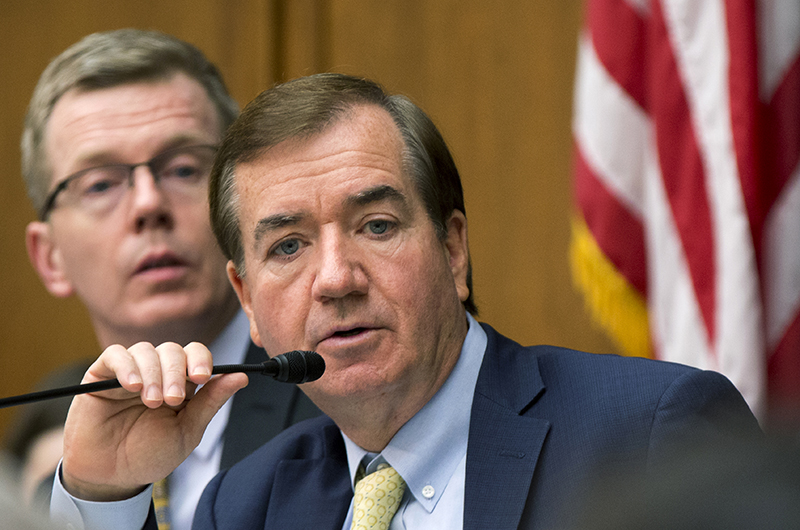
Rep. Ed Royce, R-Calif., and chairman of the House Foreign Affairs Committee, said Friday that the House will take up his bill on Tuesday to sanction North Korea, similar to the U.S. policy toward the country in 2005.
“We will put that bill on the president’s desk with strong bipartisan support,” Royce said at an American Enterprise Institute event. “This is the approach that will work because you need consequences. The idea of strategic patience, which is how the administration defines its current strategy with North Korea, means patience while North Korea goes forward with test after test.”
The North Korea Sanctions Enforcement Act unanimously passed the House Foreign Affairs Committee almost a year ago in February, after North Korea’s state-sponsored cyberattack on Sony Pictures over the movie “The Interview,” which depicts the North Korean leader being assassinated.
The bill targets North Korea’s access to hard currency and urges the administration to use all available tools to sanction officials, according to a release.
The House Foreign Affairs Subcommittee on Asia and the Pacific is bringing in analysts on Wednesday to testify on the U.S. response to North Korea’s nuclear provocations.
On the other side of the Capitol, the Senate Foreign Relations Committee is expected to hear from senior State Department officials during a closed hearing on the recent incident with North Korea.
North Korea said it conducted a successful test of a hydrogen bomb this week after sensors picked up a 5.1 magnitude seismic event, according to a CNN report. In response, the United Nations Security Council prepared to levy “significant” punishment for the test that violated its security resolution.
The U.S., however, is skeptical of North Korea’s claims. White House press secretary Josh Earnest said this week that initial U.S. intelligence reports are “not consistent with North Korean claims of a successful hydrogen bomb test.”
Defense Secretary Ash Carter called his Japanese counterpart, Minister of Defense Gen Nakatani, on Friday to talk about the North Korea nuclear test, calling it “an unacceptable and irresponsible act that undermines regional security and stability.”
Thursday night, Amb. David Shear, the U.S. assistant secretary of defense for Asian and Pacific security affairs, also held a three-way video teleconference with officials from South Korea and Japan.
