

For Republicans, first, some good news: Turnout in the presidential primary contests is way up, and voters are energized. The bad news? It doesn’t mean anything.
Republican primary voters are, by all accounts, more enthusiastic to show up and pull the lever for president this year than their Democratic counterparts. That fact has offered a glimmer of hope this political season to a Republican Party on the brink of its first contested convention in 40 years and mired in such turmoil that it risks fielding a crippled nominee against Democratic front-runner Hillary Clinton.
Higher Republican turnout in the primaries suggests greater interest in participating in November and more positive motivation to vote for the eventual presidential nominee than is the case among Democrats. If true, this might help the Republicans overcome challenges posed by nominating Donald Trump, whose negatives with key voting blocs are sky-high, not to mention internecine warfare that threatens to rip the party in two.
The problem for the Republicans is that none of this is true. It’s neither born out by history or any existing electoral data.
“When you have a small turnout universe, enthusiasm can make the difference. When you have a presidential election year turnout, you have a much larger universe because of the broader interest in voting for a president, and that diminishes the impact of enthusiasm,” David Winston, a Republican pollster, said in an interview with the Washington Examiner.
Every two years, in midterm and presidential elections, political analysts and pollsters monitor a range of voter attitudes and sentiments. Enthusiasm, both to show up at the polls generally (or vote early or absentee) and to vote for a specific individual on the ballot, are considered key metrics that can predict an advantage for a candidate and the political party he or she represents. It’s been no different this time around.
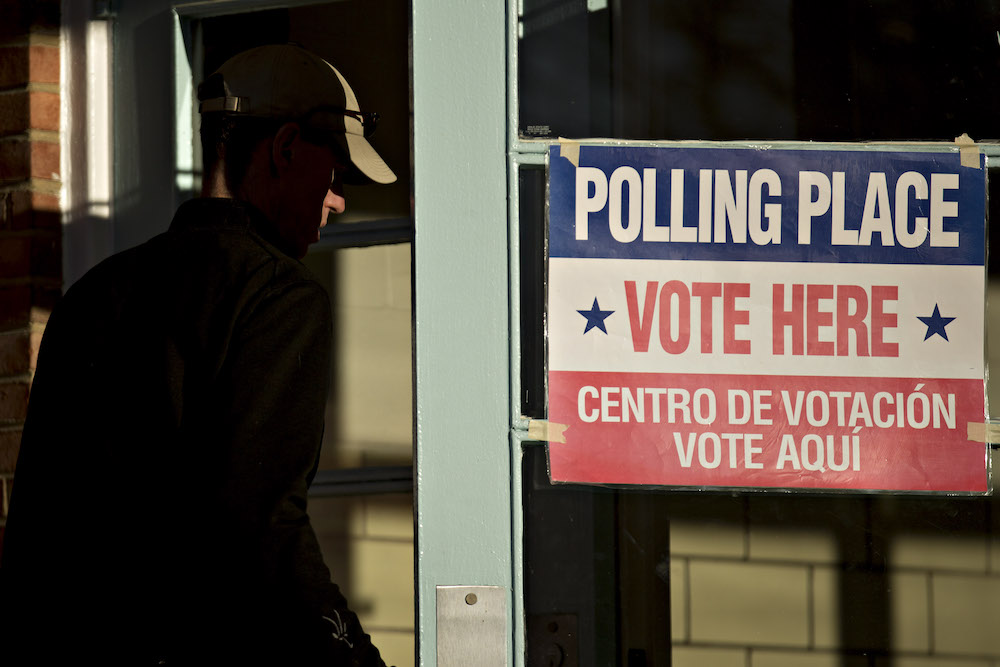
If carried over to the general election, the assumption is that the Republican nominee would enjoy a crucial turnout advantage over his Democratic rival. Unfortunately for the Republicans, there is no historical precedent to lend credence to this assumption. (Bloomberg Photo)
The most recent Fox News national survey of registered voters, conducted by two pollsters, one a Democrat and the other a Republican, gets at the question of enthusiasm in different ways. The poll has a margin of error of plus or minus three percentage points.
The survey asked respondents how satisfied they would be with Clinton or Trump at the top of the ticket. The answer: 67 percent, while 21 percent would “seriously” consider voting for a third-party candidate. The survey also asked respondents their “reaction” to Clinton and Trump being elected president. Thirty-five percent would be “enthusiastic” or “pleased” if Clinton is elected, 29 percent would feel the same if Trump is wins.
Respondents were also asked “how interested” they are in the 2016 campaign. The answer was 74 percent. The poll also asks voters which party’s primary they did, or are likely, to participate in. Forty percent said the Democratic contest, 38 percent said the Republican race, although self-identified independents said they would vote in the GOP primary by a margin of 33-21 percent.
Republicans are especially enthused by this particular data point, as they are about the fact that in the 2016 contest, more voters overall have participated in GOP presidential primaries and caucuses than in a Democratic contest.
Independent voters are an important bloc in key swing states like Colorado, Florida and Ohio, and their decision to participate in the Republican primary by a margin of 12 points might signal that they are most likely to vote GOP in the general election. Accordingly, the Republicans have seen about 20 million voters show up for their presidential contests, compared to just 15 million for the Democrats.
If carried over to the general election, the assumption is that the Republican nominee would enjoy a crucial turnout advantage over his Democratic rival. Unfortunately for the Republicans, explained Harry Enten, a senior writer and political analyst for FiveThirtyEight.com, there is no historical precedent to lend credence to this assumption. “I don’t think enthusiasm means anything,” he said in an email exchange.
“Democrats shouldn’t worry. Republicans shouldn’t celebrate,” Enten added, in a published analysis. “Voter turnout is an indication of the competitiveness of a primary contest, not of what will happen in the general election. The GOP presidential primary is more competitive than the Democratic race.”
This election cycle, the Republican primary field started out with 17 candidates, a majority of them formidable former and sitting governors and senators, not to mention Trump, a billionaire reality television star and real estate mogul from New York.
As April dawns, the contest is still raging and the outcome considered in doubt, beginning with the competitive presidential primary in Wisconsin, considered a tossup. Overall in the race for the nomination, Trump is the clear front-runner and leader in Republican convention delegates, followed closely by Sen. Ted Cruz of Texas. Gov. John Kasich is further behind, but is vowing to take his campaign all the way to Cleveland and win at the convention.
The Democratic primary features only two candidates, and is simply not as competitive.
Clinton, a former New York senator, is facing a stiff challenge from socialist Sen. Bernie Sanders of Vermont. But since Clinton vanquished Sanders in Nevada and South Carolina in late February, the nomination has been considered hers to lose, something that might only happen, speculate Democratic insiders, if she becomes subject to a federal indictment over her use of a private email server while serving as President Obama’s first secretary of state.
True, sometimes the party with higher turnout in the primary season goes on to win the White House. But often, there were other factors that impact those results.
In 1976, with the Watergate scandal still weighing down the Republican Party, turnout in the Democratic primary reached 16.1 million, versus just 10.4 million for the GOP. Democratic former Georgia Gov. Jimmy Carter went on to defeat President Gerald Ford in the general election. But four years later, Carter was ousted by Republican former California Gov. Ronald Reagan, even though the Democrats turned out 18.7 million voters in their primary, versus just 12.7 million for the GOP.
Meanwhile, in 1988, a competitive Democratic primary generated 10.8 million more voters than did the Republican primary, which Vice President George H.W. Bush won easily. It was the same in 2012, when former Massachusetts Gov. Mitt Romney, the eventual GOP nominee, slogged through a competitive primary that drew millions of voters. Obama was re-nominated by acclimation and some states didn’t even hold Democratic primaries.
The higher turnout in the presidential primaries is an opportunity to connect with more voters and track them, possibly turning them into reliable supporters down the line, and that holds tactical value, say Republican operatives active in the 2016 campaign. But as for signaling enthusiasm and victory in the general election to come against Clinton, GOP operatives say that that just isn’t the case, as much as they wish it were.
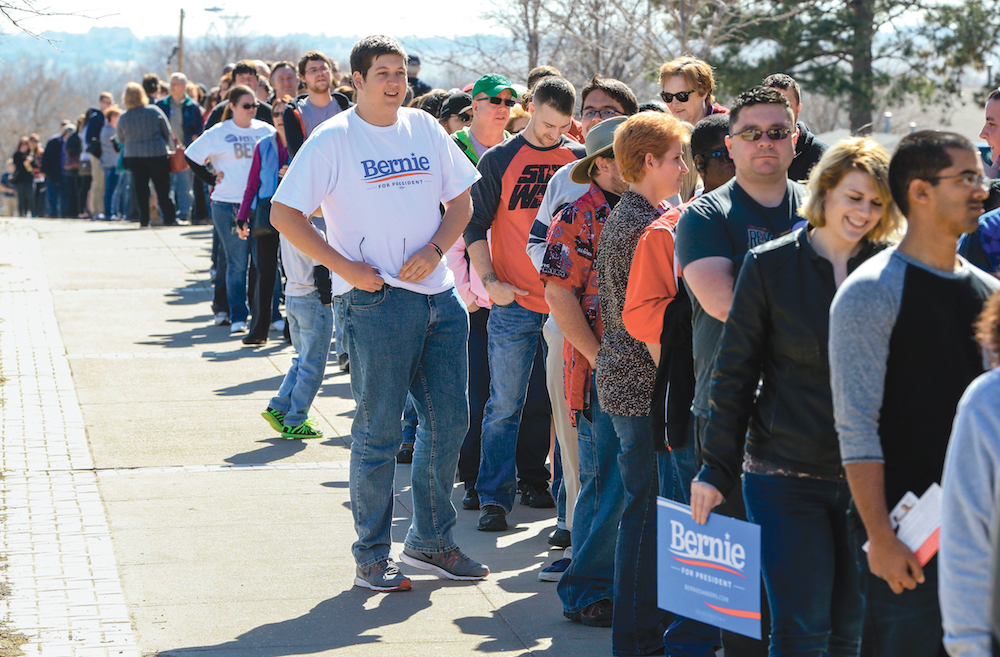
Both Trump and Democrat Bernie Sanders have benefited from the support of voters frustrated with Washington and the two major parties. (Bloomberg Photo)
“I like the story that our voters are more gassed up or juiced up. But that scenario happened four years ago,” said a Republican pollster, regarding Obama beating Romney. This operative, who requested anonymity because his client has not authorized him to speak publicly about the 2016 campaign, added: “So what that we’re more excited, all I care about as a pollster, is, are you going to turn out?”
The exceptions are lower-turnout contests like the sort of nominating caucuses held every four years in Iowa. Here, enthusiasm and excitement about a specific candidate are often the difference between winning and losing.
The 2016 primaries are unusual in that they feature two outsider candidates, in Sanders and Trump.
Sanders is a longtime independent lawmaker who was, and had never been, a registered Democrat during all his years in Congress when he launched his presidential campaign. Trump, who had never sought political office previously, was until recently a strong supporter of Clinton, Obama and many other Democrats. Both hold views that are at least somewhat out of step with the mainstream of the parties they seek to represent (more so for Trump.)
Their outsider status — and unorthodox policy positions — have enabled them to drive new and first-time voters to the polls in primaries and caucuses that might not have otherwise identified with the Democratic and Republican parties. Yet, it remains unclear to the extent Sanders and Trump have impacted turnout during the primary season, compared to other factors.
Sanders and Trump have benefited from the support of voters frustrated with Washington, angry with the so-called establishment of the two major parties, or both.
“We are seeing an influx of non-primary voters, or at least voters with very spotty GOP primary participation history,” said Republican pollster Wes Anderson, who previously advised the since-suspended presidential campaign of now-former Louisiana Gov. Bobby Jindal. “And yes, most of these voters are coming in, or coming back in, to support Trump.”
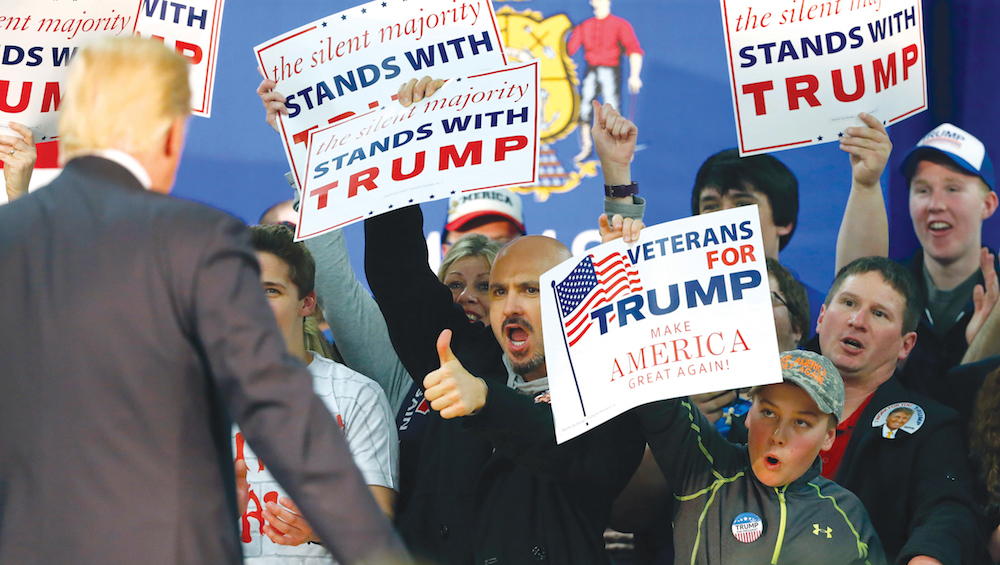
Donald Trump’s candidacy is boosting turnout at Republican primary polls. (AP Photo)
But it’s hard to know exactly how significant this factor is in terms of affecting turnout partly because of how successful these two contenders have been. They’re not just drawing votes from disaffected Americans, but from rank-and-file party regulars who can be depended upon to vote in primaries every four years.
This was most evident in New Hampshire, where Sanders and Trump romped, with 60 percent and 35 percent, respectively.
For Trump, this has also has been the case in states like South Carolina (32.5 percent,) Nevada (46 percent), Mississippi (47 percent), Florida (46 percent) and Arizona (47 percent).
Political analysts studying the available data add that so far, there’s scant evidence to suggest a surge of independent voters into the Democratic and Republican primaries consistent with the proposition that Sanders and Trump are creating millions of new voters that will turn the general election upside down.
Sanders appears to be performing better in caucuses than traditional primaries, which shouldn’t be the case if he was motivating higher turnout. As for Trump, his front-runner status cuts both ways, in terms of analyzing voter turnout.
As loyal and devoted as Trump followers are, more so than any other Republican’s supporters, the brash populist also has engendered deep opposition among many of the GOP voters supporting his remaining opponents Cruz and Kasich. And that sharp opposition is it’s own form of voter turnout, just in the opposite direction.
That could end up being true in a general election against Clinton. Groups that have already formed highly negative opinions of Trump — hispanics, women, African-Americans and whites with college degree — could be motivated to turn out to vote against him. It’s already true inside Trump’s own party, in some of the Republican primary contests. A GOP operative in Arizona attributed the high turnout in the primary there to pro and anti-Trump voters.
“Turnout was much higher [than in the 2012 primary] though, as there is genuine fear against, and excitement for, Trump,” a GOP strategist in Phoenix said.
