

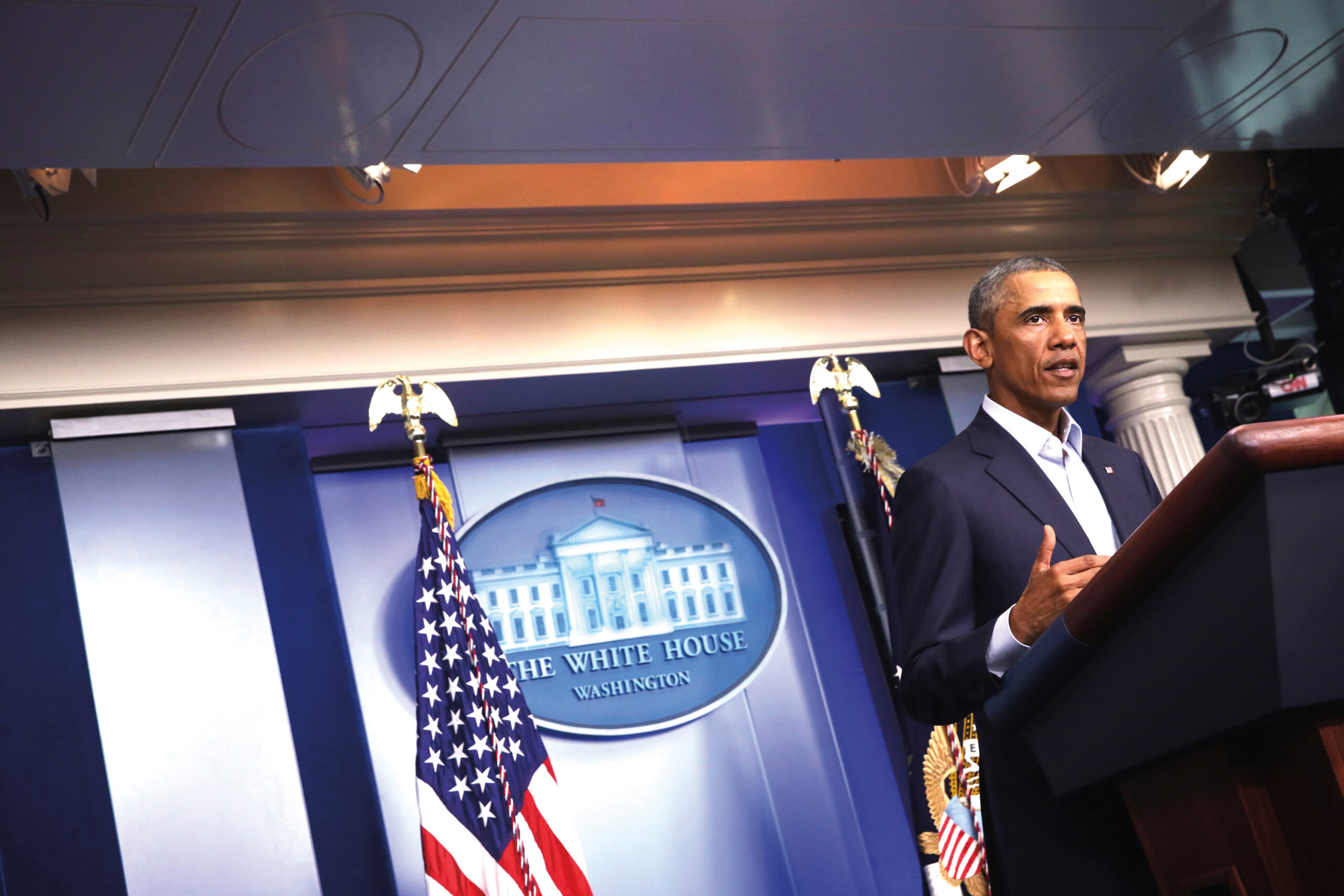
As he heads into the fall, President Obama faces a string of no-win situations.
If he pushes Congress to vote on items on his domestic agenda such as immigration reform, Republicans won’t go along. If he takes action on his own, they’ll charge him with overreach. And if he holds back, he’ll bleed support from Democrats.
Recommended Stories


On foreign policy, the picture is even bleaker. In hot spots including Syria, Iraq, and Ukraine, he faces difficult if not impossible goals. Not intervening means allowing horrors to go unchecked, but getting involved presents its own set of problems.
And then there’s the elections. With the GOP in a strong position to take control of the Senate, Obama could face two years of a Republican-controlled Congress presenting him with even more no-win situations, forcing him to cave to its demands or wield his veto pen.
It’s enough to make a commander in chief daydream of 2017, when he will be leisurely writing his next memoir and sprucing up his presidential library.
Conservatives say Obama has no one to blame but himself for these predicaments. If he had acted earlier on the growing threat of militants in the Islamic State of Iraq and Syria or armed the rebels in Syria, they argue, he might have avoided the problems.
But on domestic issues, the president’s supporters note he’s not entirely to blame.
Republican supporters of a bipartisan Senate bill on immigration asked him to stay away from the legislative process for fear he would awaken the conservative base and doom the bill. But when Obama kept quiet, it led to accusations that he wasn’t leading enough.
“It’s almost counterintuitive,” a former senior administration official told the Washington Examiner. “If you want to get anything done, you have to do as much as possible to make sure it doesn’t look like the president’s idea. Once it becomes ‘Obama’s plan,’ it’s doomed.”
In recent months, the White House has instead tried the so-called “pen and phone” strategy, which highlights Obama getting work done despite congressional gridlock. But for the most part, those are smaller initiatives, not the legacy-defining deals Obama once hoped for his second term.
Some Democrats say Obama should have focused more on getting the public on his side.
“His numbers with the public are weaker than they should be,” said Simon Rosenberg, a campaign adviser for former President Clinton and founder of Washington think tank NDN. “There has been an inadequate defense of what they’ve done, which is weakening him in these engagements with Republicans. They have to do a better job of taking credit.”
The GOP has little incentive to listen to a president with approval ratings hovering around 40 percent, opting not to give the president any help ahead of the midterm elections.
Whatever the reasons, Obama’s inability to convince Republicans to sign off on his legislative initiatives is nearly unparalleled in modern history.
According to a new analysis from the Brookings Institution and the American Enterprise Institute, House Republicans supported Obama on just 12 percent of votes last year in which the president took a clear position. The preceding year, that figure was just 17 percent.
By comparison, Bill Clinton, George H.W. Bush and Ronald Reagan each received the backing of the opposition party on at least a quarter of votes in the House, even in their final year in office.
The only president with comparably low numbers in the study was Obama’s predecessor, George W. Bush, who got the support of House Democrats on just 7 percent of votes in 2007 and 16 percent in 2008.
What does this trend mean for the remainder of the Obama presidency?
“Barring some kind of political miracle,” said the former senior administration official, “nothing is getting done.”
