

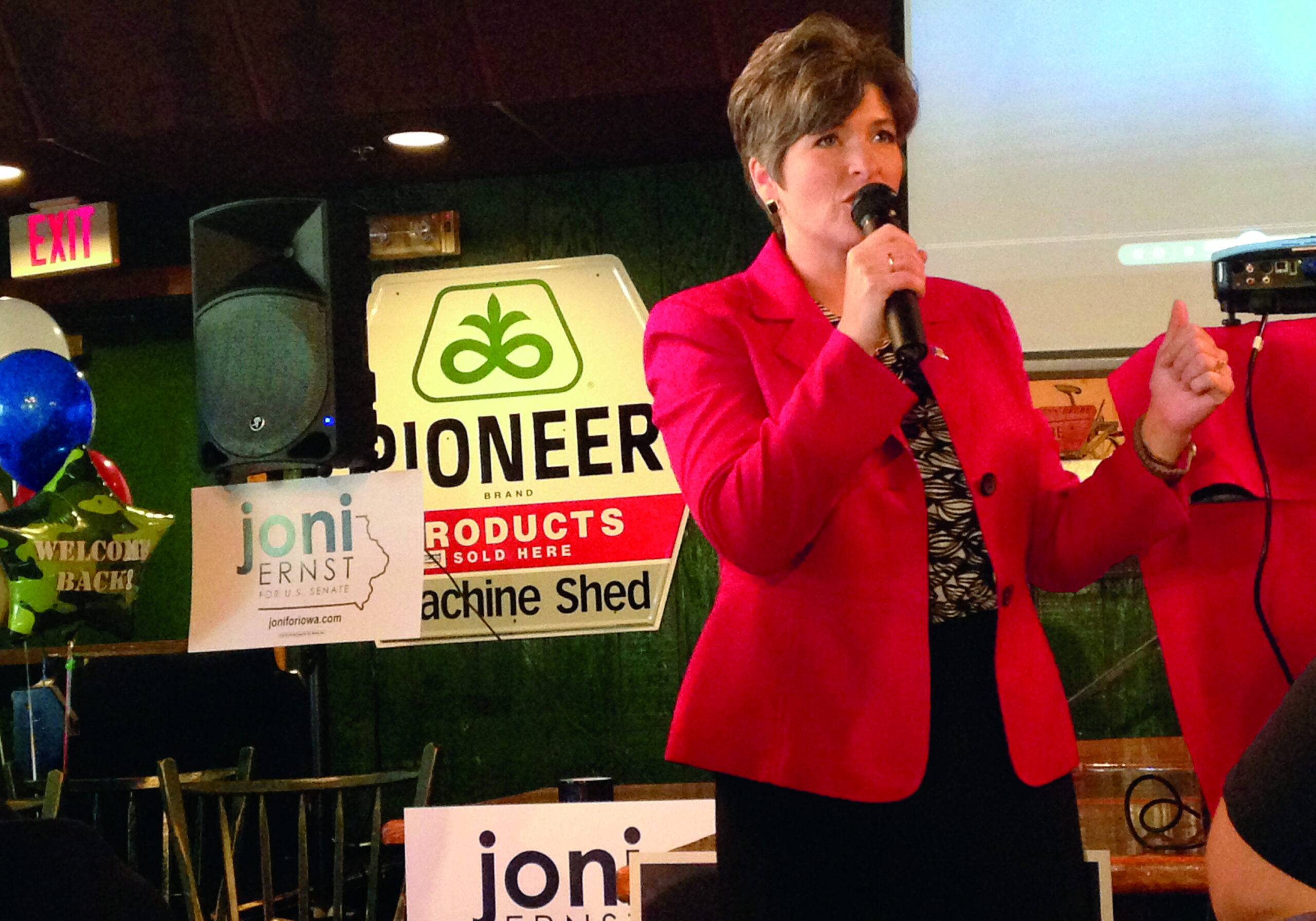
Joni Ernst could be the first woman to represent Iowa in Congress, but she’ll need to convince women voters to support her first.
The Republican Senate candidate often speaks on the campaign trail about being the mother of a high school-aged daughter. Last month, Ernst released a statement on sexual assault in the military that cited her experience “as a woman in uniform.”
Recommended Stories



But she still wins less support from women than her Democratic opponent, Rep. Bruce Braley, even as she remains tied with him overall — a common story in this fall’s elections as Republicans seek to rebuild support among women.
To start winning over women voters, Ernst says she doesn’t need to focus on so-called women’s issues, but must emphasize “what we have done here in the state of Iowa for jobs and the economy.”
“It is working,” Ernst told the Washington Examiner during a campaign stop in Iowa City last week. “And women are concerned about the same issues as men, so just making sure that we are communicating that we need a strong economy to provide jobs and a future for our children and grandchildren.”
It’s not just Ernst who is struggling. In this midterm election cycle, which has been largely favorable to Republicans, not a single Republican Senate candidate leads his or her Democratic opponent among women voters.
With memories of Todd Akin’s “legitimate rape” remark from the 2012 campaign still fresh, Republicans had hoped to engineer a turnaround this election cycle. But their efforts have so far fallen short.
Some Republicans hoped that recruiting more women candidates would disarm the “war on women” trope. But in Oregon, Michigan, and Iowa, the Republican Party’s top women candidates still enjoy less support from women voters than their male Democratic opponents.
“I haven’t noticed one race where the sex of the candidate has mattered,” said one Democratic operative. “It’s where candidates are on the issues that women care about the most.”
The enduring challenges Republicans face have been most apparent in the Colorado Senate race, where Democratic Sen. Mark Udall has tried to weaponize women’s issues against his Republican opponent, Rep. Cory Gardner.
Udall and his allies have honed in on Gardner’s past support for personhood legislation, which would have banned abortions, and his support for over-the-counter oral contraceptives, which Democrats argue would make birth control more expensive. On Monday, Udall’s campaign released a television ad attacking Gardner on both issues.
“Yep, it really is 2014,” Udall said, looking straight into the camera. “So how is it that we’re still debating a woman’s access to abortion or birth control?”
So far Udall has been successful: A poll published recently by The Denver Post showed him with a 13-point lead over Gardner among women. The gap is so wide that the pro-Republican group Crossroads GPS stepped in this week with a new ad targeted solely at winning over women for Gardner.
Thom Tillis has faced similar challenges in his bid to unseat Democratic Sen. Kay Hagan in North Carolina. Like Gardner in Colorado, Tillis has expressed support for making birth control available without a prescription.
During the first debate, Hagan shot that idea down, arguing it would actually make birth control less accessible because it would no longer be covered by health insurance plans.
“Once again, women, we’re stuck holding the bill,” Hagan said.
After years when Republicans largely ignored such issues, some party strategists are encouraged that the discussion, if not actual policy, is beginning to shift.
“Republicans were saying, ‘Oh, these issues aren’t important to women.’ Well yeah, they are,” said one Republican strategist involved in Senate races. “I think people have finally realized that we can’t just dismiss these issues. We have to talk about them.”
But the 2014 election cycle isn’t likely to be the end of the party’s struggle to win over women. It’s just the beginning.
“This has been a good trial period to learn things and to test certain things out,” the strategist added, “but we have a long way to go.”
