

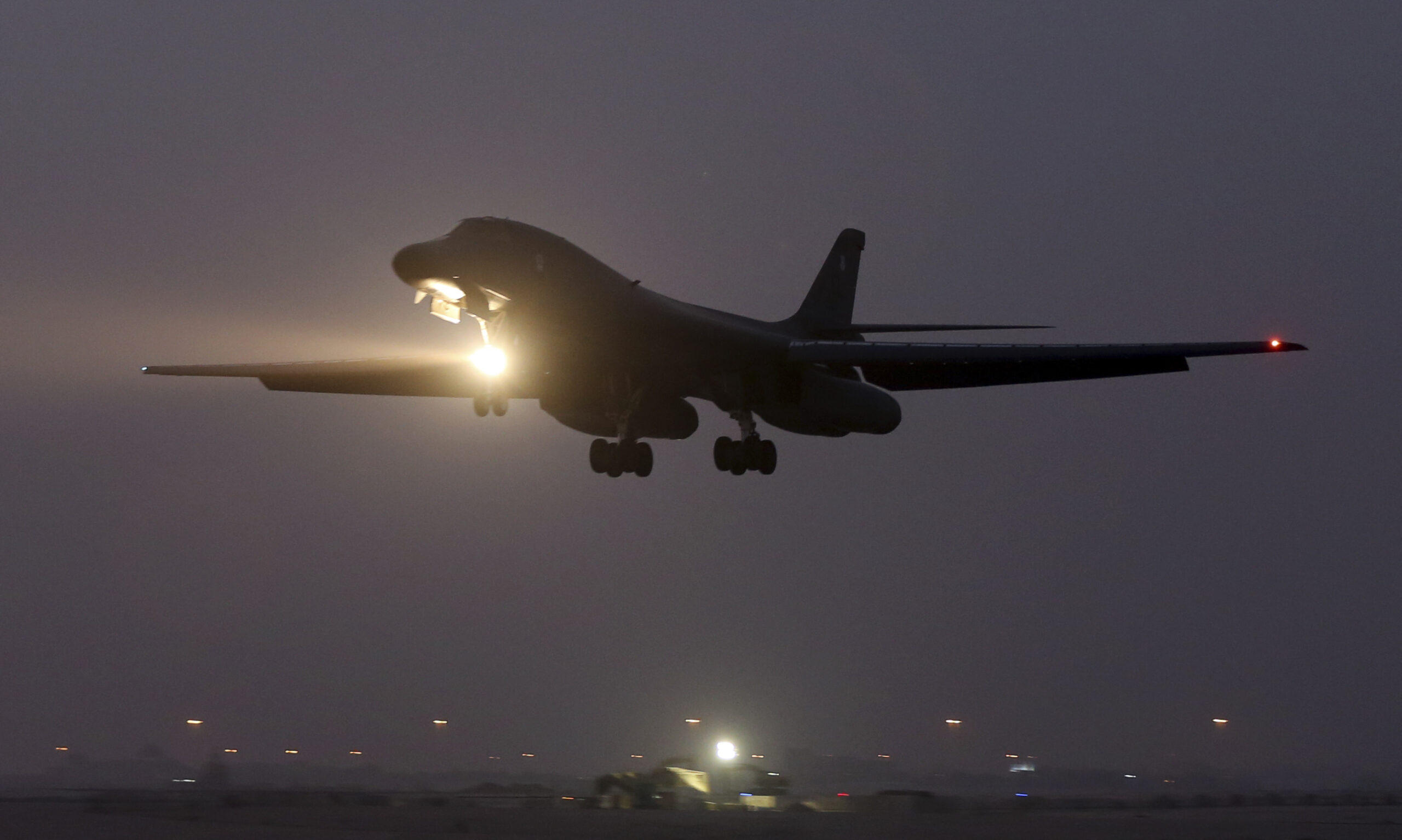
The Pentagon backpedaled Thursday after its assistant secretary of defense for the Asia Pacific told Congress that B-1 bombers were headed to Australia.
The B-1 bomber is a sleek, supersonic four-person aircraft that has been integral to the fight in Afghanistan and a regular presence against the Islamic State in airstrikes in Iraq and Syria.
Stay informed.Stay ahead.
Join Washington Examiner for unlimited access to the news, analysis, and commentary that matter most.
Already a member? Log in
On Wednesday, Assistant Defense Secretary for Asian and Pacific Security Affairs David Shear, under a line of questioning at the Senate as to why the U.S. isn’t better positioned to respond to China’s island-building efforts in the South China Sea, said the U.S. is building a long-term robust presence of Marines and Littoral Combat Ships in the region.
Then Shear noted, “we will be placing additional Air Force assets in Australia as well, including B-1 bombers and surveillance aircraft.”
Pentagon reporters pushed on the story to find out that Shear’s testimony was the first time anyone had brought up the idea of sending B-1s to Australia.
On Thursday, Air Forces Pacific Command said in a statement that “the U.S. Department of Defense has routinely deployed bomber assets through Australia in the past, including a B-52 visit last December. With regard to our force posture initiatives in Australia, the Department is currently exploring a range of options for future rotations with our Australian counterparts. The specifics of future force posture cooperation are yet to be finalized.”
If the B-1s do go, they won’t need much in terms of supporting infrastructure, unlike their B-2 counterpart, which requires a fairly sterile hangar environment to operate.
