

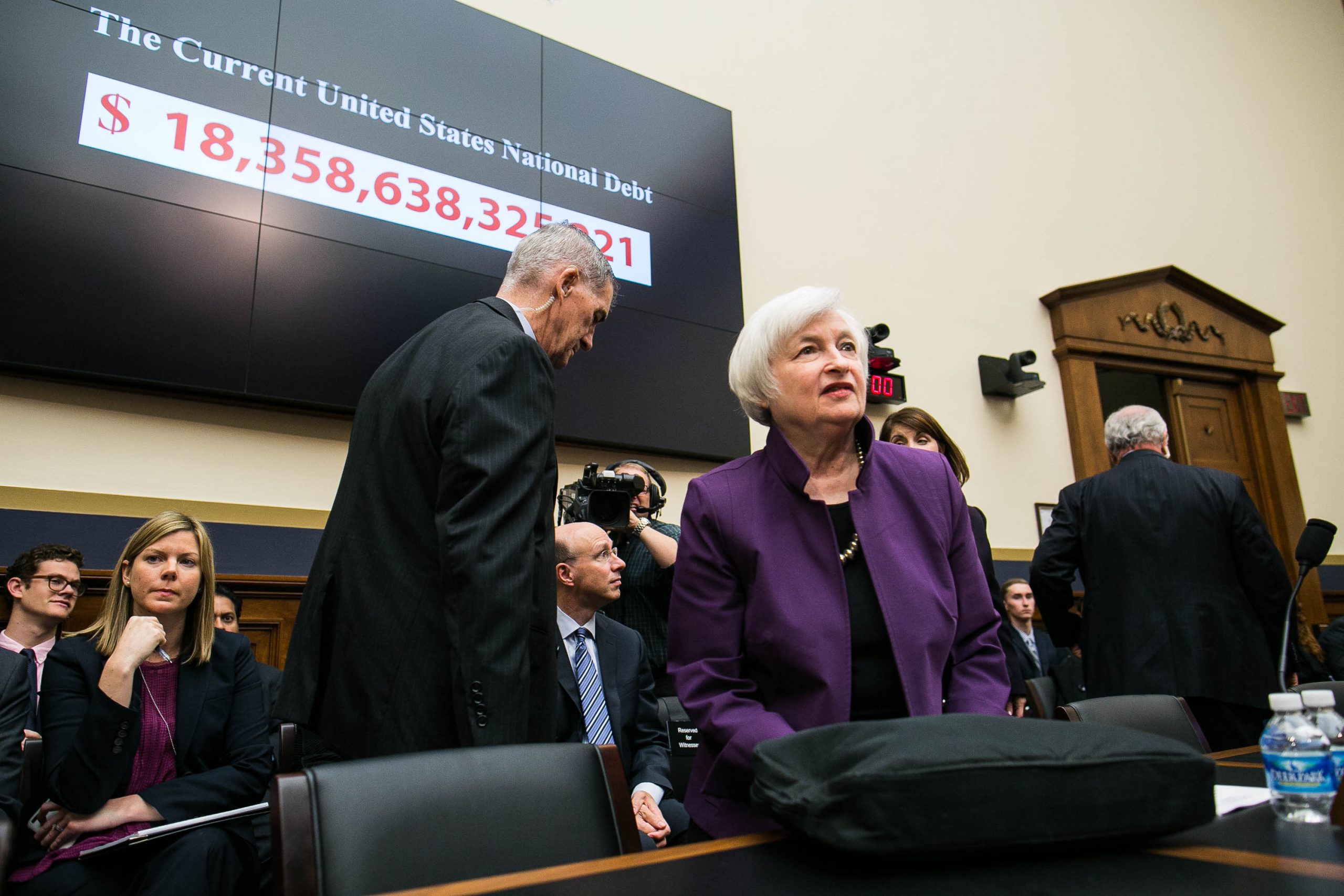
The House defied a White House veto threat Thursday and passed legislation to substantially change the workings of the Federal Reserve, in the latest sign of Republican unrest with the central bank.
The lower chamber voted 241-185 to pass the Fed Oversight Reform and Modernization Act, a measure introduced by Rep. Bill Huizenga, R-Mich., and moved by the Financial Services Committee.
Recommended Stories



“If the Federal Reserve explained to the public how it made its decisions, the American people would have greater confidence in them,” House Speaker Paul Ryan said about the bill’s passage. “Families could better plan for the future, invest their money wisely and create opportunity for all of us.”
The most contentious element of the bill is that it would require the Fed’s monetary policy committee to commit to a rule relating its decisions to factors such as inflation and unemployment, and to testify before Congress and face a Government Accountability Office audit if it strayed from that rule. Republicans said such a policy was necessary to make the Fed more predictable.
Yet Fed Chairwoman Janet Yellen warned Congress this week that such a measure would rob the Fed of its ability to respond to unusual circumstances such as the financial crisis and said that it would “severely damage” the economy.
Huizenga said in a statement provided to the Examiner that the legislation “provides the Fed with the flexibility necessary to conduct monetary policy but holds the Fed accountable by requiring it to communicate its policy to Congress and the American people.”
The bill also contains other significant measures, including a requirement that the Fed perform cost-benefit analyses on significant new regulations, limitations on the Fed’s bailout powers, and a reorganization of the structure of the Fed’s monetary policy committee.
Its passage is the latest episode in an adversarial relationship between Yellen and congressional Republicans, which in turn is a reflection of conservative dissatisfaction with the Fed’s unprecedented efforts over the past seven years to stimulate the economy. Conservatives also object to the expansion of the central bank’s regulatory powers in the wake of the financial crisis.
Yet the measure is unlikely to become law. In addition to facing a presidential veto, the measures in the bill likely would lack support in the Senate, where Democrats have the ability to filibuster legislation.
Senate Banking Committee Chairman Richard Shelby, however, has been critical of the Fed and included similar reform measures in a legislative package that he hopes to move in some form.
The FORM Act passed on a mostly partisan basis, with only two Democrats voting in favor.
Five Republicans voted against passage, including four from New York: Peter King, Dan Donovan, Chris Gibson and Elise Stefanik. Scott Rigell of Virginia also voted no.
