

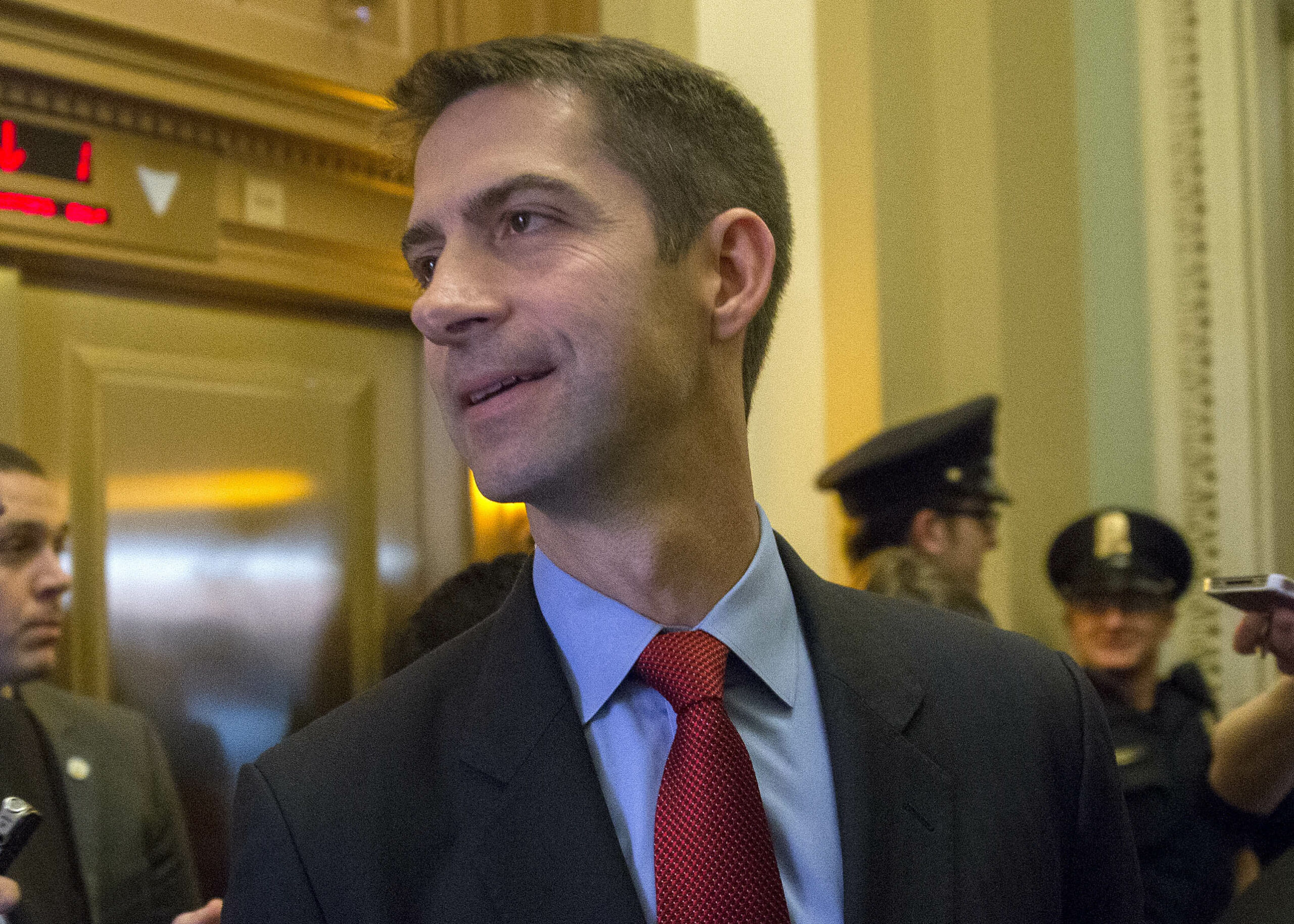
As Secretary of State John Kerry heads back to Switzerland this weekend for talks with Iran on a potential nuclear deal whose outlines the administration won’t share with an increasingly skeptical Congress, the White House and its Democratic allies on Capitol Hill are engaged in a very public disagreement with lawmakers on the issue.
Recommended Stories


The latest exchange came in response to an open letter to Iran’s leaders made public Monday that was signed by 47 Republican senators. In it, the senators reminded Iran’s supreme leader, Ayatollah Ali Khamenei, and other leaders that any deal not approved by Congress may not outlast President Obama’s term in office, which expires Jan. 20, 2017.
“We will consider any agreement regarding your nuclear-weapons program that is not approved by the Congress as nothing more than an executive agreement between President Obama and Ayatollah Khamenei. The next president could revoke such an executive agreement with the stroke of a pen and future Congresses could modify the terms of the agreement at any time,” said the letter circulated by Sen. Tom Cotton, R-Ark., an opponent of any deal with Iran.
Obama accused the Republican senators of “wanting to make common cause with the hardliners in Iran,”and Senate Minority Leader Harry Reid, D-Nev., said they were using”juvenile political tactics” to try to undermine the administration’s efforts to secure a deal.
“This is a highly inappropriate and unprecedented incursion into the president’s prerogative to conduct foreign affairs and is not befitting this chamber. This letter only serves one purpose — to destroy an ongoing negotiation to reach a diplomatic agreement in its closing days.” said Sen. Dianne Feinstein of California, ranking Democrat on the Intelligence Committee.
Senate Democratic Whip Dick Durbin, D-Ill., called the letter a “political stunt” a characterization echoed byIranian Foreign Minister Mohammad Javad Zarif, who dismissed it as “a propaganda ploy” with no legal value.
“I should bring one important point to the attention of the authors and that is, the world is not the United States, and the conduct of inter-state relations is governed by international law, and not by U.S. domestic law,” Zarif said.
“The authors may not fully understand that in international law, governments represent the entirety of their respective states, are responsible for the conduct of foreign affairs, are required to fulfill the obligations they undertake with other states and may not invoke their internal law as justification for failure to perform their international obligations.”
Congressional mistrust in the president’s negotiating strategy is a potential obstacle in the talks, which resume Sunday in Lausanne, Switzerland, between Iran and the “P5+1” group — the United States, Britain, France, Germany, Russia and China. They are racing to meet a self-imposed March 24 deadline for a political framework of a final deal, and one of the major sticking points is how much — and when — Iran will get relief from international sanctions which have hobbled its economy.
But the complaints by the administration and its allies that the letter might undermine the talks at a delicate point belie the fact that the White House has done little, if anything, to ease lawmakers’ concerns and build political support in Congress for a deal. Instead, administration officials have stonewalled Congress and expect recalcitrant lawmakers to put aside their doubts until after negotiators have reached agreement.
“I think what we’re going to focus on right now is actually seeing whether we can get a deal or not. And once we do — if we do — then we’ll be able to make the case to the American people, and I’m confident we’ll be able to implement it,” Obama said Monday.
The administration reportedly plans to use executive orders, national security waivers and other tools to bypass the need to ask Congress to give Tehran relief from U.S. sanctions, which are enacted into law.But both Democratic and Republican lawmakers support legislation to require congressional approval of any deal, and also tough new sanctions that would kick in if the July 1 deadline for a final deal is not met.
Even before Israeli Prime Minister Benjamin Netanyahu’s controversial speech March 3 in which he lobbied against a deal before a joint meeting of both chambers, “there was already substantial degree of anxiety and disquiet on the Hill about this issue and that’s not limited to Republicans,” said Ray Takeyh, a senior fellow at the Council on Foreign Relations.
Among the Republican senators who signed the letter are Majority Leader Mitch McConnell, R-Ky., and Richard Shelby, R-Ala., chairman of the Banking, Housing and Urban Affairs Committee, which has jurisdiction over any new sanctions legislation.
Foreign Relations Committee Chairman Sen. Bob Corker, R-Tenn., chief sponsor of legislation that would require congressional approval of any deal, did not sign the letter.
“As chairman of the Senate Foreign Relations Committee, Senator Corker’s focus is on getting a veto-proof majority to support his bipartisan bill for congressional review of any comprehensive nuclear agreement with Iran,” a Corker aide told the Washington Examiner.
