

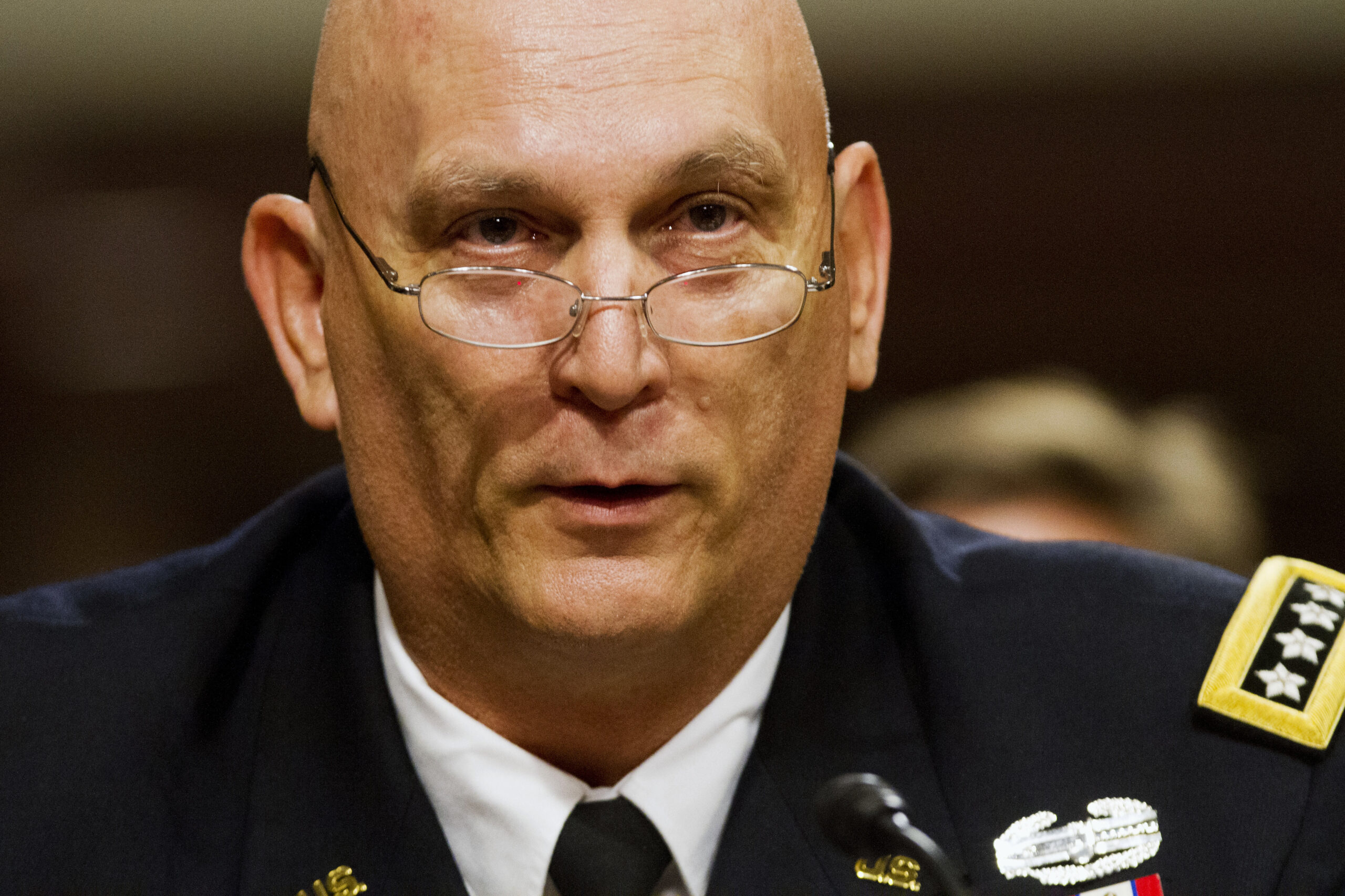
Army leaders called Monday for a renewed look at plans to cut troop levels and spending amid new crises that might require deployments of ground troops, especially Russian assertiveness in Eastern Europe and the surprise rise of the Islamic State of Iraq and Syria.
“We have to have a national security debate,” Army Chief of Staff Gen. Raymond Odierno said at the Association of the U.S. Army annual conference in Washington.
Recommended Stories



Odierno cited the Islamic State and Russian territorial grabs in Ukraine as among a number of crises that have caused him to rethink whether the smaller force he recommended just two years ago would be enough. He and Army Secretary John McHugh also highlighted the urgency of releasing the Army from the strict sequestration requirements imposed by the Budget Control Act of 2011.
President Obama’s fiscal 2015 budget would shrink the Army to 490,000 soldiers, and that number could drop to 420,000 by 2019 if sequestration remains law, based on Pentagon budget projections.
That would lead to the smallest Army since the pre-World War II draft was instituted in October 1940.
Odierno told lawmakers in 2012 that 490,000 soldiers would be adequate for U.S. national security needs when he testified in support of Obama’s new national defense strategy, which presumed the U.S. would no longer need to be concerned about fighting large ground wars.
“The problem is since we made those statements, the world is changing in front of us,” Odierno said Monday.
Over the past few years, the Army has been most affected by Pentagon budget cuts that one independent analysis expects will lead to a $200 billion to $300 billion shortfall over the next five years between the Defense Department’s budget and what it would be asked to do.
“I don’t think there’s any question the vast, vast majority of members on both sides of the aisle, in both houses, understand the challenges of this lack of predictability,” said McHugh, a former Republican House member from New York.
“The problem is collectively. We can’t get them to make a decision,” Odierno added.
