

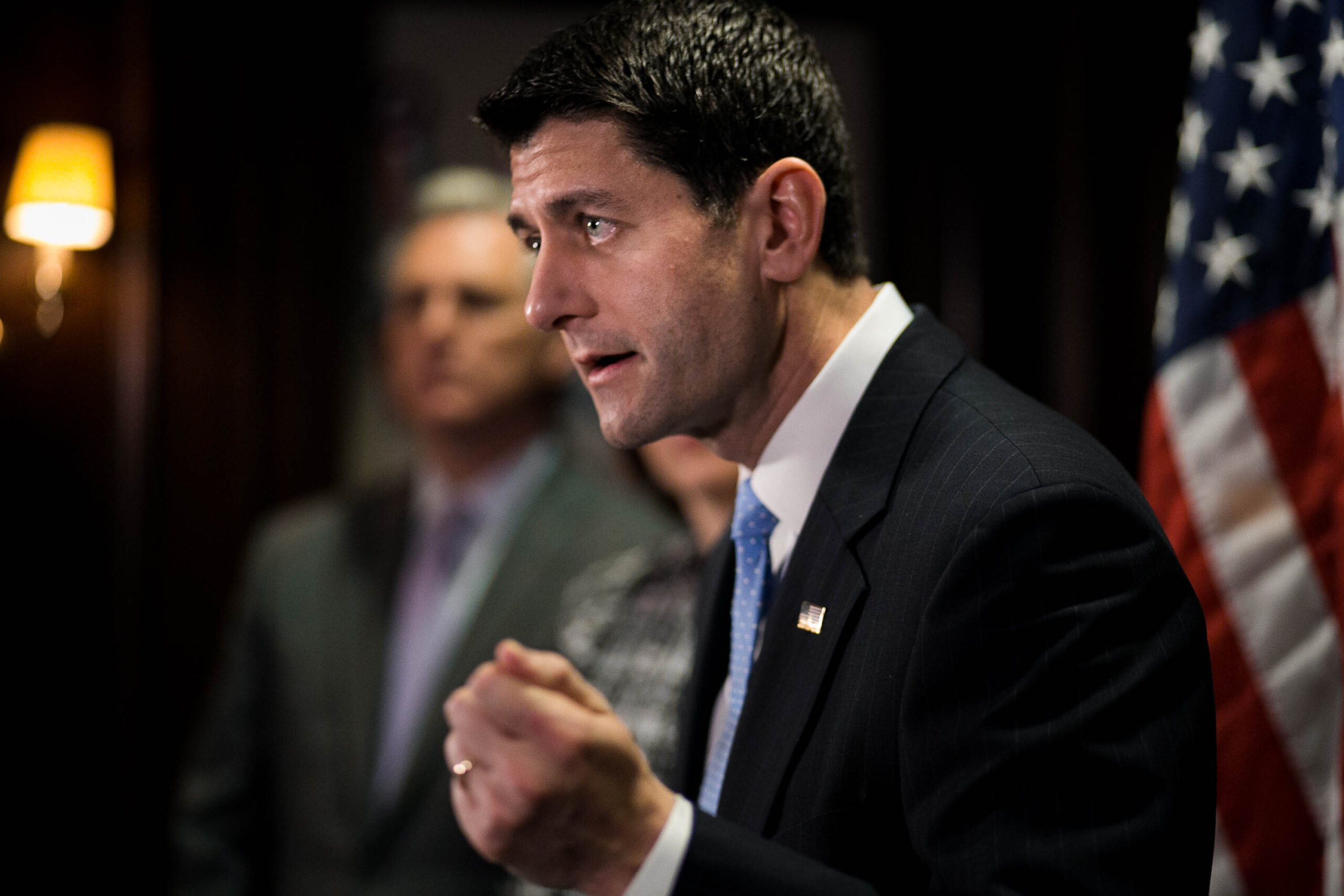
A group of conservative lawmakers is already pushing House Speaker Paul Ryan to abandon the two year budget deal that was reached just months ago, and seek spending cuts that conservative members favor in order to shrink the government.
Rep. Mick Mulvaney, R-S.C., suggested at Heritage Action’s Conservative Policy Summit on Wednesday that Ryan, R-Wis., isn’t yet doing enough to change the political culture in Congress. Mulvaney noted that the recent budget deal, reached just before Ryan became speaker, locked in higher spending for both domestic programs and defense.
Recommended Stories


“We’ll give them our spending so we can have our spending; until we change that game, then the overall environment of the place is not going to change,” Mulvaney said.
Many Freedom Caucus members, in addition to the conservatives on the House Budget Committee, want Ryan and the House Republican majority to repudiate that budget deal, which allowed for $50 billion more in spending in the current fiscal year, and another $30 billion in fiscal 2017.
The move would be opposed by national security hawks in the Republican party, in both houses of Congress, as well as President Obama and Senate Democrats, who would likely say the cuts go too deep. But Mulvaney said Ryan has to be careful not to allow the status quo to remain in place, as his predecessor did, House Speaker John Boehner.
“One of the reasons that Mr. Boehner had to leave is he failed to defend the House as a co-equal branch of government,” Mulvaney said. “And, I do hope that the new leadership team we have in place does start defending the House against the Senate. We should pass our own budget out of our own committee; we should pass it off the floor and send it to the Senate, let them do their work, and push them in that way.”
That would likely end an agreement that Senate Minority Leader Harry Reid, D-Nev., made not to filibuster debate on House-passed spending bills.
Mulvaney also suggested that Ryan might be forced to pass another omnibus bill if he doesn’t adopt the House Freedom Caucus strategy, either because of Republican defections or if Democrats break their word. And Mulvaney implied that could be a politically dangerous scenario for Ryan.
“I hope that Paul, Speaker Ryan, considers this way out,” Mulvaney said. “If we don’t do something dramatically different we’re going to end up with the same result. We’re going to end up passing an omnibus or a [continuing resolution] at the end of the year with a small number of Republicans and a large number of Democrats, which is not good for anybody, most specifically Mr. Ryan.”
Earlier at the same event, Ryan urged Republicans not to revolt, and said conservatives shouldn’t pressure GOP leaders to do things they can’t do with Obama in the White House, since that only helps to split Republicans.
Under questioning from The Weekly Standard’s Fred Barnes, the rank-and-file Republicans maintained they were being portrayed unfairly, and also suggested that “realistic” politicians lose elections.
“I understand what Paul is saying or trying to say, but let’s look at the reality: you have the Republican party, on the one hand, is saying be realistic, which I think we should be, but don’t engage in fights that you can’t win,” said another Freedom Caucus panelist, Rep. Raul Labrador, R-Idaho. “The Democratic party, on the other hand, is telling their voters ‘we’re going to do the things you want us to do’ . . . You want to lose? Then become ‘realistic’ and not aspirational about the things we can accomplish and we’re willing to do together.”
At the same time, however, Mulvaney, Labrador and the other lawmakers on the panel, Reps. Jim Jordan, R-Ohio, and Mark Meadows, R-N.C., echoed some of Ryan’s themes.
They agreed, for example, that Republicans need to be “aspirational,” and even praised the agenda items that Ryan touted this morning. “We agree 100 percent with Paul on the agenda,” Labrador said.
