

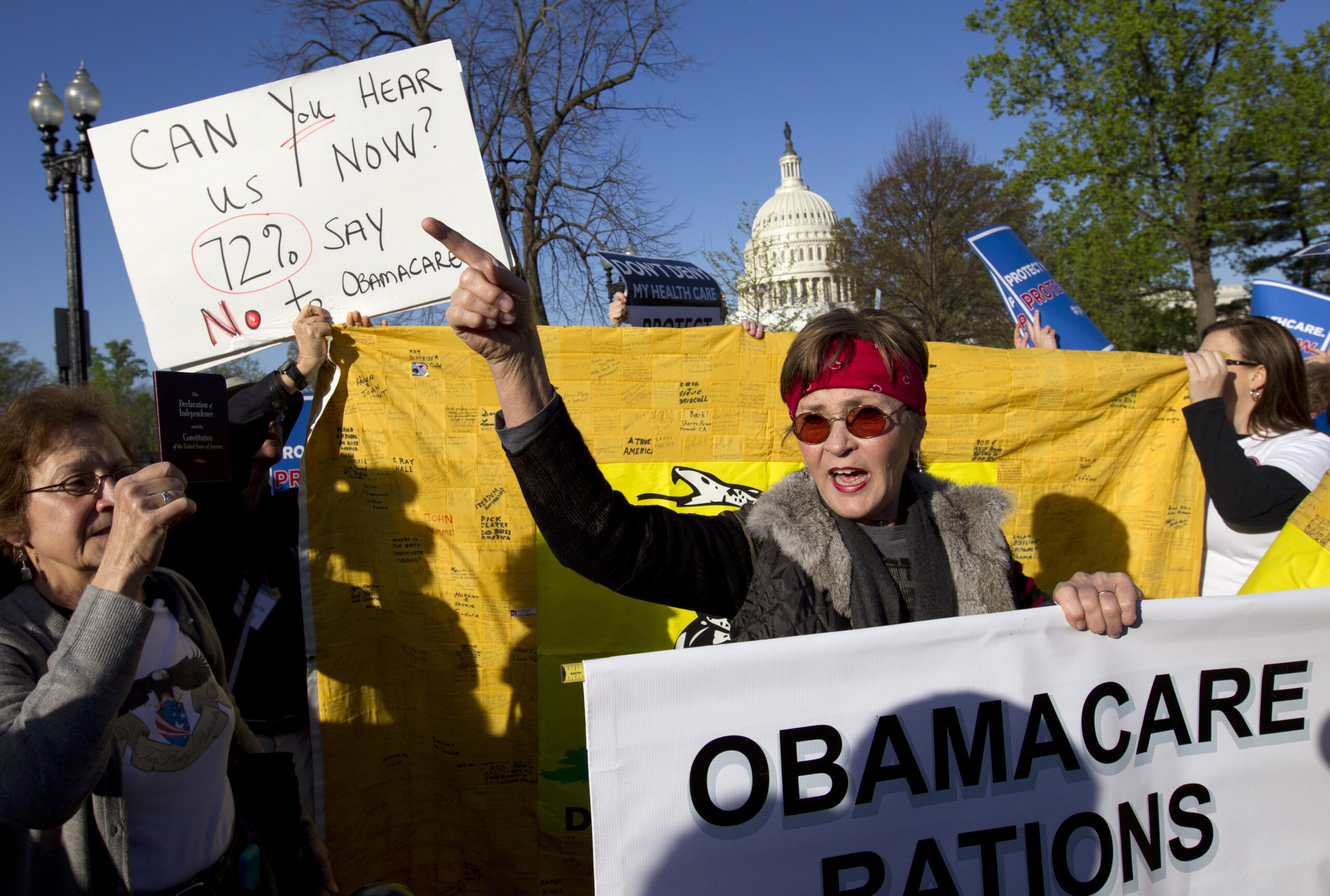
On the eve of the third Obamacare enrollment season, the public is evenly split over the healthcare law, but says it’s more concerned about the cost of healthcare overall.
Forty-two percent of respondents to a Kaiser Family Foundation poll released Wednesday said they have a favorable impression of the Affordable Care Act, while an equal percentage reported an unfavorable impression. That’s an improvement for the law from right before the last two enrollment seasons, when unfavorable impressions trumped favorable ones by about 5-6 percentage points.
Recommended Stories



And while there’s still a deep partisan divide over Obamacare, with more Republicans saying they would like to ditch the law and more Democrats saying they would like it retained, more poll respondents are basing their views on personal experience with the law’s provisions.
During the first enrollment season, 23 percent of respondents said their opinion of the law was based on personal experience rather than what they heard in the media. That’s now up to 35 percent, a few years after the law’s major provisions were put in place.
Regardless of how they feel about Obamacare, cost remains a top concern for Americans.
Despite the law’s subsidies for the low-income, healthcare tops the list of regular expenses that they find unaffordable. More than half of families (56 percent) with insurance and with a household income less than $40,000 said it is still difficult to afford healthcare. Forty-one percent of insured, moderate-income families earning between $40,000-$90,000 said it’s difficult to afford care.
Large majorities of people are deeply concerned about the skyrocketing cost of drugs used to treat conditions such as HIV, mental illness, hepatitis and cancer. When presented with a list of top healthcare priorities for Congress and the president, respondents to the Kaiser poll said ensuring drugs are affordable to those who need them and government action to bring the costs down are most important.
The debate over high-cost prescription drugs are likely to play an increasing role in the presidential debate. Both leading Democratic candidates, Hillary Clinton and Sen. Bernie Sanders, have presented plans to bring costs down, and last week, Sen. Marco Rubio blamed pharmaceutical companies for engaging in “pure profiteering” and the government for creating unnecessary red tape to get drugs approved.
The Kaiser poll was conducted from Oct. 14-20 by telephone among 1,203 adults.
