

Senate Democrats on Wednesday dodged a Republican filibuster and pushed through a bill that would extend the Bush-era tax breaks to families earning less than $250,000 a year.
It’s the first time the measure passed the Senate despite repeated attempts, and it squeaked by only because Republicans agreed to allow the bill to advance with a simple majority of votes rather than the 60-vote super-majority it otherwise would have needed.
Stay informed.Stay ahead.
Join Washington Examiner for unlimited access to the news, analysis, and commentary that matter most.
Already a member? Log in
In exchange for allowing that vote, Republicans were permitted a vote on their own proposal, which would extend the tax cuts for all income levels, including families earning more than $250,000 and individuals earning above $200,000, the cutoff in the Democratic plan.
There was little or no chance of the Republican measure passing in a Senate controlled by Democrats. But the GOP hoped to use the two votes to put political pressure on Democratic senators running in swing states and to highlight that the Democratic Party itself is divided over the plan to extend the tax cuts.
The Republican measure failed 54-45, with Republican Sen. Scott Brown, of Massachusetts, voting against it. The Democratic bill passed by 51-48 with Sens. Joe Lieberman, I-Conn., and Jim Webb, D-Va. joining Republicans in opposing it.
Democrats used the debate to underscore their election-year claims that they are fighting for the middle class, while Republicans favor only the wealthy.
“The question is, who are you fighting for?” Sen. Barbara Boxer, D-Ca., said, during the debate. “Are you fighting for the people who make a billion dollars a year? That is who the Republicans are fighting for. Or are you fighting for the middle class, the heart and soul of America?”
Republicans argued the Democratic plan would raise taxes on nearly 1 million small businesses, undermining their ability to create jobs and further weakening the nation’s economy.
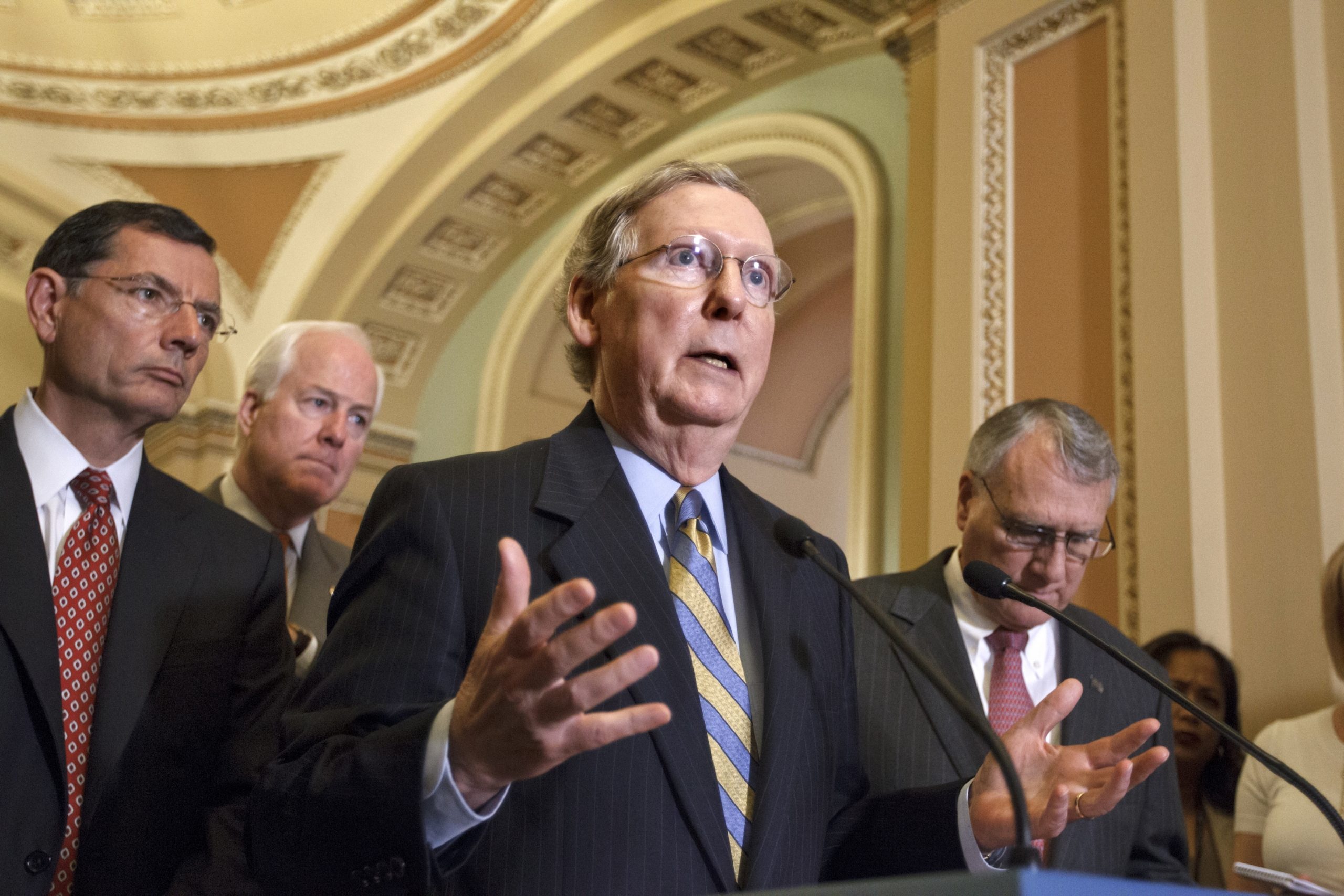
Senate Minority Leader Mitch McConnell, R-Ky., said Democrats should agree to extend tax cuts for all taxpayers, as they did in December 2010, before they expire at year’s end.
“The economic situation remains largely the same,” McConnell said. “The worst thing we can do in the middle of this economic situation is to pass this tax increase.”
Democrats intend to send their bill to the Republican-led House, but it’s unlikely House Speaker John Boehner, R-Ohio, will take it up. Instead, Boehner is expected to offer a bill similar to the one offered by Senate Republicans.
Democrats wasted no time putting political pressure on House Republicans.
“With [the] Senate’s successful vote, House Republicans are now the only thing standing [between the] middle class and a tax cut bill that [President] Obama would sign,” House Minority Leader Nancy Pelosi, D-Calif., said in a message posted on Twitter.
Both parties acknowledged Wednesday that a final resolution to the tax cut extensions probably won’t come until after voters in November determine who will be running the House, Senate and White House next year.
“It’s going to be more political posturing all the way up to the November election and in a lame duck session, we are going to get down to work,” Sen. Bill Nelson, D-Fla., said.
