
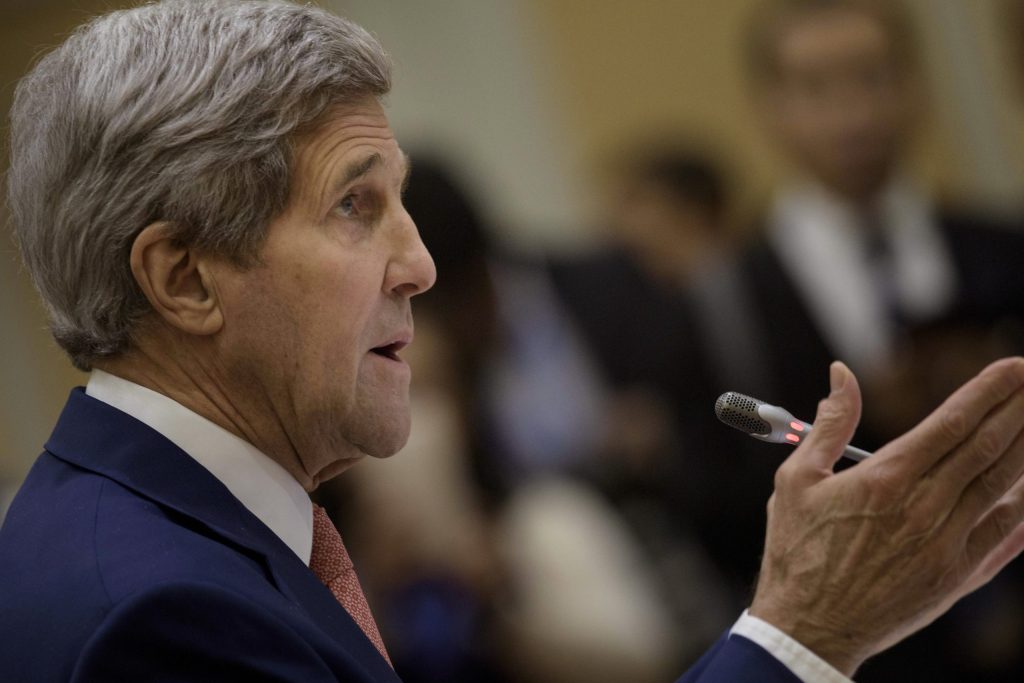
According to Secretary of State John Kerry, if Congress rejects the Iran nuclear deal, it will be the “ultimate screwing” of Iran’s supreme leader, Ayatollah Ali Khamenei.
“The ayatollah constantly believed that we are untrustworthy, that you can’t negotiate with us, that we will screw them. This will be the ultimate screwing,” Kerry said in an interview with The Atlantic. “Now the United States Congress will prove the ayatollah’s suspicion, and there’s no way he’s ever coming back [to the negotiating table].
Recommended Stories


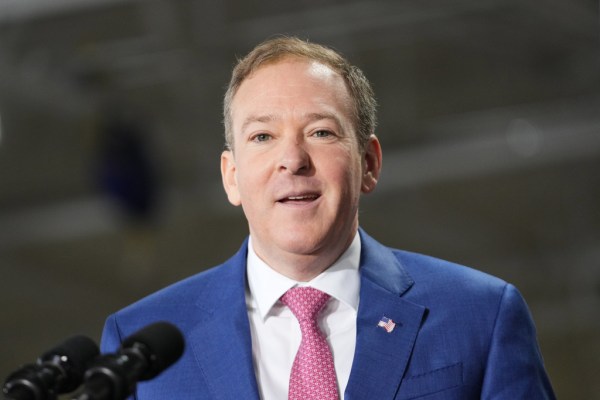
Kerry has been the lead negotiator for the Obama administration with Iran and the international community as whole in terms of a nuclear deal with Tehran. He, along with President Obama, have been working to bolster support among Congress for the deal, which lawmakers have the power to reject with enough votes.
“He will not come back to negotiate,” Kerry said about Khamenei if the U.S. rejects the deal. “Out of dignity, out of a suspicion that you can’t trust America. America is not going to negotiate in good faith. It didn’t negotiate in good faith now, would be his point.”
The deal has been met with mixed support on Capitol Hill. On Tuesday, Reps. Nita Lowey and Steve Israel, both Democrats of New York, and Ted Deutch, a Florida Democrat, announced their opposition to the Iran nuclear deal. Lowey is the senior Democrat on the House Appropriations Committee, while Deutch is the top Democrat on the House Middle East Subcommittee; all three are Jewish.
Israeli Prime Minister Benjamin Netanyahu also warned against the deal in a web address Tuesday, saying it could lead to “war.”
Kerry, like other top Obama administration officials, pushed back against this type of notion, saying Iran “will not be able to get a bomb” with the new limits on Tehran’s nuclear program under the deal.
Congress is in the middle of a 60-day period in which it can reject or approve the deal reached in mid-June between Iran, the U.S., the United Kingdom, Russia, China, Germany and France. The accord gives Iran sanctions relief in exchange for curbing its nuclear program.