

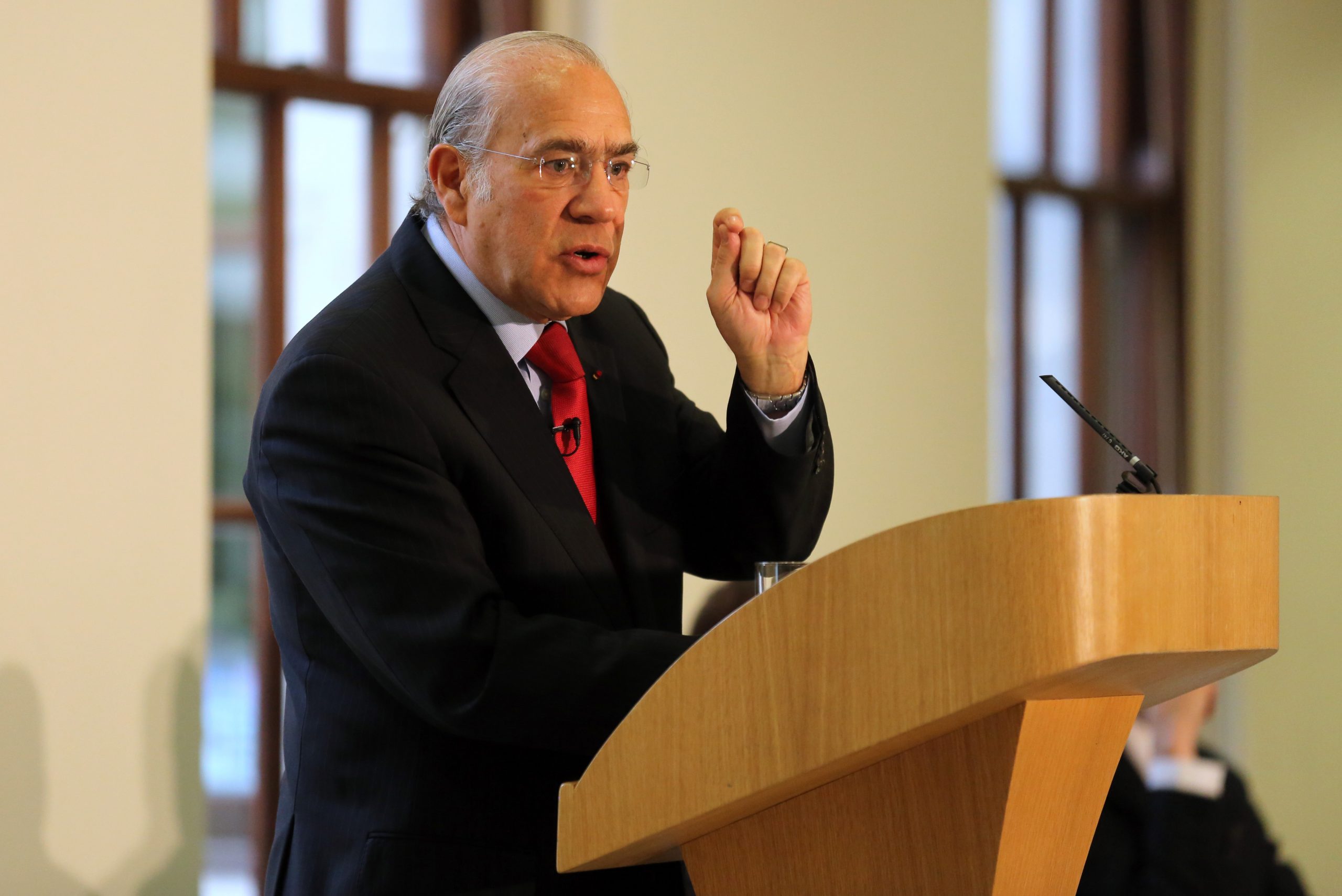
Multinational companies would face a wide-ranging set of rules meant to prevent them from shifting profits into overseas tax havens under new recommendations outlined by the Organization for Economic Cooperation and Development Monday.
The international organization of 34 countries announced 15 actions it recommended governments take to stop corporations from avoiding taxation, a course of action that the group’s secretary general Angel Gurria said was necessary as “a matter of trust.”
Recommended Stories



Shifting profits offshore “is depriving countries of precious resources to jump-start growth, tackle the effects of the global economic crisis and create more and better opportunities for all,” Gurria said in announcing the measures. “But beyond this, [tax avoidance] has been also eroding the trust of citizens in the fairness of tax systems worldwide.”
The recommended tax policies, some of which the U.S. Treasury could try to implement administratively without legislation, would likely be controversial.
Some of the recommendations, such as minimum standards for companies to report income earned in each country, already has met with skepticism from Rep. Paul Ryan and Sen. Orrin Hatch, the Republican chairmen of the tax-writing committees in the House and Senate.
The recommendations would aim to prevent companies from maneuvering to register as much income in low-tax jurisdictions through complicated legal and financial arrangements. The organization calls such tax planning “base erosion and profit shifting,” and estimates “conservatively” that it costs governments $100 billion to $240 billion in revenue annually, or 4 percent to 10 percent of corporate income taxes.
The group has been working for two years on recommendations to crack down on companies moving income into tax havens, and will present its recommendations to the G-20 group of finance ministers in Lima, Peru, this week.
Ryan, Hatch and other Republicans have outlined their disagreement with the overarching aim of the project. Rather than try to place new rules on companies, they argue, the government should overhaul its tax code to lower tax rates to make the U.S. an attractive tax jurisdiction for business.
That is also the preferred course of action for big businesses, which would rather see countries compete for their tax dollars rather than coordinate against their attempts to lower their tax bills.
Lisa Camooso Miller, a spokeswoman for the group American Innovation Matters that represents big businesses, said the recommendations should serve as a “fire alarm” for Congress.
“Act now on reforming America’s international tax system, or a significant amount of American earnings will soon go up in smoke as other countries begin levying their own taxes,” Miller warned in a statement on the recommendations.
The flight of corporate profits overseas and the looming prospect of the Organization for Economic Cooperation and Development proposals have served as an impetus for Congress to work on corporate tax reform to lower tax rates, eliminate loopholes and repatriate some of the roughly $2 trillion in profits U.S. multinationals have held overseas to avoid U.S. taxes.
Those reform efforts, however, have stalled in Congress over the year, raising the likelihood that the recommendations will be imposed, at least in part.
Those recommendations include tightening the rules on controlled foreign companies, to prevent parent companies from shifting “mobile income,” such as profits from intellectual property or technology that can easily be attributed to a given geographic location, into low-tax countries.
Other proposals would prevent companies from taking excessive tax deductions on interest payments on corporate debt, as well as “treaty shopping” to take advantage of tax treaties for countries to which the company doesn’t really belong.
The organization’s proposal also introduced curbs on the use of “innovation boxes,” or special tax breaks for profits from intellectual property that create single-digit tax rates in some countries. Under the OECD’s proposed rules, companies would qualify for innovation boxes based on how much money they spent in the country, as a proxy for the research and development that the innovation box is meant to encourage.
The rules also would regulate companies “transfer pricing,” or the prices that subsidiary companies in different jurisdictions can assign to revenue or assets transferred between each other.
