

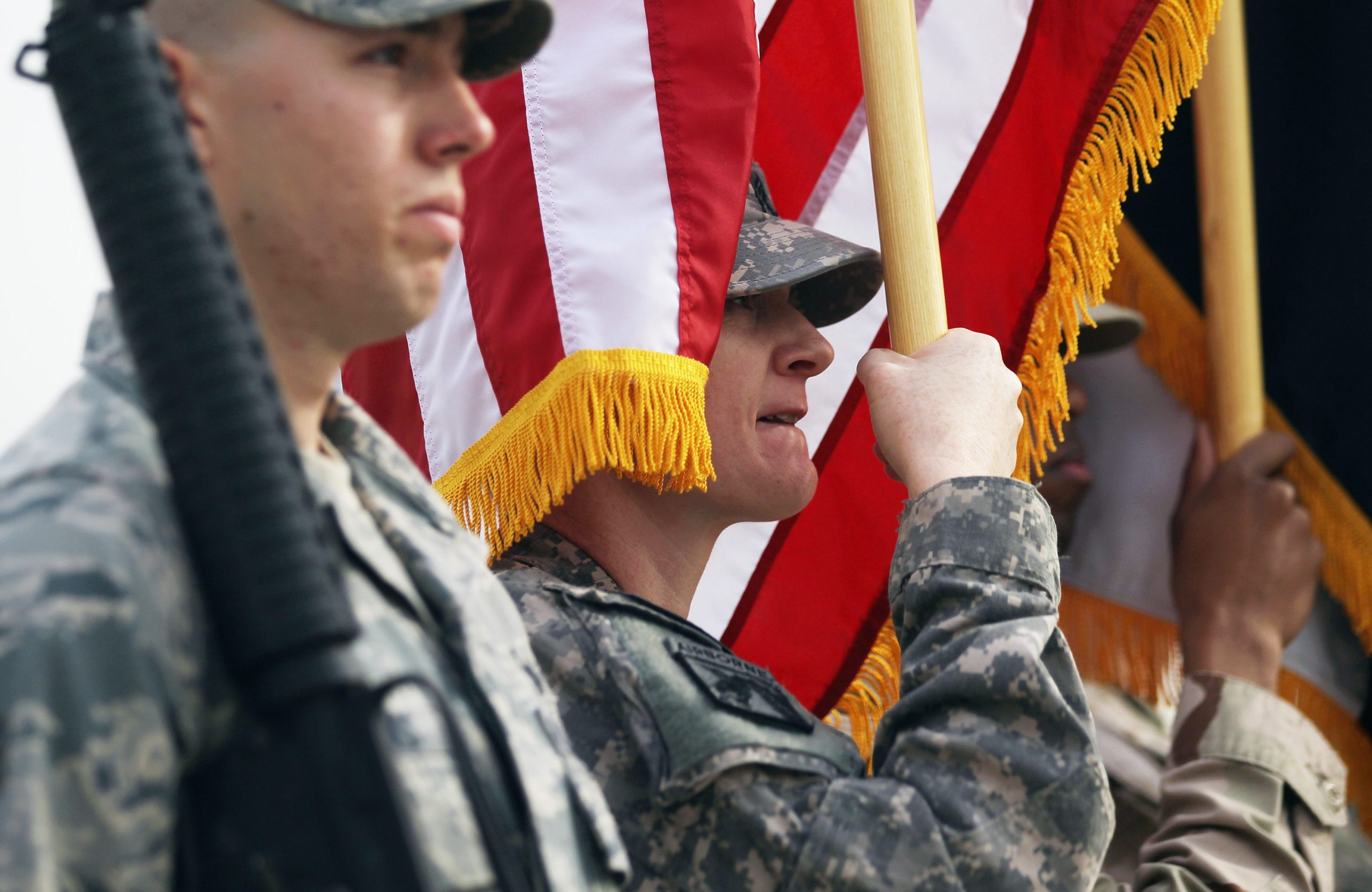
The debate over whether the Obama administration should put American troops on the ground to fight the Islamic State is intensifying just as Congress is expecting President Obama within days to authorize the use of military force to battle the terrorist group.
The decision of whether to insert U.S. troops into the fray has gripped Capitol Hill and U.S. allies. The discussion comes after the terrorist group released a video Tuesday of captured Jordanian pilot Lt. Muath al-Kaseasbeh being burned alive and claims that the Islamic State of Iraq and Syria has killed 26-year-old American aid worker Kayla Mueller, which U.S. officials have not verified.
Recommended Stories


Libertarian-minded GOP lawmakers and Democrats, who want to avoid more war spending and foreign entanglements, have pressed for options such as arming Iraqi and Kurdish fighters.
“You know, I don’t believe, right now, we need American boots on the ground, and the reason is we have boots on the ground already with the Kurds. The Peshmerga are trained, effective fighters. They are close allies of us,” Sen. Ted Cruz, R-Texas, said Sunday on ABC’s “This Week.”
United States military officials are assessing whether American soldiers are needed on the ground. Central Command officials worry Iraqi forces might not be able to overtake Islamic State strongholds in Mosul, Iraq’s second-largest city. The U.S. is a member of a 60-nation coalition that has since September conducted airstrikes against the Islamic State.
Secretary of State John Kerry said on NBC’s “Meet the Press” that the U.S. was “on the road” to defeating the Islamic State, but didn’t say whether ground troops would be part of the future strategy.
Hawkish Republicans who have long pressed Obama for more decisive, aggressive action to curb the Sunni terrorist group’s advances are calling for a U.S. ground presence. Sen. Lindsey Graham last week on CBS’s “Face the Nation” suggested the U.S. should send 10,000 U.S. troops to areas the Islamic State has carved out to impose caliphate.
“An aerial campaign will not destroy them,” Graham said, adding, “You’re going to need boots on the ground, not only in Iraq, but in Syria.”
The authorization for the use of military force will be a key flashpoint. The Obama administration has so far been using an existing authorization stemming from the Sept. 11, 2001, attacks to carry out the current combat mission, and is expected to soon propose a new one to deal specifically with the Islamic State.
It’s a politically fraught topic, Sen. Tim Kaine, D-Va., said Sunday on CNN’s “State of the Union.” Kaine said the White House wouldn’t endorse an authorization for military force before the 2014 elections and that Congress similarly punted with the midterm contest in the foreground.
Whether the authorization includes a call for troops or instead gives the president flexibility to decide strategy at a later date is uncertain. Those details will be key for Republicans, some of whom are loath to give Obama wider berth over handling the Islamic State while others might resist a return of ground troops to the region.
Democrats are being cautious about recommending ground troops. Many Democrats prefer sticking to airstrikes that have pounded Islamic State positions.
“They should be ground troops from the region and not U.S. ground troops,” Kaine said, adding, “We cannot police a region that cannot police itself.”
Kurdish officials contend the intensity and frequency of coalition airstrikes against the Islamic State have increased since the releasing the video of al-Kaseasbeh’s death. Much of that has come from Jordan’s anger over the video.
“The Arab states within this coalition are really providing important leadership in this regard,” John Allen, the special presidential envoy for the global coalition to counter the Islamic State, told ABC News this week.
But Arab allies don’t appear ready to enter the fray with ground troops, either.
“I think at this time no one is talking about boots on the ground,” said Mohammed al-Momani, a spokesman for the Jordanian government.
