

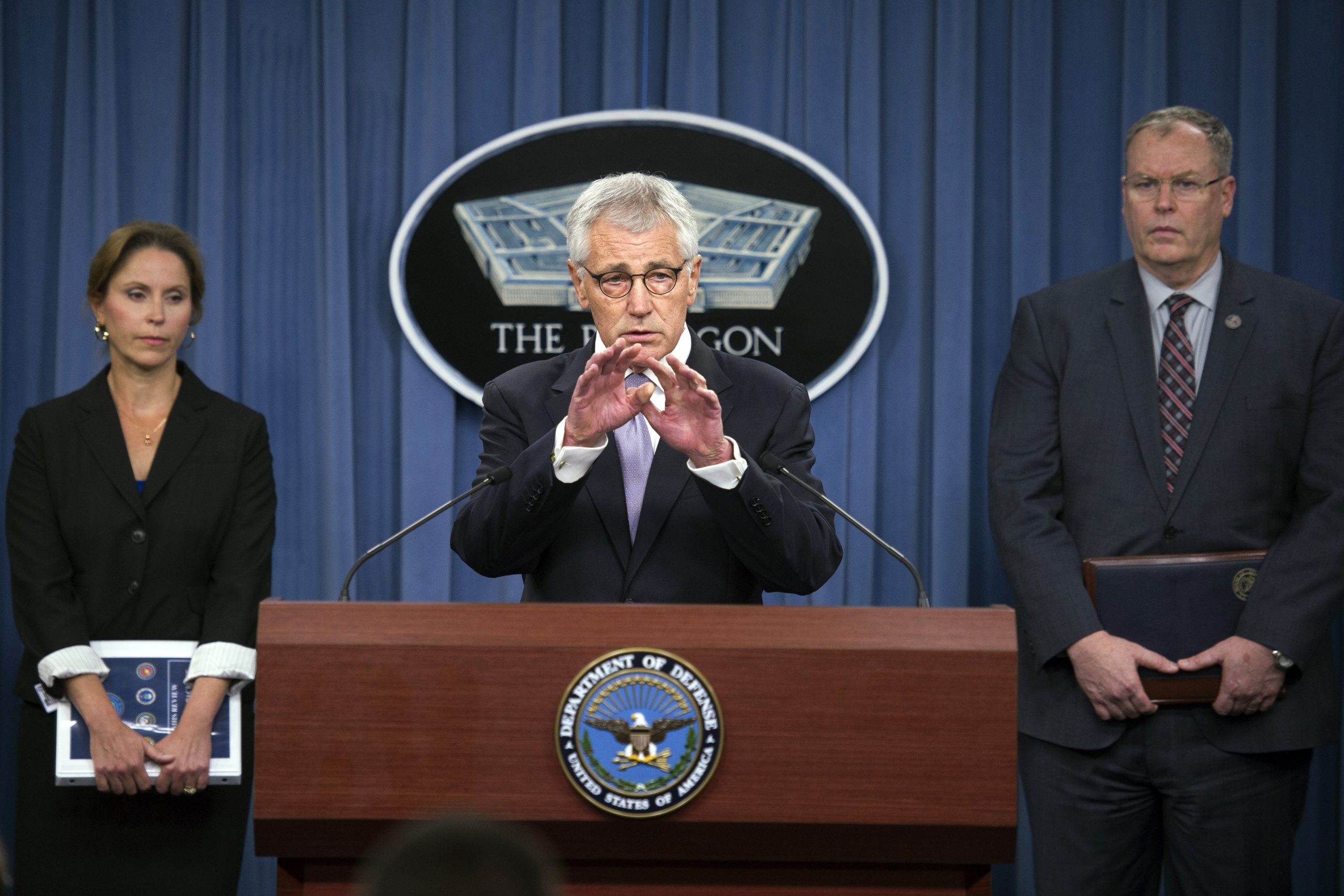
Defense Secretary Chuck Hagel on Wednesday ordered changes designed to boost military healthcare after a review found wide variations in the quality of care at the 56 hospitals and more than 600 clinics in the system.
Hagel ordered facilities identified as having problems to submit plans within 45 days on how those problems would be fixed and said the Pentagon would create unified standards for care and a systemwide process to manage performance. He also ordered that all currently available data on military healthcare be made public.
Recommended Stories


Though the 208-page review by a combination of Defense Department and outside experts found that military healthcare was generally comparable to average quality private care, Hagel noted that “we can do better.”
“We must hold the entire military health system to the same exacting standards that we demand of our combat missions,” he said. “So today, I’m directing the Department of Defense to take steps to ensure that the entire military health system is not merely an average system, but a leading system, because that’s what America’s troops and their families deserve.”
Hagel said he expects a detailed implementation plan by the end of the year for the changes recommended by the review panel.
“These steps are the beginning, not the end of our efforts to improve the military healthcare system,” he said.
Hagel ordered the review on May 28 amid reports of substandard care at military health facilities, particularly Womack Army Medical Center at Fort Bragg, N.C., where two patients in their 20s died unexpectedly earlier in the month. In the wake of the deaths, the Army relieved the hospital commander and suspended several of his subordinates.
The deaths came amid a scandal involving substandard care at medical facilities run by the Department of Veterans Affairs that heightened public concerns about how service members and their families were being treated. A subsequent New York Times investigation found “persistent lapses in protecting patients” in military health facilities.
The military health system serves 9.6 million beneficiaries, including active duty service members, retirees and eligible family members.
This article, originally posted at 2:07 p.m., has been updated.
