

Back in the ’80s, the film critic John Simon devised a classification system that neatly explains why Woody Allen’s comedies charm disparate audiences. “A highbrow moviegoer can laugh,” Simon wrote, “a middlebrow, empathize; a lowbrow, gape, awestruck.” Something similar could be said about the appeal of Dan Brown’s novels. The highbrow can chuckle condescendingly at their supposed erudition. The middlebrow can engage with them in earnest. And the lowbrow can simply marvel. There is something for everyone.
Brown has occupied a curious place in American letters ever since his thriller The Da Vinci Code was published in 2003. The novel was intended to provoke, and provoke it did. It follows Robert Langdon, a Harvard symbologist (not a real job), as he uncovers an ancient conspiracy within the Catholic Church to suppress knowledge of Jesus Christ’s marriage to Mary Magdalene and of his children with her. Brown prefaced the novel with a declaration that everything contained within was based in fact. When challenged, he stuck to his story, even as the preponderance of evidence piled up against him. And why not? Fact or not, The Da Vinci Code was a global sensation. By 2016, the book had moved more than 80 million copies and had become one of the bestselling novels in American history.
Recommended Stories


The book touched a nerve. In 2003, the United States was going through a minor religious revival. George W. Bush was president — and a very popular one — and the terrorist attacks of Sept. 11, 2001, had filled the nation with a pervasive sense of moral righteousness that had not yet been deflated by the debacle of the Iraq War and the Great Recession. Brown’s novel made a mockery of those attitudes. And his inflammatory alternative to the Greatest Story Ever Told proved impossible to ignore. It helped him that the organization at the heart of The Da Vinci Code’s conspiracy, Opus Dei, is a real Catholic group, some of whose members hold positions of power within the church, as well as in academia, the banks, and world governments. (Opus Dei doesn’t, however, possess any untold secrets about Jesus.) It didn’t take long for what was already a print sensation to become a hot topic on the internet, then a new technology, where the fictional conspiracy was often treated as documentary fact.
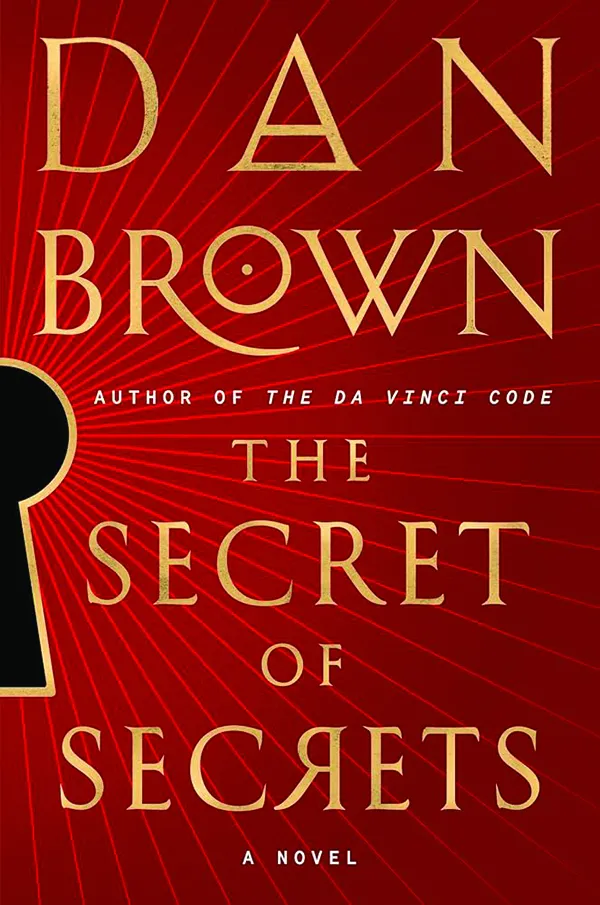
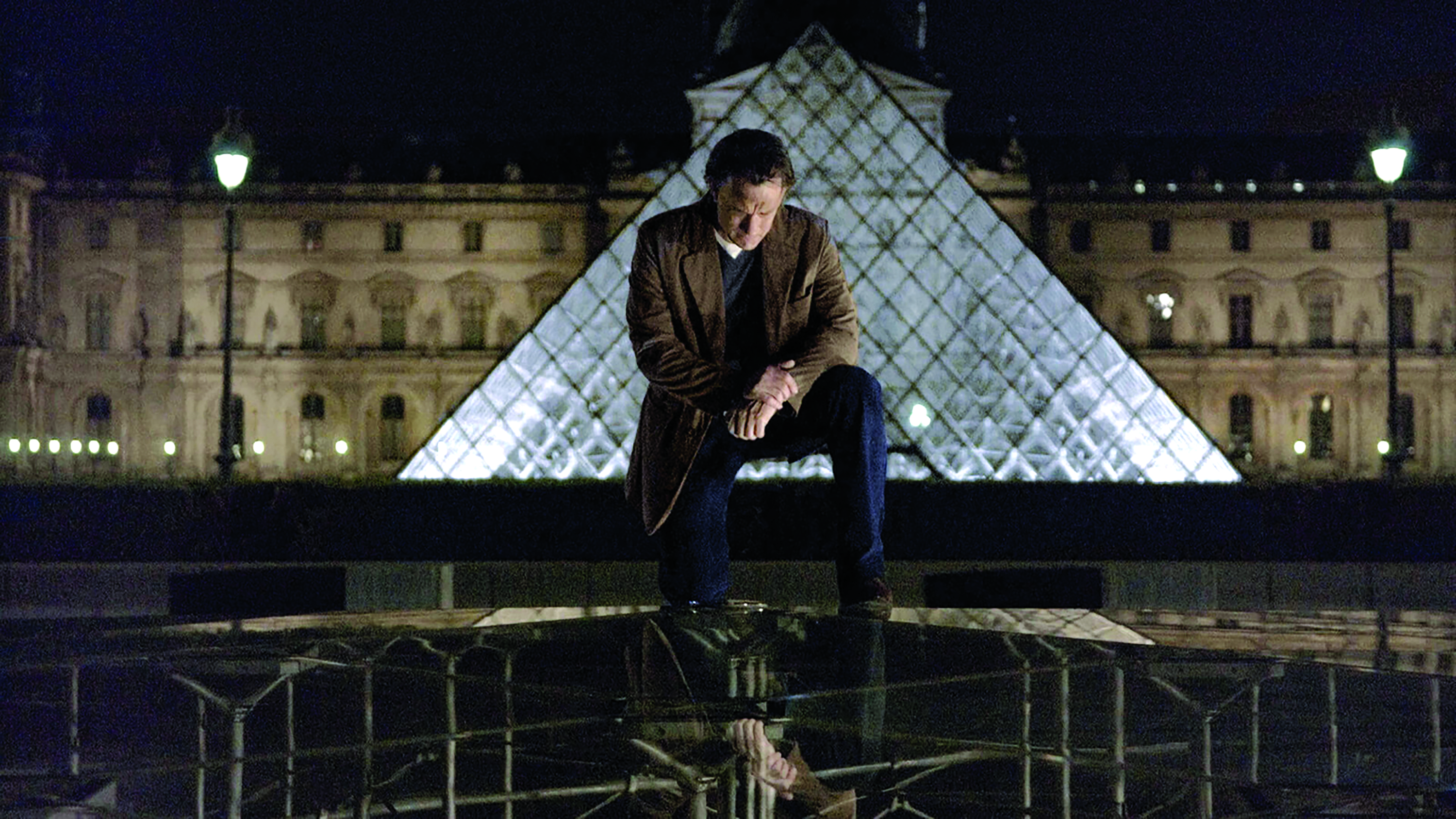
The Da Vinci Code earned Brown lasting notoriety. Robert Langdon is by now an institution, the subject of six novels and three film adaptations starring Tom Hanks. The latest of the novels, The Secret of Secrets, was published this month to the usual fanfare: wall-to-wall newspaper advertising in all the major dailies, massive pyramidal displays in Barnes & Noble, and floor-to-ceiling banners in airport concourses. The initial print run exceeded 1 million copies, and Brown’s publisher, Doubleday, withheld advance copies from reviewers — better to keep the secret safe.
But for all that, there is nothing too remarkable about The Secret of Secrets. It follows Brown’s familiar formula just as closely as every other Langdon novel. This time, the “affable, humble, and razor-sharp” Harvard symbologist finds himself in Prague, embroiled in a mystery involving a noetic scientist (which is a real job), the CIA, and a mysterious being known only as The Golěm. Over the course of one day, Langdon rushes around the city — in a manner reminiscent of his debut, Angels and Demons, which was published before The Da Vinci Code — decoding signs and dazzling his interlocutors with ad hoc disquisitions on art, history, and religion. The novel is nominally about the nature of human consciousness. In reality, it is, as with the rest of the Langdon series, a vehicle for taking the reader from the title page to the acknowledgements, padded out with a miscellany of references ripped from newspaper headlines, pop history books, and Wikipedia, haphazardly strung together by one of the worst prose stylists working today.
Perhaps this is unfair. It is almost too easy to mock Brown. His plots are absurd, his knowledge facile, and his writing laughably bad. But the fact remains: I picked up The Secret of Secrets at 10:00 on a Tuesday night and by the time I reached its end, it was 3:00 on Wednesday morning. And I was still wide awake. For all of his faults, Brown can write a true page-turner. That is a skill — and not one to be laughed at.
Brown’s methods are simple but highly effective. He works with large casts and keeps multiple storylines running at once, frequently switching from one narrative to another and withholding information just when it seems most necessary. He knows exactly when the lines should converge and when to deliver a hit of adrenaline via a plot twist. He is a puzzle maker, and he is so good at putting the pieces together that you almost forget that the picture he is constructing is an ugly mess. You get used to his garbled descriptions (“the meager foyer of his domicile”). You overlook his cumbersome exposition (“Mysterious Jewish writer Franz Kafka was born and worked here, penning his darkly surreal The Metamorphosis”). You cease even to wince at Langdon’s redundant internal monologue (“I am alone on Charles Bridge” when he is alone on Charles Bridge) and gratuitous references to a certain college in Cambridge (“Langdon donned his faculty-issue Harvard sweatpants”). Brown moves too quickly for these infelicities to really matter. And by the time he has fit in the last piece of the puzzle, you are pleased that it is finished.
The Secret of Secrets will sell respectably. But it won’t top The Da Vinci Code. Nothing will. (We’re talking about a novel that sold better than every individual Harry Potter book.) Brown, like every brand-name author beset by a shrinking public appetite for novels, has been on a downward slide since the late Aughts. His Lost Symbol (2009) may have sold 30 million copies, but Inferno (2013) only cleared 6 million, and Origin (2017) did not even crack 2 million. That’s still a lot of books — more than most other authors could ever hope to sell — but the decline must be frustrating all the same.
REVIEW OF ‘MIDNIGHT ON THE POTOMAC’ BY SCOTT ELLSWORTH
In any case, the way Brown writes about the publishing industry indicates that he is anxious about the future of his work. A significant subplot in The Secret of Secrets involves late-night intrigue at Random House Tower, involving an editor at Penguin and some rogue CIA agents. At one point, the editor, Jonas Faukman, whose name is a rather lazy anagram of Brown’s own editor’s name, Jason Kaufman, bemoans the “coming literary apocalypse” brought on by ChatGPT. “An existential threat to the noble craft of writing!” he exclaims. Not long after, Brown interjects with his own observation: “PRH was already receiving submissions that clearly had been written by robots, but they were getting alarmingly harder and harder to spot.”
But Brown need not worry too much about AI replacing him. His writing is so idiosyncratically awful that it could only have been produced by a human mind. And that is its charm. Besides, Robert Langdon is so much bigger than his author. For, as Brown told Le Monde in a recent interview, he is not so much Langdon’s creator as he is his disciple. “He’s a little smarter than I am,” he admitted. “He’s the man I wish I could be.”
Nic Rowan is managing editor of The Lamp.
