
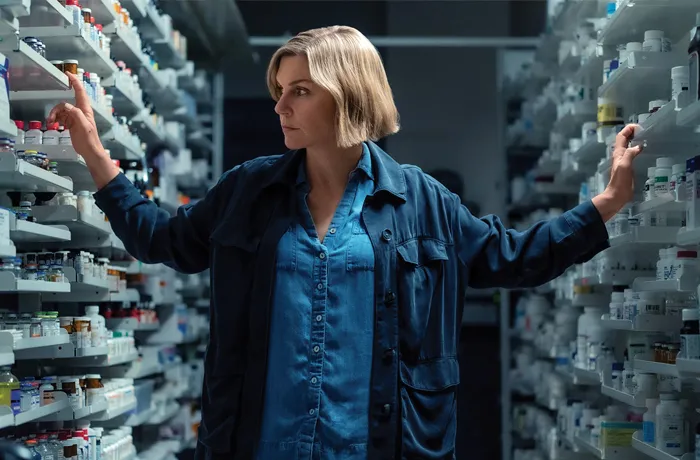
Vince Gilligan is the master of the slow burn. Rewatching the showrunner’s debut now, one is startled to find that Breaking Bad (2008-2013) is rather dull until episode six, when chemist-turned-meth-kingpin Walter White nearly blows up a rival with a clump of fulminated mercury. Better Call Saul (2015-2022), in retrospect an even finer series, spends at least a season clearing its throat. That both shows are masterpieces by the end is hardly worth debating: Gilligan could lay down his pen tomorrow and retire as one of the three or four best television creators ever. Fortunately for viewers, the writer-director is doing no such thing, and his latest production bursts from the starting gate like a champion thoroughbred.
That show, the patriotically named Pluribus, is now streaming on Apple TV and has already been renewed for a second season. Starring Better Call Saul’s Rhea Seehorn, the series asks whether a capacity for misery is at the heart of our identity as human beings. Intrigued, like Gilligan’s previous productions, by smashed-up genre tropes, Pluribus reconceives sci-fi’s alien-virus plot as a happiness disease, a mass cerebral rewiring that leaves victims satisfied, smiling, and dull. One minute, the Earth’s citizens are pursuing their destinies in raucous, competitive disunity. The next, we are all members of a boringly contented hive mind.