

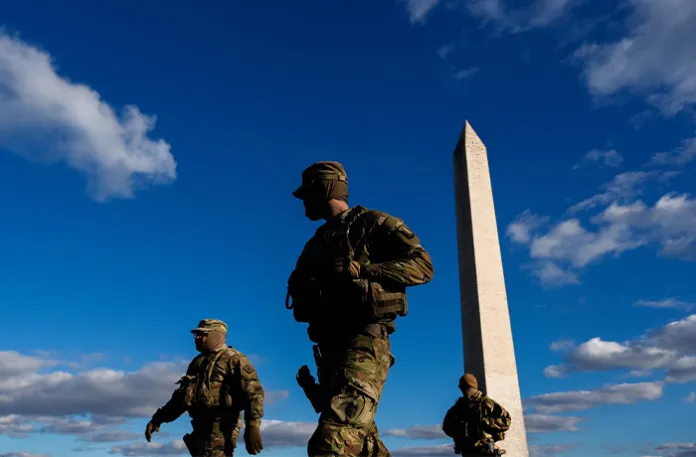
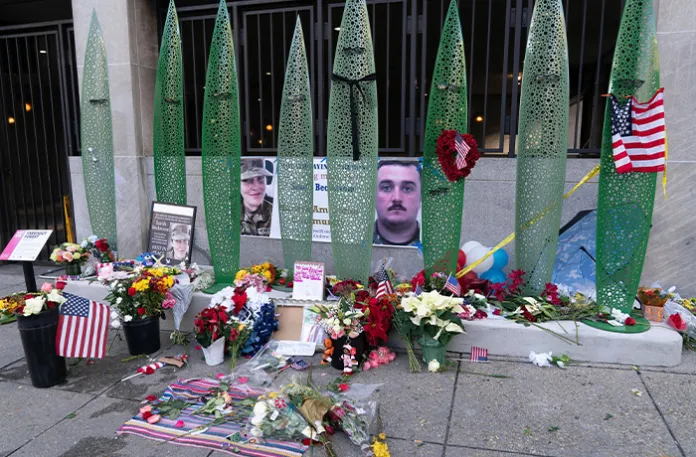
On a crisp autumn afternoon on Nov. 26, two blocks from the White House, the crack of gunfire shattered the routine of National Guard troops Sarah Beckstrom and Andrew Wolfe. Beckstrom, a 20-year-old enlistee from West Virginia deployed to bolster federal law enforcement, succumbed to her wounds hours later. Wolfe, shot in the leg and torso, fought for his life in a Washington hospital. The suspect is Rahmanullah Lakanwal, a 29-year-old Afghan national who entered the United States in 2021 under Operation Allies Welcome, the Biden-era evacuation effort, and secured asylum in April 2025. Lakanwal, a former CIA-backed paramilitary fighter, had no prior criminal record but carried the scars of a war-torn homeland.
The attack ignited a firestorm. President Donald Trump, addressing the nation from Palm Beach, Florida, on Thanksgiving evening, decried it as “an act of evil, an act of hatred, and an act of terror.” Within days, his administration unleashed the most sweeping immigration restrictions since his first term. Asylum processing ground to a halt nationwide. Visas for Afghans ceased. Applications from nationals of 19 “high-risk” countries, mostly in the Middle East and Africa, froze, pending exhaustive reviews. Trump vowed a “permanent pause” on migration from “all Third World Countries,” framing it as a national security imperative to reclaim America’s sovereignty from former President Joe Biden’s “illegal admissions.”
This is the story of Trump’s 2025 immigration offensive: a high-stakes campaign blending executive muscle, congressional funding, and unyielding enforcement to deliver on his promise of the “largest deportation operation in American history.” Backed by the $170.7 billion in supplemental funding for immigration and border enforcement under the One Big Beautiful Bill Act signed in July, the effort has expelled over 400,000 people; spurred 1.6 million self-deportations, according to administration estimates; and slashed the foreign-born population by an estimated 2.2 million since January. Critics decry it as chaotic and cruel. Supporters hail it as the long-overdue restoration of the rule of law. Either way, it’s reshaping the nation’s demographics, economy, and identity.
From DC streets to a national reckoning
The Farragut West Metro station ambush tragedy catalyzed the Trump administration to take even stronger measures to protect U.S. citizens from dangerous migrants. Lakanwal, who fled Taliban reprisals after serving in a U.S.-allied unit in Kandahar, Afghanistan, drove from his home in Bellingham, Washington, armed with a revolver traced to a deceased resident in that state. He fired four rounds at the guardsmen, who were aiding in urban security amid rising migrant-related tensions. One round struck Army Spc. Beckstrom fatally, and another critically wounded Air Force Staff Sgt. Wolfe, 24.
Investigators later uncovered signs of Lakanwal’s unraveling: financial strain, depression, and erratic behavior noted in emails from a volunteer aide as early as 2023. Yet his path to the U.S., humanitarian parole in 2021 and asylum approval under the Trump administration’s Department of Homeland Security, exposed fissures in the system Trump inherited. “The last administration let in 20 million unknown and unvetted foreigners,” Trump thundered on Truth Social, blaming Biden-era laxity for the “single greatest national security threat facing our nation.”
Hours after the shooting, U.S. Citizenship and Immigration Services Director Joseph Edlow announced an indefinite hold on all asylum decisions, affecting over 1.5 million pending cases. Afghan visa processing halted entirely. By Dec. 2, a USCIS memo expanded the dragnet: an “adjudicative hold” on green cards, citizenship, and other benefits for applicants from 19 countries flagged in Trump’s June travel ban, including Afghanistan, Somalia, Yemen, and Sudan. Officials ordered reinterviews and vetting for any such immigrants admitted after Jan. 20, 2021.
The moves echoed Trump’s first-term tactics but were amplified by wartime-era tools. Invoking the Alien Enemies Act of 1798, last used during World War II, Attorney General Pam Bondi authorized warrantless home entries for suspected threats. “This ensures USCIS exercises its full authority to investigate immigration benefit requests filed by aliens who may pose risks,” the memorandum reads. Immigrant advocates cried foul, labeling it a “scapegoating” of entire nationalities. But for Trump, it was vindication: proof that unchecked inflows bred peril.
Storming sanctuary strongholds
If the Washington shooting lit the fuse, enforcement operations provided the dynamite. In Democratic bastions such as New Orleans and Minneapolis, Immigration and Customs Enforcement’s “sanctuary surges” turned policy into spectacle. On Dec. 3, the DHS launched Operation Catahoula Crunch in New Orleans, named for Louisiana’s state dog, deploying 250 federal agents to target “criminal illegal aliens roaming free thanks to sanctuary policies.”
Agents fanned out to construction sites, restaurants, and Home Depot parking lots, where day laborers gathered. Dozens were detained on Day One, including Binh Van To, a Vietnamese national serving 40 years for aggravated kidnapping and sexual assault. The DHS touted the sweep as a response to Orleans Parish’s refusal to honor ICE detainers, a stance rooted in federal consent decrees limiting local-federal cooperation. Gov. Jeff Landry (R-LA) cheered the influx: “We are welcoming them to come in.”
Protests erupted almost immediately. In the French Quarter, demonstrators blocked federal vehicles, prompting FBI and state police warnings of arrests for obstructing officers. By week’s end, over 100 detentions rippled through the metropolitan area, where foreign-born residents comprise 10% of the population. Similar raids hit Minneapolis, where Mayor Jacob Frey vowed noncooperation, and Charlotte, North Carolina, under “Operation Charlotte’s Web.”
These weren’t isolated raids — they formed the vanguard of a nationwide push. ICE arrests doubled to over 480,000 by October, prioritizing criminals: 752 convicted murderers and 1,693 sexual assaulters among the 435,000 identified threats. Deportation flights surged to third countries such as El Salvador, which received payments to house detainees in its “megaprison.” Yet data revealed a broader net: 71.5% of detainees lacked serious convictions, per Syracuse University tracking.
Sanctuary defiance fueled the fire. New Orleans’s jail, under judicial oversight, rarely notified ICE of releases. In response, Louisiana’s legislature criminalized interference with federal enforcement, punishable by up to a year in jail. “Law and order will prevail,” Homeland Security Secretary Kristi Noem posted on X. The operations, while chaotic — mistaken detentions of U.S. citizens drew lawsuits — underscored Trump’s mantra: No city is too blue to breach.
Clearing the deportation pipeline
Behind the raids lay a clogged judicial artery: 3.9 million pending immigration cases as of mid-2025, a backlog swollen under Biden. Trump’s fix for this quagmire was to purge the bench. On Dec. 1, eight judges at New York’s 26 Federal Plaza, the hub of ICE’s city operations, received termination notices. Among them was Assistant Chief Judge Amiena A. Khan, who supervised the 34-justice team.
The firings capped a year of upheaval. Over 100 judges out of 700 were dismissed or pushed out since January, often probationary hires or those with immigrant-defense backgrounds. The National Association of Immigration Judges decried it as a “Monday afternoon massacre” that threatened to erode impartiality. Temporary “deportation judges,” including military lawyers trained for speed over scrutiny, were ushered in as replacements. The Executive Office for Immigration Review loosened qualifications, aiming for 1 million annual removals.
Critics warned of due process erosion. Federal judges rebuked mass detentions without hearings, with 225 rulings ordering releases for over 500 detainees by November. Yet Trump’s DOJ pressed on, citing the Laken Riley Act, signed Jan. 29, as mandating detention for certain criminal migrants. In New York, posthearing arrests at 26 Federal Plaza became routine, turning courthouses into traps.
The overhaul accelerated clearances: from 3 million cases, removals hit upwards of 400,000 by September, per the DHS. But at what cost? Wait times ballooned for noncriminal cases, stranding families in limbo. “The court has been eviscerated,” said fired Judge Olivia Cassin. For Trump, it was efficiency incarnate: a system tuned for expulsion, not absolution.
No more lifelines
Trump’s first term flirted with ending protections, and 2025 consummated his desires. The Deferred Action for Childhood Arrivals program, which had shielded approximately 800,000 “Dreamers” brought in as children, faced renewed termination threats, tied to Project 2025’s blueprint for indefinite refugee halts. Over 76,000 Afghan evacuees who were paroled post-2021 saw their statuses evaporate. In April, Noem terminated temporary protected status for Afghanistan, citing improved conditions despite reports of Taliban repression. Up to 12,000-14,600 lost deportation shields by July, accruing unlawful presence bars. The CHNV parole program for Cubans, Haitians, Nicaraguans, and Venezuelans now faces renewed termination threats as well. “Afghanistan no longer meets statutory requirements,” Noem declared. Trump’s orders after the shooting consequently placed indefinite halts on Afghan entries and mandated reviews of Biden-era approvals. Over 2,000 with final deportation orders were tracked for arrest.
These revocations, although ostensibly tweaks, may have the effect of slowly but surely dismantling the Biden administration’s migration policy, or lack thereof. TPS beneficiaries, 1.1 million from 16 countries, saw work authorizations lapse, thrusting families into the shadows. Trump’s rationale for these measures was migrants’ abuses of the previous administration’s inexcusable laxity. The result is a hard reset of U.S. immigration policy that exposes so-called “special cases” to the same scrutiny as border crossers.
The economic payoff of enforcement
Deportations have the dual effect of removing possibly dangerous foreigners from the country while also allowing employment to be reallocated to U.S. citizens. With foreign-born workers down 1 million, blue-collar sectors report gains. Though overall private wage growth slowed in the second quarter of 2025, construction wages climbed 5% in key states, per National Foundation for American Policy data, as labor shortages eased competition. In agriculture and hospitality — 42% undocumented farmworkers, 19% in hotels — employers pivoted to U.S. citizens, aided by Trump’s April executive order boosting skilled-trade training.
H-1B reforms added teeth to these measures, such as $100,000 fees for external hires and skill-based lotteries favoring U.S. graduates. Tech firms grumbled, but domestic coders saw 2.6%-5.1% wage bumps, per studies Trump cited. Overall GDP dipped 1% in the short term from workforce shrinkage, but long-run projections show stabilized growth without “cheap foreign labor.”
In Ohio’s manufacturing belt, workers hit by migrant influxes stand to gain from this shift. The DHS credits enforcement as well: 2 million exits, formal and self, since January, reversing 50-year foreign-born growth. Critics forecast recession, but proponents predict equity. Trump’s betting that American labor, unleashed, will rebuild the middle class.
Trump’s immigration rhetoric peaked after the shooting. He called for a permanent shutdown of immigration from all “third-world countries.” The June travel ban, originally envisioned to be a complete ban for 12 nations, including Afghanistan and Somalia, and partial for seven more, expanded to 30 by the fall. And under his wishes, because of increasing security risks, there were to be no exceptions made for “nonasset” immigrants.
The “net asset” test, hinted at in Agenda 47, prioritized Western-aligned entrants. Refugee caps plummeted to 7,500 for 2026, favoring Afrikaners over Taliban foes. “Citizenship is a privilege, not a right,” the DHS echoed. The president framed his immigration crackdown as a policy that we must deploy if we’re to be serious about defending “Western civilization.” Sure, we may wish to be nice, but the shooting showed that if we’re interested in cultural preservation, security must trump sentiment, and borders must take precedence over benevolence.
Even as victories mounted, fissures emerged. Harder-line influencers lambasted the 850,000 projected legal immigrant figure for 2025 as a soft betrayal. Deportations lagged behind the 1 million goal — there were only 340,000 formal removals by November — sparking “no mass deportation yet” threads.
White House aides countered that reversals on H-1B tweaks preserved tech growth. Some insiders referred to it as “pragmatic balancing,” but activists on the Right continued to excoriate such compromises. Trump’s response was to step up efforts on raids, promising “reverse migration” to cure the “migrant crime epidemic.”
NEW YORK BRACES FOR MAYOR ZOHRAN MAMDANI
The tensions reveal a leader navigating zeal and reality, delivering results amid grumblings from the base. As 2026 looms, the operation endures— flawed, fierce, and fundamentally Trumpian.
In the end, Trump’s late-2025 pivot to an even more muscular migration stance may have been best defined by the man best positioned to continue Trump’s agenda, Vice President JD Vance, who wrote on social media earlier this month that “mass migration is theft of the American Dream. It has always been this way, and every position paper, think tank piece, and econometric study suggesting otherwise is paid for by the people getting rich off the old system.”
Daniel Ross Goodman is a Washington Examiner contributing writer and the Allen and Joan Bildner Visiting Scholar at Rutgers University. Find him on X @DanRossGoodman.
