

Now that football season is over and we, at least those of us who religiously follow the NFL, have more time to watch other things, the question is, “Well, what should we watch?” For me, the answer is clear: Landman! It’s my favorite current show — it’s basically like what would happen if one of those dysfunctional White Lotus families were transplanted onto a Texas oil field. (Which, for me, means I can’t watch it without a drink — dry January be damned.)
For those of you who may have not seen it yet, it stars Billy Bob Thornton as Tommy Norris, a grizzled crisis manager in the Permian Basin who juggles oil rigs, cartel threats, a crabby but wise old father (Sam Elliott, starting in the second season), a wild but loving wife who’s still technically his ex-wife (a terrific Ali Larter), and enough roughneck banter to make you feel like you’re getting immersion lessons in Texas-speak.
The show, created by Taylor Sheridan, the same guy behind Yellowstone, dropped on Paramount+ in late 2024 and has already powered through two seasons, with a third on the way. In addition to the high-stakes plotlines and Thornton’s pitch-perfect drawl, Landman also packs a punch that hits home for conservatives. It’s a rare Hollywood production that doesn’t just tolerate red-state values — it celebrates them with the kind of unfiltered authenticity that’s been missing from screens for years. If you’re a conservative who’s tired of being force-fed progressive lectures, or even if you’re on the fence, this show might just win you over. Here’s why.
The oil patch as America’s backbone
Step into the world of Landman, and you’re immediately immersed in the raw, unforgiving reality of West Texas oil country. Thornton’s Tommy isn’t some corporate suit sipping lattes in a boardroom — he’s out there in the field fixing blowouts, negotiating with landowners, and staring down dangers that could end a man’s life in an instant. The series doesn’t shy away from showing the oil industry as a vital engine of American prosperity, where hard work and ingenuity pull black gold from the earth and fuel the nation.
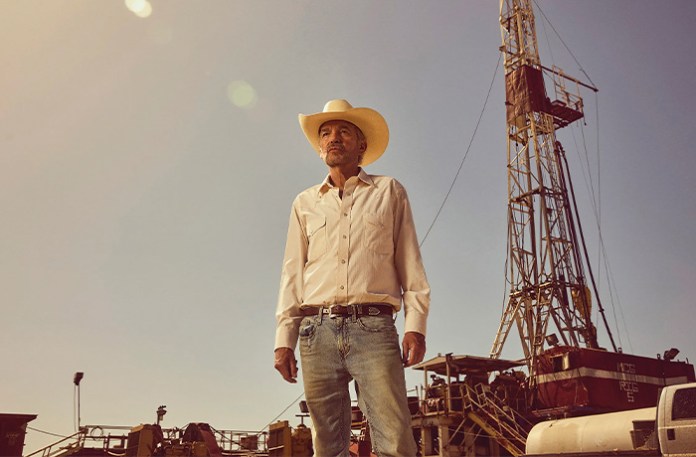
One episode opens with a rig explosion that sends workers scrambling, highlighting the peril and precision required in this line of work. Tommy arrives on scene barking orders and piecing together the chaos, all while delivering lines like “getting oil out of the ground is the most dangerous job in the world. We don’t do it ’cause we like it. We do it ’cause we run out of options.” It’s a narrative that resonates deeply with conservatives who see energy independence as a cornerstone of national security and economic strength. Sheridan weaves in stories of roughnecks risking everything for a paycheck, portraying them not as villains polluting the planet but as heroes building legacies for their families.
Take the subplot involving Tommy’s son, Cooper, a young aspiring landman fresh out of Texas Tech and eager to prove himself. His arc captures the essence of bootstrapping: starting at the bottom, learning through bruises and blisters, and climbing up through sheer determination. There’s no safety net here, no handouts — just the grind. Cooper earns his place in the business not because of entitlement, though being Tommy’s son doesn’t hurt, but because he puts in the work. And when the show touches on the ripple effects of oil booms — jobs flooding small towns, families thriving amid the boom-bust cycles — it’s a love letter to free enterprise.
Sheridan doesn’t stop at glorification — he adds layers of conflict that feel as if they’re pulled from real headlines. Cartel violence spills over the border, forcing Tommy to navigate moral gray areas while protecting his crew. It’s a stark reminder of border security issues, presented without preachiness but with enough edge to make you nod in agreement. The narrative drives home how interconnected energy, economy, and everyday American life truly are, making Landman a compelling case for why conservatives should tune in. Episodes delve into the nitty-gritty of land deals, where Tommy haggles with stubborn ranchers over mineral rights, emphasizing property ownership and the entrepreneurial spirit that built the West. These moments on the show reflect a worldview where private initiative trumps government meddling, a theme that runs like a vein through the entire series.
Pushing back against the green machine
If there’s one thing that gets conservatives fired up about Landman, it’s the show’s unflinching takedown of environmental overreach. Sheridan laces the dialogue with monologues that skewer renewable energy hype and regulatory red tape, all while keeping the story humming along. In one memorable scene, Tommy schools a naive outsider on wind turbines powering oil rigs: “They use alternative energy. There’s nothing clean about this.” He breaks it down — the diesel burned to build and haul those massive structures, the unreliability when the wind dies down — turning what could be a dry lecture into a gripping exchange.
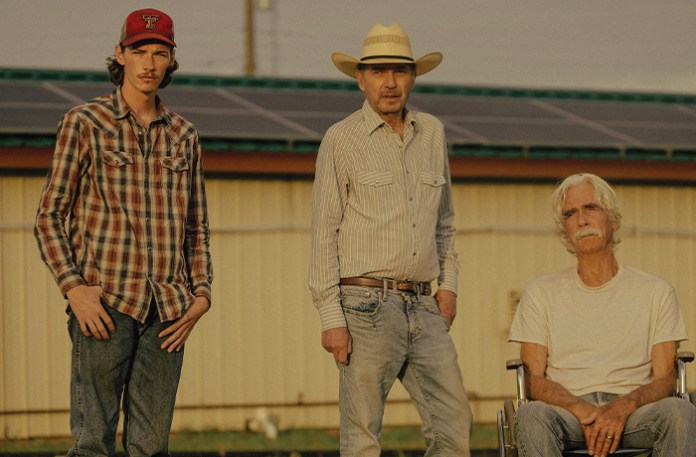
If done the wrong way, this could come across as propaganda. But Sheridan is too skilled a storyteller to stoop to that level. He instead weaves these themes into the fabric of the characters’ lives. When federal inspectors show up, they’re portrayed as out-of-touch bureaucrats more interested in paperwork than progress and in virtue-signaling, pie-in-the-sky environmentalism than in providing real, usable energy for real human beings. Tommy’s frustration boils over when he has to explain how even wind turbines rely on oil: “If Exxon thought them f***ing things right there were the future, they would be put all over the goddamn place.”
Fans in conservative circles have latched onto these moments, sharing clips on social media with captions like “Taylor Sheridan dropping truth bombs.” Podcast hosts have raved about how the show exposes the hypocrisy of green initiatives and how it satirizes the excesses of radical woke lunacies. Even Thornton, in interviews, has defended the series against political sniping, insisting that it’s not a rah-rah commercial for oil — rather, it’s about showing the human side of the industry. But it’s also true that, in a surprising twist for a major platform show, it does not present fossil fuels as the devil and argues that pursuing “net zero” at all costs ignores the real-world trade-offs.
The narrative doesn’t ignore the downsides — worker deaths, environmental spills, corporate greed — but it frames them as challenges to be overcome through innovation and grit. This balanced yet pro-energy stance is one of the reasons why many conservatives have flocked to it, and why many more probably will in the coming seasons. Sheridan expands this stance in later episodes by introducing characters from renewable energy sectors, only to have them confront the limitations of solar or wind in the harsh Texas landscape, where dust storms and vast distances make alternatives less viable. These plot points illustrate how the show subtly questions the feasibility of rapidly transitioning away from oil, and what such a transition would do to jobs in red states.
Rugged men and traditional ties
At its core, Landman is a celebration of a kind of masculinity that’s as tough as a drill bit. Thornton’s Tommy embodies the archetype of the battle-scarred oilman who’s as quick with a fist or a quip and who’s even more fiercely protective of his kin. The show revels in scenes of men hammering pipes, facing down threats, and solving problems with callused hands rather than committee meetings. It’s a throwback to an era when TV heroes were doers, not brooders. It rejects the emasculated male tropes that dominate modern media.

But it’s not just brawn — it’s brains wrapped in bravado. Tommy’s monologues on fatherhood hit hard, like when he advises his son on the rig: “You think life’s fair? It’s not. But you show up, you fight, and you provide.” Tommy embodies personal responsibility and family leadership, ideals he’s trying, with occasional success, to pass down to his son. Women in the show, while strong, often play supporting roles that reinforce traditional dynamics — nurturing, challenging, but ultimately aligned with the men’s missions. Tommy’s ex-wife/wife, Angela — her murky status supplies one of the show’s plotlines, plus running jokes — played by Ali Larter, is the dictionary definition of a drama queen but is also Tommy’s grounding force, as well as the show’s comic relief.
Critics from the Left have called Landman a conservative male fantasy, but it’s really just a realistic portrayal of blue-collar life — something which mainstream Hollywood entertainment tends to lack. The show is entertaining because it’s dramatic and often riotously funny, but it’s also entertaining because it’s relatable: fistfights settle scores, loyalty binds crews, and wisdom comes from experience, not degrees. For those of us who are weary of shows that prioritize diversity quotas over storytelling, Landman feels like a victory lap.
Speaking of that humor, Sheridan sprinkles in just enough to keep the show light. One Tommy and Angela scene that involves an omelette had me laughing so hard I was worried I was going to spill my drink. Yet beneath the laughs is a narrative drive that champions self-reliance over systemic fixes. The ensemble cast adds depth, with characters such as Jon Hamm’s oil tycoon Monty Miller representing the cutthroat side of capitalism. Yet even Monty espouses values of risk-taking and reward. Other subplots explore intergenerational tensions, where older roughnecks mentor the young, passing down not just skills but a code of honor that emphasizes resilience and family bonds over fleeting trends.
A Counterpunch to Hollywood’s Elite
What makes Landman stand out in the current TV landscape is its role as a cultural counterweight. In an industry dominated by progressive narratives, Sheridan crafts stories that amplify rural, working-class voices without condescension. Episodes tackle corporate overreach and Native American displacement, but from a perspective that questions big government and celebrates individual agency. It’s why outlets such as the Texas Public Policy Foundation have hosted discussions on whether it’s “conservative TV done right.”
You don’t need to be a Republican to enjoy Landman. My mom, a lifelong liberal Democrat, loves the show just as much as I do. But for conservatives, Landman is special — it’s proof that entertainment can thrive without woke checkboxes. Social media buzzes with posts such as, “Finally, a show that sticks it to liberals,” highlighting scenes that mock college woke culture and environmental extremism. Thornton’s performance, and the show’s pitch-perfect writing, anchors it all, blending grit, vulnerability, and some of the best lines for a leading-man TV character since Don Draper on Mad Men.
If you haven’t jumped on board yet, you’re missing out on a series that mirrors conservative values while delivering winning humor and top-tier drama. It’s not preachy — it’s just real.
Snubbed in the spotlight
Despite it clearly being one of the best, if not the best, shows going, Landman has gotten snubbed by all the major award shows outside of one Golden Globe nomination and two SAG, now known as “Actor Awards,” nominations. Thornton earned a Golden Globe nod for best actor in a drama series for the first season 1, but was snubbed for the second, while the series picked up SAG nominations for outstanding performance by an ensemble in a drama series and outstanding action performance by a stunt ensemble in a television series. There were also Critics’ Choice and Satellite recognitions, but the big one, the Emmys, passed it over entirely. It’s beyond me how Thornton hasn’t been nominated for an Emmy for it — his portrayal of Tommy is a masterclass in straight-man humor and understated intensity.
Thornton himself has speculated that politics may have played a role in these snubs, with some assuming that Sheridan is “right-wing” and thereby giving themselves an excuse to dismiss his work. Sheridan has pushed back, insisting that his shows explore complex themes such as greed and gentrification without an agenda. Yet the snubs sting, especially as Landman racks up ratings and renewals. This oversight highlights a broader bias in awards circuits, where the few shows that actually do lean conservative often get sidelined in favor of more progressive fare. I would argue that the series’ craftsmanship, from its stunning cinematography that captures the stark beauty of the oil fields to its sharp scripting, deserves recognition regardless of its perceived politics.
In any case, it’s the best thing on television right now, at least until The White Lotus comes back, and it’s not even close. Pour a drink, fire up Paramount+, and see for yourself why this Texas tale is drilling straight into the heart of America.
Daniel Ross Goodman is a Washington Examiner contributing writer and the Allen and Joan Bildner Visiting Scholar at Rutgers University. Find him on X @DanRossGoodman.
