

For decades, Virginia‘s firearms policy has mirrored much of the South and the Mountain West. Open carry is allowed without a permit, the state recognizes many out-of-state concealed carry licenses, and it has resisted regulatory steps common in New York and California. In most of Virginia, firearm ownership is viewed as an everyday fact of life instead of a cultural or political statement.
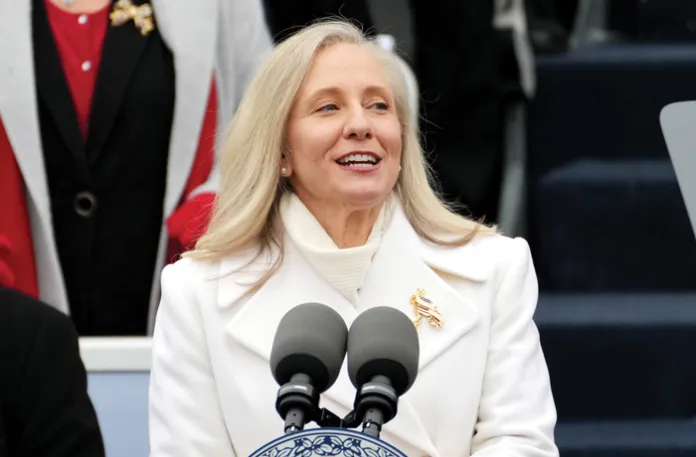
With Abigail Spanberger‘s election as governor and a Democratic majority in the state legislature, that could very well change.
In Richmond this session, lawmakers are advancing a sweeping package of firearm restrictions that, taken together, would move Virginia away from the permissive Second Amendment framework shared by neighboring states such as West Virginia and Tennessee and toward one of the most tightly regulated states in the country, akin to one of its other neighbors, Maryland. The proposals range from a ban on many semiautomatic rifles and a 10-round magazine limit to new purchase permit requirements, expanded storage mandates, industry liability exposure, excise taxes on guns and ammunition, and potentially eliminating long-standing concealed carry reciprocity agreements. Supporters call the effort a long-overdue update to Virginia’s “gun safety” laws. Opponents maintain it amounts to a comprehensive reordering of the relationship between the state and lawful gun owners.
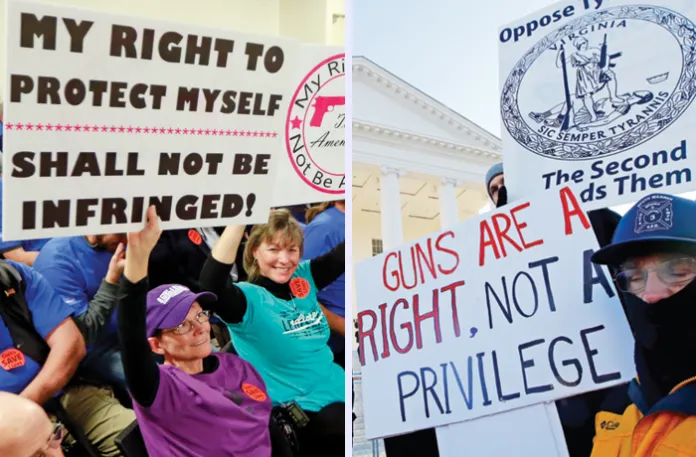
The shift is especially notable given that Virginia’s previous governor vetoed similar legislation. During his term, Republican Glenn Youngkin rejected attempts in 2024 and 2025 to impose gun restrictions, arguing the proposals were unnecessary and targeted lawful owners rather than reducing crime. Virginia’s constitutional structure, which dates back to the 1700s, prohibits governors from serving consecutive terms, making it easy for them to go full steam ahead on priorities because they’re essentially lame ducks the moment they take the oath of office. One election can completely reset the executive branch, even if the larger electorate remains closely divided.
That dynamic now places Spanberger in a position to sign measures Youngkin blocked. With Democrats holding majorities in both chambers of the General Assembly, legislation that died on Youngkin’s desk now has a direct path ahead. The result is one of the most aggressive gun policy pushes in Virginia’s modern history.
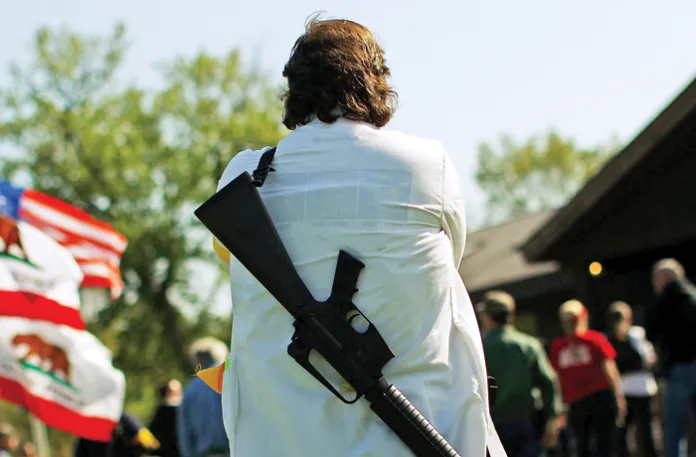
At the center of the legislation is a proposal to ban what lawmakers describe as “assault firearms” and to prohibit the sale or transfer of magazines capable of holding more than 10 rounds. The phrase “assault weapon” is a misnomer, devised by gun control advocates to make semiautomatic rifles sound scary, and cites features, not the operating mechanism of the rifle, to target for prohibition. They include ones such as pistol grips, adjustable stocks, threaded barrels, or flash suppressors. They still operate like any other rifle. The trigger is pulled once, and a round is discharged. A pistol grip doesn’t make it operate any differently.
Gun control advocates claim the listed features make firearms more adaptable for rapid fire or easier control for extended periods of shooting, which is true, but they do so in the context of claiming it would deter mass shootings. The deadliest mass shooting in Virginia took place in 2007 when Seung-Hui Cho murdered 32 people and injured 17 more on the campus of Virginia Tech, using two semiautomatic pistols. Whatever the framing, the bill would apply to some of the most commonly owned and sold rifles in the United States, including variants of the AR-15 platform.
The accompanying magazine provision would limit new sales to 10-round magazines, aligning Virginia with states that have adopted similar restrictions, again, operating under the assumption that a 10-round magazine is “safer” than one with 15 rounds.
The “assault weapons” and magazine capacity proposals are only the most visible component of a much greater legislative effort.
Lawmakers are also advancing a bill that would require a state-issued permit to purchase firearms, which would oddly extend to renting a firearm at a shooting range. This is another bureaucratic layer that almost always operates as a means of delay and a source of revenue. In addition, applicants must complete training and submit fingerprints before being authorized to purchase a firearm.
Another part of that proposal is a five-day waiting period before taking possession of a firearm after purchase, in addition to the time required to obtain the required permit. It’s sold as a “cooling off” period to make it so that someone doesn’t purchase a firearm impulsively and shoot someone. Of course, if someone is hell-bent on shooting another person, there are numerous illegal ways to get a firearm if the intent is to commit another crime.
What this does is effectively transform a constitutional right into a preapproved state privilege.
Mandatory storage requirements would also expand under pending legislation. Firearms in homes where minors are present would need to be stored unloaded and secured in locked containers. So much for guns allowing for personal safety within the home. The proposal is nonsensical. The people who are reckless enough to allow children access to their firearms uninhibited would not adhere to new requirements, and it would make criminals of those who decide immediate access to self-defense is more critical than a bureaucrat’s idea of “gun safety.”
Another area where gun control advocates look to place restrictions on law-abiding citizens is through taxes. One proposal would impose an excise tax of up to 11% on firearms and ammunition sales, claiming the funds would be directed to “gun violence intervention programs,” whatever that means. It is the state imposing a surcharge on the exercise of a constitutional right, and one that is applied nowhere else.
Finally, Virginia is proposing to eliminate concealed carry reciprocity. What reciprocity does is allow people who are legally allowed to carry a firearm in one state to carry in another. There are some caveats. While someone who lives in Virginia does not need a carry permit to enter West Virginia, the reverse is true. As a resident of West Virginia, I am not required to have a permit to carry in my home state, but if I wanted to carry in Virginia, I would need a permit issued by West Virginia. If I traveled to Florida, I would not need a permit. Virginia would eliminate reciprocity altogether, making it more like New York, California, and Maryland. Republicans at the federal level have been content to let states set their own rules, but as state rules continue to change and grow more complex, there is pressure to pass a national standard.
Outside of penalizing law-abiding gun owners, Democrats also have firearms manufacturers in their sights, so to speak. One of the most significant lies former President Joe Biden espoused was his claim that firearms manufacturers “are immune from civil liability.” Firearms are subject to civil liability like any other product that has defects. Firearms manufacturer Sig Sauer recently settled a class-action lawsuit related to the P320 pistol that plaintiffs said would discharge without a trigger pull. The 2005 Protection of Lawful Commerce in Arms Act provides immunity to firearms manufacturers and dealers from liability for criminal misuse.
While federal law would likely make any legislation passed by Virginia null and void, it probably won’t stop them from trying, especially because it would benefit one of the Democratic Party’s most significant benefactors: trial lawyers.
There is a major contradiction at the heart of this push.
Modern Democratic politics is steeped in the language of “rights.” The right to vote. The right to marry. The right to an abortion. The right to healthcare. The right to gender identity. The right to live free from discrimination. The list is ever-expanding when it centers on rights, and those rights are treated as foundational, inherent, and not subject to debate or question.
Except when the right in question is the Second Amendment.
In that context, rights suddenly become negotiable. It becomes a privilege contingent upon the whims of people who think permits, fees, waiting periods, storage mandates, and government approval do not override those rights. They are cut up by defined features, narrowed by capacity limits, taxed at the point of purchase, and delayed through permitting and waiting periods. The cumulative effect is clear: This right is different.
Naturally, no constitutional right is absolute. The First Amendment does not protect defamation. The Fourth Amendment does not prohibit every search. But think about what would happen if a state passed a law mandating a five-day waiting period to protest? What if a state chose to impose an excise tax on books, magazines, and newspapers? Imagine requiring a permit to write a letter to the editor. The outcry would be immediate and rightly justified.
Yet when the right involves firearms, such layers are described as modest, reasonable, even overdue.
Virginia’s Democratic lawmakers are free to pursue the policies they believe will make communities safer. But it would be better for all involved if they dropped the pretense about “safety” because that’s not what it represents at all. It is about redefining the practical boundaries of a constitutional guarantee that they do not like.
If rights are to mean anything, they must be applied consistently, even when they are politically inconvenient. The Second Amendment is not an asterisk in the Bill of Rights.
And in Richmond this year, Democrats are attempting to make it one.
Jay Caruso (@JayCaruso) is a writer living in West Virginia.
