

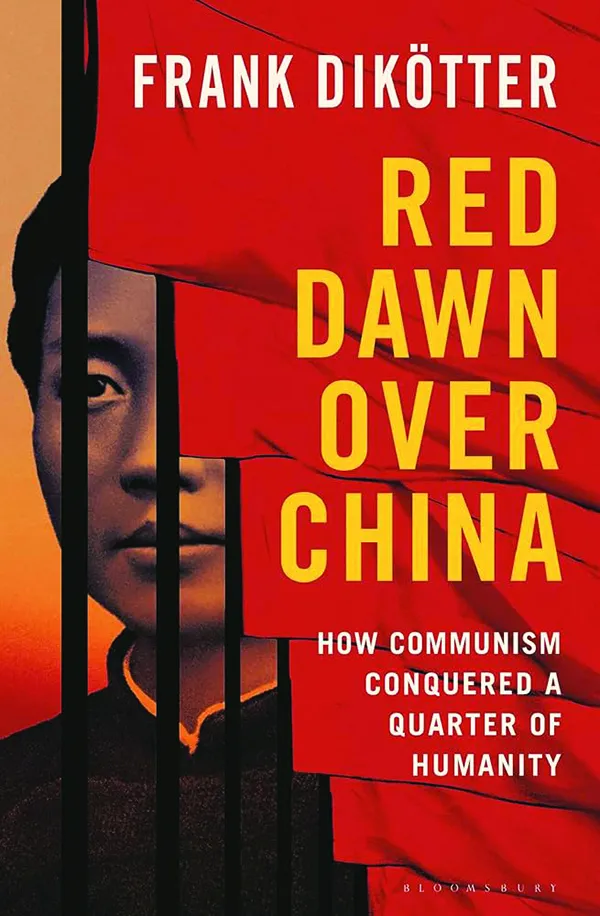
“In history,” the late historian Paul Johnson memorably observed, “there are no inevitabilities.” Johnson’s adage holds true with the Chinese Civil War. In 1949, communism emerged triumphant, securing control over nearly a quarter of the world’s population. But as Frank Dikotter highlights in his new book, Red Dawn Over China, the victory of Mao Zedong and his followers was far from guaranteed.
Indeed, the majority of Chinese weren’t communists — far from it, in fact. In 1929, in the industrial city of Wuxi, north of Shanghai, the Party had a mere 25 members out of a population of 100,000. In 1927, the province of Zhejiang, with a population of 20 million, had no more than 2,600 members. As Dikotter observes, “almost every European country, with the exception of Nazi Germany, boasted a larger number of Communists as a proportion of their population than any province in China.”
Even if one were to rely on the inflated figures provided by the Comintern (the Communist International set up in 1919 by the Soviets to spread communism), only one person in 1,700 was a supporter. This level, Dikotter notes, “was roughly equivalent to Communist membership in the United States, a country not generally considered a leader in the world Communist movement.”
Small wonder then that a U.S. military attache traveling the Chinese countryside in 1934 declared that “a belief in a danger from communism in China is not warranted by the facts.” And the territory then under communist sway was far from ideal. “Today not one large city, one port or one revenue producing area is under Communist control,” the attache wrote.
Yet, a little more than a decade later, everything had changed. How this came to be is the subject of Dikotter’s latest volume.
Dikotter, a senior fellow at Stanford University’s Hoover Center, is the rarest of historians of modern China. Far too many have been too trusting of narratives put forward by the Chinese Communist Party, often foregoing insights for the illusion of access. By contrast, Dikotter eschews rose colored glasses, writing about the CCP and all its monstrosities with clear eyes and candor. His “People’s Trilogy” on the first few decades of CCP rule remains a landmark achievement. Ditto for his previous book, China After Mao. All set up exploding myths and conventional wisdom. His latest work is no different.
Indeed, for all of its titanic significance, the story of the rise of communism in China has long been the subject of more fiction than fact. The conventional tale depicts Mao and his men unleashing a “liberation” of poor peasants, fighting a successful insurgency against both the proto-fascist forces of Chiang Kai-shek and his nationalists and the Imperial Japanese. Chinese people were “won over” by the CCP’s promises of a better tomorrow, as well as their skills at repelling corrupt and often brutal opponents.
This, it must be said, is largely nonsense. In fact, the CCP triumphed in the same fashion that communism conquered huge swaths of Europe: by violence and propaganda. Communists in China proved adept at both.
Still, the rise and eventual rule of the CCP would not have been possible without its forefathers and future rivals in the Soviet Union. The virus of communism was incubated, appropriately enough, by members of the intelligentsia far removed from the Chinese working class.
Not long after the 1917 Russian Revolution and the end of the First World War, Soviet agents began filtering funds and propaganda into Shanghai and Beijing. As one French missionary observed in 1920, “the Bolshevists are sparing no efforts. Their emissaries are well supplied with money and are working hard in every large town.” Communists also benefited from the chaos that had taken over China for nearly a decade. And they proved skilled at preying on and adapting to, rising nationalist sentiment in the Middle Kingdom.
Yet, it was a hard slog for Soviet agents seeking to convert China to communism. Even Bolshevism’s founding father, V.I. Lenin, despaired. The communists had to tread carefully. China was at war with itself and remained dominated by a host of imperial powers hostile to communism, Great Britain not least among them. It would take years for Moscow’s seeds to bear fruit.
Dikotter ably chronicles both the frustrations of Soviet agents and leaders, along with the numerous Chinese leaders that they worked with — and, just as often, against. And he skillfully paints portraits of figures, both well-known and overlooked. Some, such as Chiang Kai-shek, a mercurial Chinese warlord belonging to another age, played a fateful role in the battles to come.
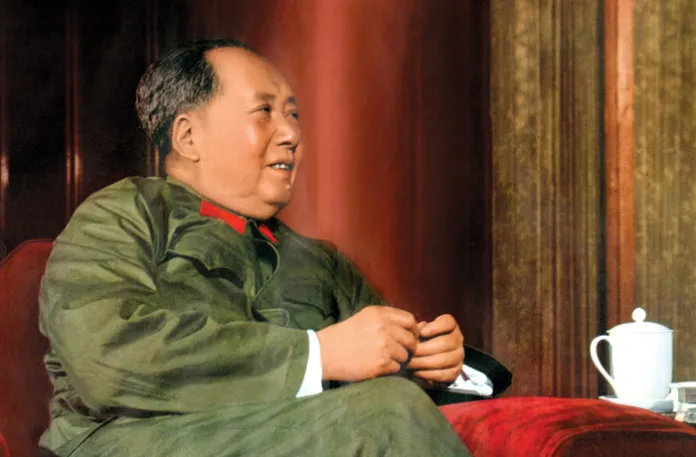
Chiang’s name would become synonymous with “losing” China. But ultimately, communism emerged victorious thanks to its leaders. Mao Zedong, the eventual founder of the People’s Republic of China, comes across as a cunning zealot with an almost otherworldly detachment from his own people’s suffering. It’s a dangerous game to diagnose historical figures who have long been dead and buried. But Mao was almost certainly a sociopath, exhibiting a level of selfishness unique even among his fellow tyrants.
Yet communism’s path to victory was an uneven one. There were many false starts and near misses. And, as Dikotter shows, ample amounts of bloodletting. Indeed, the sheer size and scale of both battles and atrocities is hard to fathom, even eight decades later. The figures alone defy Western imagination.
The Chinese Civil War has long presented a challenge for historians. In addition to issues with sources, the conflict itself lasted decades, with numerous temporary truces and agreements. Further complicating matters, many key figures switched sides or were variously imprisoned, assassinated, or died early from illness. Yet its consequences remain with us today, as the United States and the West confront a threat from the largest police state the world has ever known. As Dikotter makes clear, from the beginning, mass murder and propaganda were its weapons.
Sean Durns (@seandurns) is the deputy commentary editor for the Washington Examiner.
