

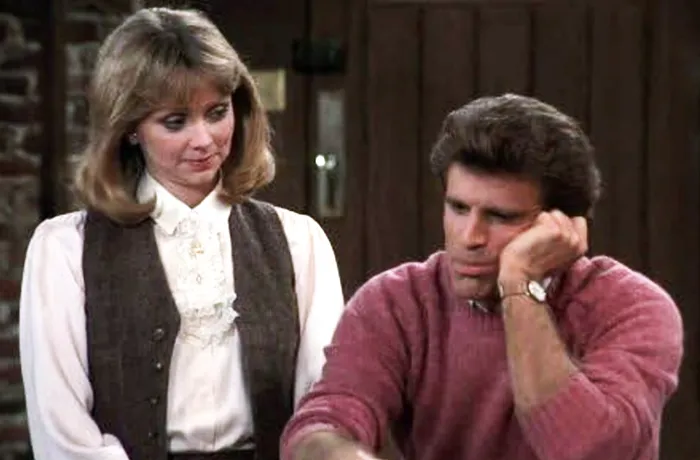
“Hey, Rob, we needed you last night!”
I heard that this morning from a classmate, during the casual chit-chat phase of class when everyone is settling in and getting their notebooks out.
Recommended Stories



She was smiling when she said it, which makes sense because she thought she was about to tell me something nice, something I’d want to hear. When people give out compliments, they often do so with a smile. But they also smile, I have discovered, when they’re about to slip in the knife.
She and some classmates had gone to pub trivia — a weekly event at a bar in Princeton where teams compete to answer questions about history, science, pop culture, and whatever else the trivia master decides is worth knowing. They have these all over, of course, but my guess is that the one at the Princeton bar is a very high-end trivia contest. The pub itself is a short walk from Princeton University, the Princeton Theological Seminary, where I am halfway toward my Master of Divinity degree, and the Institute for Advanced Studies, where Einstein and Oppenheimer did research. I have always assumed it’s a very high-end pub trivia experience. I was mistaken. It turns out that a lot of the questions were about TV shows.
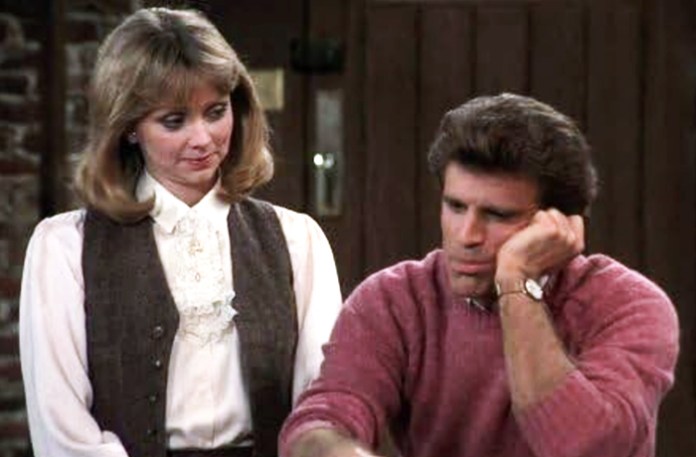
“Yeah, there were two questions about that show Cheers,” she said. “And we didn’t know the answers. But then someone said that you worked on that show? So, you’d know about the cast and that kind of thing?”
I smiled and nodded while trying not to focus on the news that I am now an answer to a pub trivia question. No, wait, two pub trivia questions. Cheers, the television comedy where I was a writer and producer, ended its run in 1993. A person born that year would now be 33 years old, which is older than most of my classmates, and I realized when I looked at the front of the classroom, my professor in this class.
“What were the questions?” I asked.
She shrugged. “I don’t remember actually. But I wish you had been there because no one else knew the answer!”
She smiled again because she is a nice person who thought she was saying something nice. I smiled back because what else can a person do who has been shivved so effortlessly?
For the record, the evening before, I was at home reading about ancient Near Eastern creation myths for a class and trying unsuccessfully to decipher ancient inscriptions written in cuneiform.
Cuneiform is one of the earliest writing systems — wedge-shaped marks pressed into wet clay tablets by scribes in ancient Mesopotamia. It is 4,000 years old, give or take. When you first see it, it looks completely impenetrable — a series of marks that seem almost random, that seem to have nothing to say to us across the gulf of time. And then a scholar explains what it says, and it turns out that most of it is not transcendent poetry or myth or religious vision. Most of it is everyday writing. Receipts. Inventory logs. Someone, 4,000 years ago, carefully pressed a stylus into wet clay to record that 14 goats had been transferred from one account to another. That person was not thinking about posterity. They were just doing their job.
I understand this feeling. I did not, when I was writing Cheers, think of myself as making important and lasting artifacts. I thought I was making television — which is to say, I thought I was making something for right now, for the people sitting at home on a Thursday night who needed to laugh at something. But time is the great curatorial force. It decides what becomes ancient and what disappears entirely, and if you’re lucky, it puts two questions about you on a trivia card at a bar in New Jersey, and a table of young people stares at them and comes up empty, and one of them thinks, Oh, I wish that ancient scribe in our class were here to decipher this!
And then, maybe thousands of years from now, some future graduate student will watch an episode of Cheers and decide that it is an artifact of an ancient religion, and that the characters sitting around the bar were participating in a divine council while they sipped a holy brew. In the future, then, I’ll be venerated as an important epic poet. Right now, though, I’m just that old guy in class who wrote that show that your grandparents watched. It’s OK. I can wait.
Rob Long is a television writer and producer, including as a screenwriter and executive producer on Cheers, and the co-founder of Ricochet.com.
