

ALLENTOWN, Pa. — FBI Director Kash Patel joined a roundtable hosted by Sen. David McCormick (R-PA) earlier this month to discuss the work the Trump administration, Congress, local law enforcement, and area prosecutors have done to curb the fentanyl trade in Pennsylvania over the past 13 months.
Recommended Stories


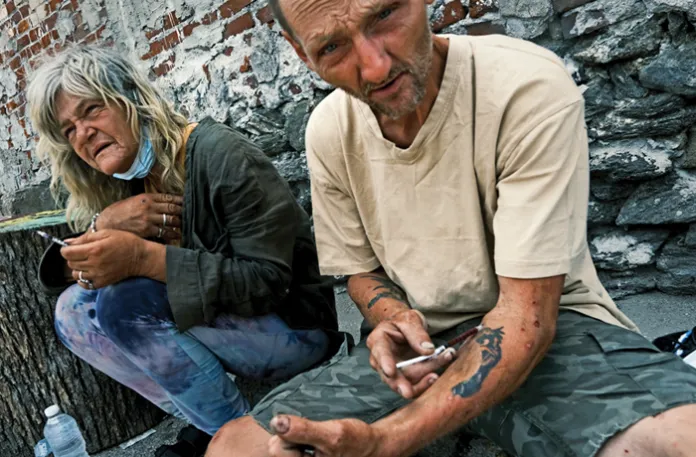
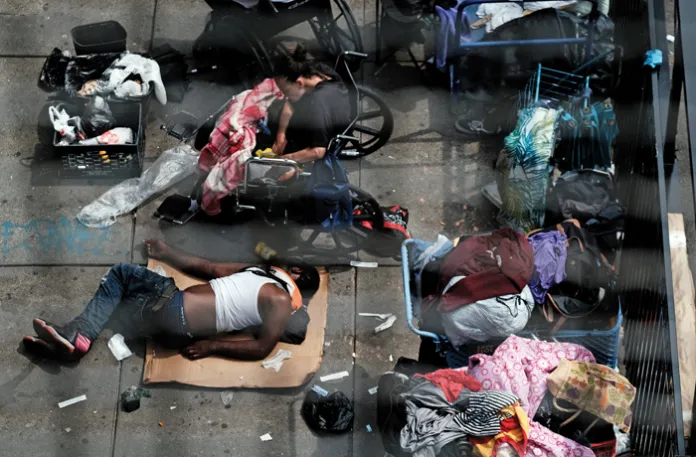
McCormick led the packed event at the Edward N. Chan Federal Building and said that, while the state’s death rate due to fentanyl overdoses has significantly decreased over the past year and a half, there was still work to be done. The senator said that fentanyl killed 4,000 Pennsylvanians per year between 2020 and 2023, but preliminary data showed that number fell to approximately 1,500 in 2025.
“That is the lowest number in a decade,” McCormick said.
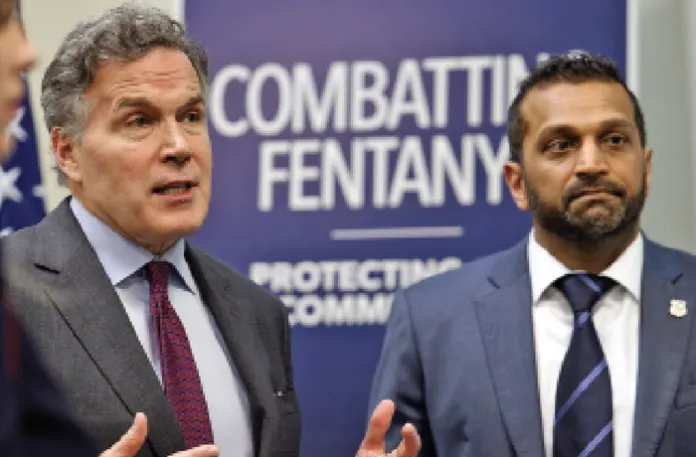
Patel credited the disruption of trafficking networks, enhanced enforcement efforts, and the direction of treatment and recovery programs for the substantial progress.
Sitting across from Patel and McCormick were the Cullen, Miller, and Ott families, all of whom lost children to fentanyl. They discussed the pain and devastation they experienced, stressing they don’t want to see it happen to another family.
In 2024, President Donald Trump campaigned on a drug war approach to fentanyl. This included strong border security and enforcement, pressure on foreign nations such as China and Mexico to curtail the flow of fentanyl manufacturing and trafficking, and severe legal penalties to disrupt drug supply chains.
Pennsylvania Attorney General Dave Sunday said that because of the state’s collaborative efforts with both the local and federal partners, his office was able to remove a staggering 56.5 million doses of fentanyl last year alone.
In a joint interview with the Washington Examiner after the roundtable, both McCormick and Patel discussed how moved they were by the families’ stories. They said the success of the past year was an inspiration to increase their efforts going forward. Patel discussed his visit with his counterpart in China, which resulted in increased export controls on the 13 precursor chemicals used by Mexican cartels to produce fentanyl.
WASHINGTON EXAMINER: You discussed numbers today in the fentanyl crisis, but you also sat across the table of families who were one of those numbers, what is the human element of this crisis like for you when you are face to face with the victims?
PATEL: It’s two things: It’s heartbreaking, and it’s inspiring. It’s heartbreaking because you have something that’s irreplaceable that they lost that maybe could have been prevented if the prior administration had taken the steps we are taking. It’s also inspiring because you know that you can take their stories, and our agents live and breathe them every day at the FBI, and say, “we’re going to stop the next one.”
And how do we learn from what happened to them to save the next life, or the next 10 lives, or a hundred or thousand lives? So for me, getting out of D.C. and meeting the Americans that are impacted by what we do in Washington, and where we came up short, and where we succeeded, is truly some of the best trips I can do. And coming to Pennsylvania is exactly that.
WASHINGTON EXAMINER: Do your agents talk to you about the impact it has on them? What do your agents tell you when they talk to you about this?
PATEL: My agents, almost 12,000 of them, tell me what my agents told me here today, which is, thanks for taking the shackles off us. Thanks for removing the bureaucracy and thanks for letting us do what we signed up to do, which is crush violent crime and defend the homeland. And it wasn’t anything that was new or super secret. It was simply letting them do what they signed up to do, the mission. And I hear that in every single state I go to, and that’s how I know we are on the right track.
WASHINGTON EXAMINER: Sen. McCormick, you did a lot of events running for office around the fentanyl crisis, including with Sheriff Ott of Blairsville, who lost a son. What have you learned from these relationships? What’s it like for you?
McCORMICK: It was probably the most shocking thing I discovered on the campaign trail. The scale, 4,000 Pennsylvanians, 100,000 Americans, and you look at those statistics and people’s eyes glass over the numbers, but again, that is someone’s family in those numbers. The reference point is how many people died in Vietnam, remember, 52,000 people died in Vietnam. 100,000 died [from] fentanyl in one year. So it’s just so shocking. So you have the shock effect. But then I met, through the campaign, with a number of families that were affected by it. And I did a sheriff’s event where all the sheriffs came out to endorse me, and Sheriff Ott said, “Can I speak with you privately?” And he had heard me talking about fentanyl. He said, “I think I can help you on this.” He said, “I lost my son.” And he and I sort of bonded from that point forward, and he became my biggest advocate.
Every time you hear these parents’ stories, it’s so excruciating. And as a father of six daughters, just to imagine it. And two of these cases, the kids didn’t even know they were ingesting fentanyl. It’s a poison that was integrated in other things.
WASHINGTON EXAMINER: What did you do once you were sworn in?
McCORMICK: Once I got to Washington, I was like, “What can we do? ” And of course, the president was all over this, secure the border, China. And I tried to do my part in legislation. So I’m involved. I’m a co-sponsor of five or six bills that are focused specifically on fentanyl or synthetics, the next generation, nidosine, and things like that.
We have leadership [with] the president, we have leadership with the director, we have it in Congress, the U.S. attorney, these districts, everybody, you can feel it. They are focused. You didn’t see one person in this roundtable try to sort of bigfoot anybody else and take credit. Of course, the resources are a critical part of it, but I think the focus and the team at that ethos, “we’re going to crush this thing,” is what’s making a difference.
WASHINGTON EXAMINER: Director Patel, can you please discuss the root causes of the fentanyl crisis? And is that why [you visited] China last November, where the components are made, then shipped to countries south of our border?
PATEL: We needed a couple of things to happen. We needed a commander in chief who was willing to engage on the global stage with efficacy. And that’s what we have with President Trump. He met with President Xi [Jinping] … and they set up the framework for fentanyl, specifically for the scourge and crisis of fentanyl in America. And then, my trip to Beijing for the first time in over a decade as FBI director, would show up and engage with my counterparts for the first time. And thanks to President Trump’s leadership, we were able to come to an agreement to shut off the 13 precursors that the Mexican drug traffickers were using to make the fentanyl.
That was a critical point of it. Reaching that historic agreement was attacking it at the source in terms of origination materials. President Trump didn’t stop there. We are still going with ferocity after the drug traffickers in Mexico, and he was the one that designated them foreign terrorist organizations, giving us law enforcement more tools that we can use like we used to do to manhunt al Qaeda and ISIS. We’re now doing it against the Gulf Cartel, CGNC, and every cartel down there.
So when you set up on both sets of the spectrum, you’re able to really attack this problem. And that’s why you saw the historic results. I mean, we say these numbers, and I didn’t get to say this earlier, these are truly historic numbers for law enforcement and for President Trump, who backed law enforcement. We have saved hundreds of thousands of lives under this commander in chief.
We have taken enough fentanyl [off the] streets to [kill] 178 million Americans in one year. That’s a 31% increase. Murder rate’s down 20%. Opioid deaths are down 20%. I mean, the list goes on. Any one of those for just the FBI would have been a banner a year. And thanks to President Trump, we’ve done it all in 13, 14 months. And we’re not stopping … until we completely annihilate the problem. So starting the precursors and then meeting the problem head-on in Mexico.
WASHINGTON EXAMINER: What was your reception like in China?
PATEL: They were more than receptive. If they weren’t receptive, we wouldn’t have walked out of there with an agreement with President Trump and the Chinese government to shut off the precursors.
They got it. And that’s because he set the stage and led that effort and made fentanyl, made attacking the fentanyl crisis a priority for law enforcement. That’s what we did. And I mean, that in and of itself, getting an agreement with modern-day China and the United States of America to attack drug trafficking is in itself history.
Salena Zito (@ZitoSalena) is a senior writer for the Washington Examiner and author of the New York Times bestseller Butler: The Untold Story of the Near Assassination of Donald Trump and the Fight for America’s Heartland.
