

What should constitute the proper education of U.S. military officers? Who should be teaching at the war colleges and command and staff colleges? Until it was knocked out of the headlines by the Iran war, Secretary of War Pete Hegseth’s criticism of professional military education (PME) unleashed a debate among members of the national security community.
Recommended Stories


In a Feb. 27 memorandum titled “Rebuilding the Warrior Ethos in Professional Military Education,” Hegseth directed that professional military education institutions must return to their fundamental mission of producing strategic thinkers free of bias, grounded in American ideals, and focused on core national security strategy. He emphasized that these institutions should focus on developing the warfighting capabilities of senior leaders and support the “founding principles” of the republic.
Accordingly, Hegseth directed the undersecretary of war for personnel and readiness to impanel a Senior Service College Task Force to ensure that the War Department and professional military education institutions — the war colleges and command and staff colleges, which exist to develop strategic leaders capable of fighting and winning America’s wars — are not distracted by political ideology and DEI issues.
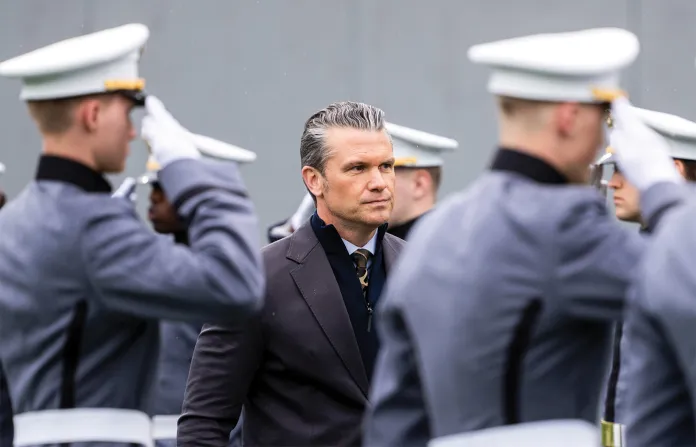
In a short video, Hegseth said the task force is “going to identify any deficiencies and make sure [professional military education institutions] are focused on core national security issues… We want military leaders who are critical thinkers that have studied the principles on which our founding fathers established this republic, and that are educated and prepared to win wars.”
After canceling military fellowships at several prestigious universities, including Harvard, Hegseth questioned even the wisdom of having civilian professors teach at these institutions.
“We’re going to ensure that the professors, administrators and curriculum of those institutions are focused on national security, strategy, history and overall excellence,” he said. “[We’ll] confirm that high standards and meritocracy are [at the] forefront. And [we’ll] make sure that what we’ve seen in our civilian institutions never surfaces in our military education institutions.”
The education of officers has been a central part of US military service since the founding of the Republic. In the beginning, such education was primarily technical and tactical — training really — designed to produce competent engineers, and infantry, cavalry, and artillery officers. But as the United States emerged as a world power, the military was becoming professional. The result was a new emphasis on education rather than simple training. 1884 saw the establishment of the U.S. Naval War College, based on the German model of the Kriegsacademie for education in strategy and policy.
Other professional military educational institutions followed. As part of the far-reaching Root Reforms in response to the shortcomings of the Army revealed by the Spanish-American War, the Army War College was established in 1904. Following World War II, the National War College and the Air War College were added in 1946. The Marine Corps War College was added in 1990. War College students are normally senior officers: Navy commanders and captains, and Army, Marine, and Air Force lieutenant colonels and colonels with 15 to 18 years of service.
In addition to the senior or top-level war colleges, each service also has an intermediate-level command and staff college, focusing primarily on the operational level of war (the conduct of campaigns to achieve strategic goals within a theater of operations). Students here are Navy lieutenant commanders and Army, Marine, and Air Force majors with about 12 years of service. Officers are selected for both intermediate and senior-level schools by merit. Selection to a senior-level school is seen as a stepping stone to flag and general officer.
PME and the ‘cult of lethality’
Writing Feb. 26 for the website American Greatness under the pseudonym of “Cynical Publius,” a retired officer offered a list of steps that educational institutions should take to achieve Hegseth’s vision. These include ending accreditation of professional military education institutions by civilian educational boards, reshaping the curriculum to focus on the military instrument rather than diplomacy and the like, eliminating all curriculum that disguises wokeness as a military matter, and firing most civilian faculty.
At the website War on the Rocks, another retired officer, Brad Duplessis, responded, labeling Cynical Publius as an advocate of the “cult of lethality.” Duplessis argued that “the problem [with PME] is not a lack of warfighting instruction or too much focus on the diplomatic, informational, and economic instruments of national power… The problem is Washington’s policy and resourcing decisions, which have produced a highly tactically competent joint force that struggles to link tactical actions to achievement of strategic objectives.” He echoes the contention of the late strategist, Colin Gray, that there is “a black hole where American strategy should be.”
The ‘black hole’ of American strategy
Although I agree with Cynical Publius that “wokeness” has no place at these institutions, I agree with the broader point made by Duplessis and Gray: The U.S. military has excelled at the operational level of war, conducting successful campaigns to achieve strategic goals within a theater of war, while failing to connect that success to the end of national policy.
The U.S. military has produced officers versed in operational planning and educated them to conduct operations in a flexible manner, relying on the adaptability and initiative of subordinate commanders. U.S. operations are routinely based on mission orders, which provide the overall operational objective rather than the details of how to execute assigned tasks, allowing subordinates the maximum freedom of action in the context of a particular situation.
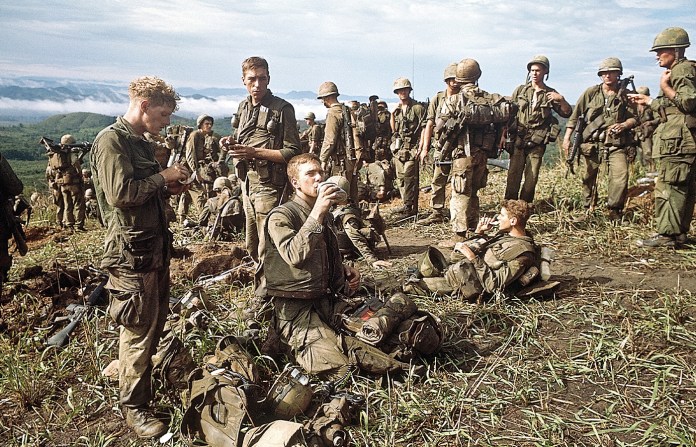
American professional military education has been instrumental in developing current U.S. doctrine for military operations. In the 1970s and ’80s, American planners concluded that the U.S. lacked the conventional capability necessary to defeat a Soviet offensive against NATO and that our threat to escalate to the nuclear level rang hollow. Led by young Army officers at the Army’s Command and General Staff College, Fort Leavenworth, and elsewhere, land and air forces developed a battle-winning operational doctrine that came to be known as AirLand Battle or AirLand Operations, which represented a true doctrinal revolution. The success of that doctrine was based on developing the tactical instrument to include well-trained and educated officers and men, flexible command and control, and operational planning. It proved its worth in both Iraq wars. The Naval War College played a similar role in creating the Maritime Strategy that revolutionized the US Navy.
Thinking about fighting and winning wars should indeed lie at the heart of professional military education, but the idea that officers need to learn nothing else is deeply flawed. As Samuel Huntington argued in his 1957 book on civil-military relations, The Soldier and the State, although the functional imperative of the military is the management of violence in the service of the state, throughout history, we have called upon the military to do many other things. In addition, military excellence requires an understanding of policy, which, in our system, is the purview of civilians. Military force is one of many tools that can be used to effect policy. Learning how to integrate military operations and strategy into national policy should be the central focus of educating officers.
In short, contrary to the secretary’s implication, these institutions have done a pretty good job of educating officers for warfighting. The problem has been the lack of integrating military operations with other instruments in order to achieve the strategic goals of policy, which, in the U.S. system, are established by the civilian political leadership.
Strategy is a dialogue between policy and national power, linking ends and means and seeking to minimize any mismatch between the two. Strategy is both a process and a product. As such, it is dynamic — a sound strategy must adapt to changing circumstances. A strategy that works under one set of conditions may not work under different ones. To develop and execute a strategy requires that leaders are able to comprehend the whole and be able to bring the right instrument to bear at the right time and in the right place to achieve the object of the war. Risk assessment is always a part of strategy, both in terms of development and execution. To be successful, strategy-making must be an interactive process that takes account of the interplay of all relevant factors.
If military officers are being properly educated in the art of war, what accounts for the military failures over the years? First, in the U.S. system of civil-military relations, the goal of any war is established by the civilian leadership. The uniformed military must fight within the bounds established by overall policy. Military strategy is the application of means in order to achieve the ends of policy. In the U.S. system, the military provides advice, which civilian policymakers may accept or reject. The uniformed military does not have the right to insist that its advice be followed. If that advice is not accepted, the military is obligated to salute and obey. Resignation is always a possible response, but wholesale resignation is not part of the U.S. military tradition.
Critics of recent military failures rightly praise generals such as Ulysses S. Grant and George Patton, but to compare recent generalship unfavorably to such giants of the past glosses over the fact that the policy objectives and environment of such conflicts as Afghanistan and Iraq differed considerably from those of the Civil War and World War II. Whether we like it or not, our wars since 1945 have been limited conflicts, both in terms of ends and of means. Both the Civil War and World War II were unlimited, not because of the military but because of civilian policy.
The primacy of policy is illustrated by President Harry S. Truman’s decision to relieve Douglas MacArthur of his command when MacArthur publicly criticized the administration’s policy of limited war in Korea. Truman’s concern was motivated by the possibility of a nuclear confrontation between the U.S. and the Soviet Union, as well as by the belief that an unlimited war in the Far East would weaken the U.S. position vis-à-vis the Soviets in Europe.
Subsequent U.S. wars were also limited. We can question the prudence of fighting such wars, but the fact remains that the application of military force in Vietnam, Iraq, and Afghanistan was constrained by national policy. For instance, the Joint Chiefs of Staff presented President Lyndon Johnson with viable military options that could have enabled South Vietnam to survive while avoiding the massive commitment of U.S. ground troops that began in 1965. But such options had to be considered in the context of nuclear deterrence. When Johnson was weighing his options in Vietnam, the United States was only three years removed from the Cuban Missile Crisis.
Military options in Iraq and Afghanistan were also limited by political decisions. Whether these limits were prudent is a matter for debate, but the U.S. military’s problem was how to fight these wars within the limitations set by policy. During the first Gulf War, the military developed an operational plan to march on Baghdad, but the George H.W. Bush administration chose to settle for the expulsion of Iraqi forces from Kuwait.
The explanation for the excellence of the U.S. military at the operational level of war, while the country has suffered strategic failures, can be found in a 2009 article for the Army War College’s Strategic Studies Institute:
Rather than meeting its original purpose of contributing to the attainment of campaign objectives laid down by strategy, operational art — practiced as a “level of war”— assumed responsibility for campaign planning. This reduced political leadership to the role of “strategic sponsors,” quite specifically widening the gap between politics and warfare. The result has been a well-demonstrated ability to win battles that have not always contributed to strategic success, producing “a way of battle rather than a way of war.”
The political leadership of a country cannot simply set objectives for a war, provide the requisite materiel, then stand back and await victory. Nor should the nation or its military be seduced by this prospect. Politicians should be involved in the minute-to-minute conduct of war; as Clausewitz reminds us, political considerations are “influential in the planning of war, of the campaign, and often even of the battle.”
PME, Accreditation, and Civilian Faculty
If an exclusive focus on military operations is flawed, so is Hegseth’s argument for excluding civilian faculty, as well as interagency students. I taught for nearly three decades at the U.S. Naval War College in Newport, Rhode Island. The core courses were taught by three departments (I retired from NWC in 2015, so the names of the departments may have changed, but the basic structure has not. Other war colleges educate officers in a similar way).
The first, Joint Military Operations, focused on what Hegseth emphasizes: war planning and the conduct of war in different operational environments. The second, Strategy and Policy, taught strategic theory and history, beginning with an examination of major strategic thinkers (e.g. Carl von Clausewitz, Sun Tzu, Alfred Thayer Mahan, Sir Julian Corbett, Giulio Douhet, and Mao Zedong). These classes provided the foundation for analyzing historical case studies — ranging from Thucydides to recent conflicts — the purpose of which was to furnish students with the materials to construct an analytical framework for understanding the interrelationship of policy and strategy. The third department, National Security Affairs, was designed to provide students with the analytical tools necessary to navigate the national security system and convert resources into a force structure capable of executing military operations in support of national strategy.
The overall curriculum of senior professional military education institutions is designed to provide officers from all the services, as well as civilians from various agencies and international students, with a broad education in military and diplomatic history, policy and strategy, allocation of resources, the workings of the U.S. security structure, and ethics and leadership.
The faculty is both civilian and military. The former provides expertise across various functions and geographic regions that cannot be matched by military faculty who may be fine teachers but whose priority is to return to operational units. For an institution educating officers in the art of war, a working knowledge of the history of war is important. The Naval War College civilian faculty excelled in this area.
Eliot Cohen recently raised many of these points in two articles for The Atlantic. He and I overlapped for a few years at Newport, and I concur with his assessment of the civilian faculty at the Naval War College during his tenure there. Not only did civilians on the NWC faculty provide a degree of continuity, but they also provided scholarly expertise that could not be matched by military faculty. Part of the problem was that many of our prized civilian faculty, including Cohen himself, were lured away by prestigious civilian institutions.
If the character of civilian faculty at these institutions has changed over the past two decades, it is because of the decision to award a graduate degree for completing both top-level and intermediate professional military education. As a graduate degree became a box to be checked for officer promotion, the pressure grew for these institutions to grant a master’s degree, which required accreditation by a civilian board. Such accreditation tended to increase emphasis on factors like diversity rather than scholarship and government/military experience. I left the Naval War College before DEI took hold in the military, but I have no doubt that DEI influence on PME is a major driving force behind Hegseth’s recent actions.
Education for strategy
To be successful, strategy-making must be an iterative process that takes account of the interplay of all relevant factors. As noted above, strategy is the product of the dialogue between policy and national power within the broader international security environment. Real strategy must take account of such factors as technology, the availability of resources, and geopolitical realities.
The strategy of a state is not self-correcting. If conditions change, policymakers must be able to discern these changes and modify the nation’s strategy and strategic goals accordingly. Strategy and strategy-making are complex phenomena, not reducible to a simplistic mechanical process. In essence, any strategy worth the name should articulate a clear set of achievable goals, identify concrete threats to those goals, and then, given available resources, recommend the employment of specific instruments to meet and overcome those threats. A good strategy also seeks to minimize risk by, to the extent possible, avoiding mismatches between strategy and related factors. Finally, the forces required to implement a strategy must be funded, or else it must be revised. If the risk generated by such policy/strategy, strategy/force, and force/bud get mismatches cannot be managed, the variables must be brought into better alignment.
The goal should be to educate officers in strategy and the art of war, enabling them to provide sound military advice to civilian policymakers, ensuring that a strategy is capable of achieving the ends of policy, and that the appropriate tactical and operational instrument to implement it exists.
WHAT THE TRUMP NATIONAL SECURITY STRATEGY GETS RIGHT
Professional military education, properly understood, should support healthy civil-military relations — and by extension, effective policy, good decisions, and positive outcomes. In the American system, the role of the military is to advise civilians and then carry out policies, not to make them. The key is trust, which requires mutual respect, candor, collaboration, cooperation, and ultimately, subordination. The product of a professional is an officer corps that can adapt to complex, evolving threats across a variety of geographic spaces and develop, communicate, and execute military operations in support of national policy and strategy.
History clearly teaches that the development of a coherent strategy is absolutely essential to national security in times of both war and peace. In the absence of a coherent strategy, non-strategic factors such as bureaucratic and organizational imperatives will guide national security decisions.
Dr. Mackubin Owens is a retired Marine and former Naval War College professor.
