

Congressional Democrats voted in lockstep against the 2017 tax reform and relief bill, a signature accomplishment of the first Trump administration. They argued that the measure was a giveaway to “millionaires and billionaires,” while ludicrously describing it as “Armageddon” for families. Based on their parade-of-horribles messaging, they conditioned working- and middle-class people to expect tax increases, followed by an economic collapse. In reality, the overwhelming majority of taxpayers across all income groups received a tax cut, thanks to the across-the-board provisions actually in the law. And in the latter portion of Trump’s first term, up until COVID-19 shut the world down with black swan disruptions, the U.S. economy was cooking with gas, meeting with solid approval from voters.
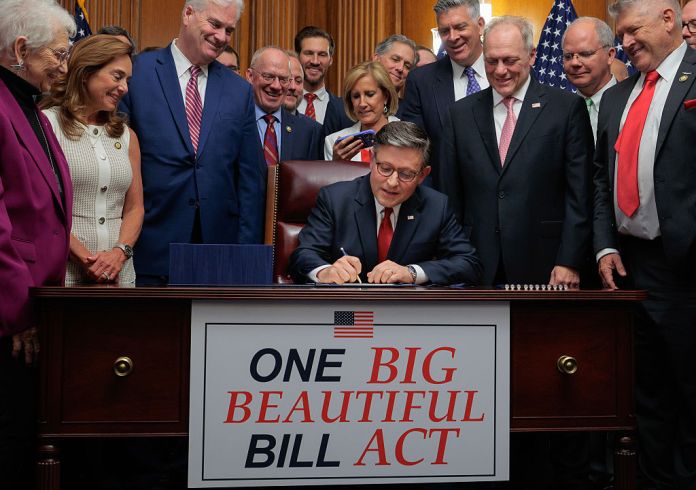
In the first year of Trump’s second term, congressional Republicans voted to make the 2017 tax cuts permanent, thus preventing a punishing, multitrillion-dollar tax hike from slamming millions of households and businesses alike. The GOP may not get much gratitude or credit from the electorate for doing so, but ruinous and broad-based tax increases, right on the heels of years of painful inflation, would have been catastrophic. Their action, unanimously opposed by Democrats, spared the country even more economic harm. That is a significant accomplishment. In the 2025 One Big Beautiful Bill Act, now the law of the land, not only were those previous lower rates extended, but additional tax relief was enacted. Trump’s famous “no tax on tips or overtime” sloganeering became law. In spite of this policy targeted squarely at working people, Democrats predictably pilloried the proposal as Republicans doing the bidding of ‘the rich’ — a trope they flog, regardless of its applicability to the policy itself.
Stay informed.Stay ahead.
Join Washington Examiner for unlimited access to the news, analysis, and commentary that matter most.
Already a member? Log in
Many conservatives pointed out at the time how illogical it was to frame tax cuts on income derived from tipping and overtime work as a sop to the uber-wealthy, but Democrats ran with it anyway. It’s their decadeslong talking point, and they’re clinging to it. But new official government data dispel, again, the crux of the Left’s attacks on the Trump-GOP tax law. According to the Treasury Department, absent passage of that policy, “tax filers would currently be feeling the expiration of the 2017 Tax Cuts and Jobs Act,” and would have been “hit with a $5 trillion tax hike.” The data summary notes that instead of that fate, “97 percent of filers received a tax cut this past filing season, who would have otherwise owed taxes,” if the previous tax cuts hadn’t been extended — again, without any help whatsoever from Democrats, who’ve taken to mumbling about “affordability” at every opportunity (having fueled the affordability crisis under President Joe Biden with trillions in reckless and inflationary government spending).
It doesn’t take a math whiz to determine that a policy under which 97% of tax filers saw a tax cut cannot be fairly dismissed as a handout to the “top 1%.” On that score, Treasury also reports that lower and middle-income individuals and families have disproportionately benefited from the law:
“96% of filers receiving a tax cut earned less than $200,000. Filers earning between $100,000 to $200,000, who claimed one of President Trump’s signature tax cuts, received an average tax cut of over $1,250. Nearly 70% of filers receiving a tax cut earned less than $100,000. Filers earning between $50,000 to $100,000, who claimed one of President Trump’s signature tax cuts, received an average tax cut that is over $815.”
CALIFORNIA’S THIRD-WORLD VOTE-COUNTING MESS
As for the beneficiaries of the tax relief on tipped and overtime income, more than 7.5 million filers have claimed no tax on tips benefits, “with an average deduction of over $7,000.” Relatedly, 90% of these tax filers had income under the $100,000 annual threshold. Additionally, more than “29 million filers have claimed no tax on overtime, with an average deduction of over $3,100,” the data show, with three-quarters of those filers reporting annual income under $100,000. More than 35 million senior citizens took advantage of what the administration calls an “enhanced tax deduction” for that age bracket, more than two-thirds of whom reported income under $100,000. Within this group, the average deduction was $7,500. More than 40 million families also availed themselves of the GOP-enacted expanded child tax credit, which was “permanently doubled” under the law. Two-thirds of these families had incomes under $100,000. In all, roughly 90% of all tax filers claimed the standard deduction, which was also permanently doubled (over pre-2017 levels) in last year’s law.
Every single congressional Democrat opposed all of this by voting against the legislation. They’re now asking voters to trust them on affordability, having contributed so much to the prevailing dissatisfaction with their failed policies. Whether or not one views the 2025 tax bill as sound and fiscally responsible policy is a subject of reasonable debate. On balance, many conservatives supported the law, especially when compared with the alternative. But given the statistics rehearsed above, it’s dishonest to continue to dismiss the policy as “tax breaks for the rich.” Tens of millions of decidedly non-wealthy people would beg to differ and can point to their own tax returns and bank accounts as the supporting evidence.
