
The odds of you existing are about 1 in 102,685,000. This number takes into account your parents meeting and staying together long enough to produce a child (about 1 in 40,000,000.) It also takes into account the biological odds of one egg meeting one sperm, which is 1 in 4*1017, and then reflects those probabilities throughout one’s ancestry. In other words, the probability of any one person existing takes into account the probability of every single person in their lineage also existing. That’s quite a probability.
For comparison, the number of atoms in the known universe is about 1,080. In other words, the odds of any one person existing is essentially zero.
Recommended Stories
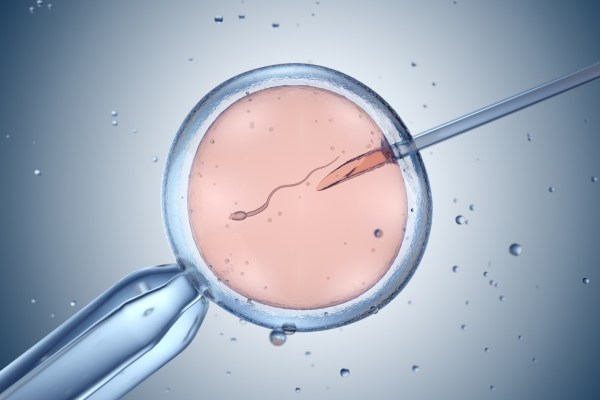
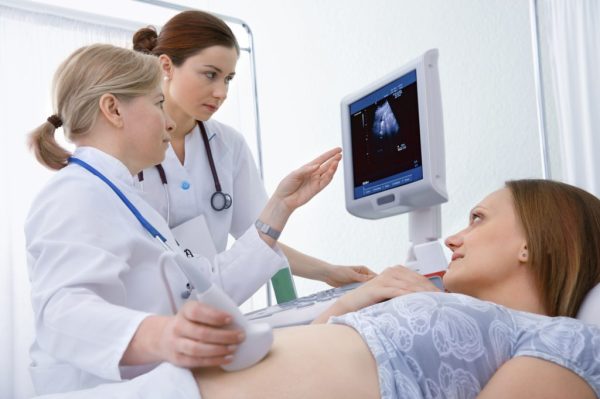

Human DNA has 3 billion base pairs, meaning about 43000000000 different strands of DNA. For DNA to ever repeat we would need around 23000000000 people; so far in human history there’s only been approximately 108 billion.
These numbers are barely computable for the average individual, but it is safe to say that sans identical twins and cloning, a strand of human DNA is unique and will never exist again in the universe. Every single person who has ever existed or will ever exist is unique and not replicable through natural means.
In most things, humans value rarity. Since every fertilized egg is one of a kind and statistically impossible, it seems strange that as a society we don’t value these entities more. Ending the development of a fertilized egg is seen as commonplace in our society. It’s simply a way to discontinue developing eggs which will one day become children. Of course, children, on the other hand, are protected at all costs in our society. For those who don’t understand the science, there’s a missing link between the two.
Culturally, abortion is trivialized and downplayed. Fetuses have been compared to parasites and tumors, and it has been said that a fetus has no value if it is unwanted by the woman carrying it. While abortion activists claim to be pro-science, those who truly understand the science know otherwise.
The scientific criteria needed to define biological life are metabolism, growth, reaction to stimuli, and reproduction. An organism is a complex structure of interdependent elements that are living through separate but mutually dependent organs.
Once a fertilized egg attaches to the uterine wall, a unique set of human DNA has formed (as previously discussed the probability of this set of DNA occurring is essentially zero) that is different from the DNA of woman it is developing within.
Around six weeks after implantation, the embryo has a heart that has begun circulating its own blood and electrical activity in the brain can be detected. By twelve weeks the fetus resembles a human with arms, legs, and facial features, and all vital organs have developed. By twenty weeks the fetus is about 10 ounces, over 6 inches long, has a detectable heartbeat and brain functions, and can feel pain.
So a fetus is a unique, statistically impossible, scientifically defined life. It is biologically confirmed as an independent, human life. Inside the womb or outside the womb, this life is completely dependent on another human being to survive.
If a woman does not want a child there are many measures to prevent sperm from fertilizing an egg, but once that process has occurred people must realize that an abortion ends a statistically unfathomable, and biologically proven, independent life. Abortions eliminate DNA that will never exist again in the whole universe, and takes for granted the statistical impossibility of that life being created to begin with. In a society so interested in the rare, unique, and unfathomable, we need to understand these traits apply to early human life.