
Instead of spending their resources to lower the cost of higher education, colleges are lobbying to inflate tuition nationwide.
An Opensecrets.org report on higher education lobbying showed that 558 institutions spent a combined $76 million on lobbying in 2015.
Recommended Stories
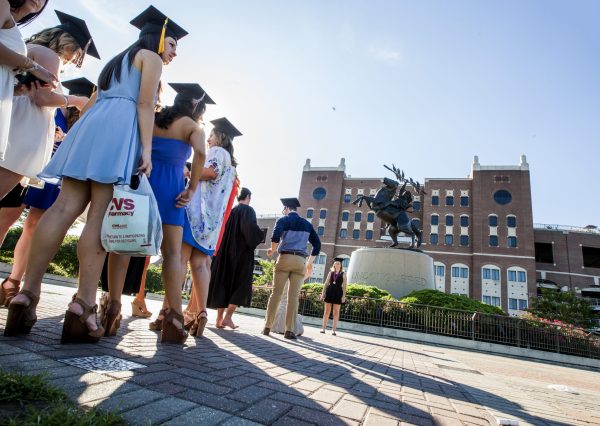
What are colleges and universities lobbying for? The New York Times outlined the strategy that private institutions have been using in order to increase tuition costs. Powerful private schools flex their financial muscle in order to keep public institutions underfunded and to increase federal aid. This forces public institutions to raise their tuition to cover their operating costs. The tuition gap between private and public institutions is deliberately closing as states stop subsidizing public schools as they once did.
For instance, in Arizona tuition has risen by 83 percent, or $4,734 per student since 2008. A closer look at the University of Arizona shows that in 2008, undergraduate tuition would cost an Arizona resident $5,274 per year. Today, undergraduate in-state tuition at the University of Arizona sits at $11,400, an increase of 116 percent. While tuition has steadily increased, funding for these institutions has decreased disproportionally. The state of Arizona spent 47 percent less per student last year than it did in 2008.
Public institutions were once regarded as an affordable option for those who possessed the ability and desire to attend college, but lacked the means. If a student and their parents had paid their taxes, the reward was an affordable public education. Special interests and lobbying have inflated the costs of these institutions beyond what is reasonable, making affordable college education for the properly motivated much harder to find.
For millennials, who list college affordability as the second most important issue after the economy, the reasonable question is: How do we break the cycle?
The answer is not for federal government to offer “free education.” Our capitalist society offers any citizen the right to purchase higher education; it is not a fundamental right. Higher education is not for everyone, with determination and a specific skill set, someone with no higher education whatsoever can build a successful business as a mechanic, carpenter, electrician, or pursue a plethora of other meaningful and necessary careers. Offering education as a fundamental right to all demeans the working class, who may not need a day of higher education to play an important role in American society.
The solution is to elect principled elected officials who will not become the puppets of special interests. No matter the political affiliation, it is critical that millennials take control of their future by finding candidates who can be trusted not to get in bed with the university lobby, and to look out for the actual citizens they represent.