At a recent MLB showdown between the White Sox and Cubs, fans of both teams united against a common enemy: the Packers. Chants of “Green Bay sucks” filled Rate Field on the South Side of Chicago, in a game that ended in a walk-off White Sox victory.
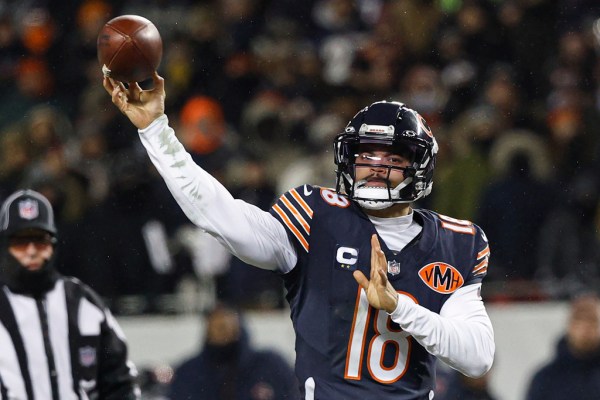
It was a memorable moment for sports fans, but it appears Packers fans will get the last laugh. Last week, the Bears announced they will not be staying in the city of Chicago.
Recommended Stories

“[We] have exhausted every opportunity to stay in Chicago, which was our initial goal,” the team said in a statement.
That Chicago is losing its football team should not come as a huge surprise. In April, reports surfaced that the NFL’s Stadium Committee no longer considered Chicago “a viable option for the Chicago Bears’ next stadium.” ESPN’s Courtney Cronin reported that the committee had narrowed the field to two viable locations: Hammond, Indiana, and Arlington Heights, Illinois.
Betting markets suggest Indiana — which in February passed state Senate Bill 27, legislation aimed at financing a stadium in Hammond — has more than a puncher’s chance of landing the Bears. But whatever happens, one thing is clear: the franchise, which moved to Chicago in 1921 under legendary owner and coach George Halas, appears all but certain to leave the city.
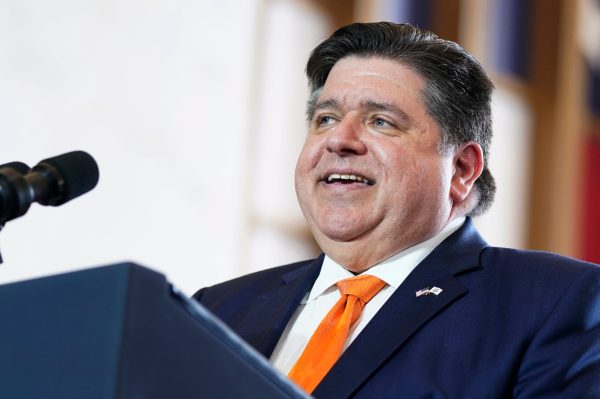
In fact, the blame game has already begun. Earlier this month, Gov. JB Pritzker publicly criticized Chicago Mayor Brandon Johnson for failing to produce a viable plan to keep the team in the city.
“He has come up with no plan at all about how the Bears would end up in the city of Chicago,” Pritzker told reporters.
While Johnson’s advisers continue to express optimism, the economic logic behind moving the Bears out of Chicago has long been compelling.
For one thing, the franchise badly needs a new stadium, and Chicago was always going to be a difficult fit. Soldier Field is not only old and small by NFL standards, but also physically constrained by protected lakefront land, museums, roads, and park space. Major expansion would be enormously difficult and expensive. A new, domed stadium would cost billions of dollars, setting off fierce battles over taxpayer funding. Complicating matters further, the Bears do not own Soldier Field. The Chicago Park District does. That limits the team’s control over development.
Keeping the Bears in Chicago was always going to be a heavy lift, but Pritzker is not wrong: Johnson’s leadership (and lack of leadership) is a big reason the franchise is leaving the city.

The uncomfortable reality is that Chicago, a once-great American city, faces deep fiscal and political problems that deter public-private projects of this scale. The city’s budget has grown by more than 40 percent since 2019, driven largely by debt and pension obligations. Chicago’s pension system carries more than $53 billion in unfunded liabilities — more than all but six US states. Largely because of these long-term debts, Fitch and Kroll downgraded the city’s credit rating earlier this year.
“The rating agencies are looking at Chicago right now and seeing a dysfunctional government,” financial experts told a local reporter.
Chicago has plenty of other problems, too. Its school system carries a junk credit rating. Violent crime remains a serious issue. And the city’s population is shrinking. In 2024, Chicago’s population fell to its lowest point since 1920, the year before the franchise arrived from Decatur as the Decatur Staleys.
The fact that Decatur once housed the franchise is a reminder that cities are not entitled to professional sports teams. These franchises are businesses — and extraordinarily valuable ones at that.
The Bears are valued at nearly $9 billion, with the McCaskey family — descendants of George Halas — controlling roughly 80 percent of the team. Given those stakes, it is reasonable to question whether a 30-year lease makes sense in a city led by the man the Wall Street Journal once dubbed “America’s worst mayor.”
One of America’s great virtues is the degree of freedom individuals and businesses possess to relocate, invest, and pursue opportunity. This was no accident. The Founders created a system designed to maximize trade, competition, and freedom of movement among the states.
THE SOCIALIST PROMISE: FAIL, BLAME RACISM, REPEAT
Economist Charles Tiebout famously argued that people “vote with their feet.” Individuals and businesses gravitate toward the places that best align with their interests, values, and economic priorities. In that sense, the Bears’ looming departure from Chicago is not a shock. It’s a market signal.
Leadership matters. Policy matters. And as other “progressive” cities become increasingly dysfunctional or openly hostile to property rights — looking at you, Seattle and New York — expect other professional teams to exercise the power of exit as well.
As a Packers fan, I do not relish Chicago losing its beloved team. That said, the city earned this outcome.