Thirty years of policy reform have delivered significant improvements in K-12 education for students and their families. But much more needs to be done.
Charter schools, educational savings accounts, and scholarship tax credits have helped. Recent legislation authorizing a federal scholarship tax credit presents an opportunity for even greater parental choice in education, at least for families in states whose governors opt in.
Recommended Stories
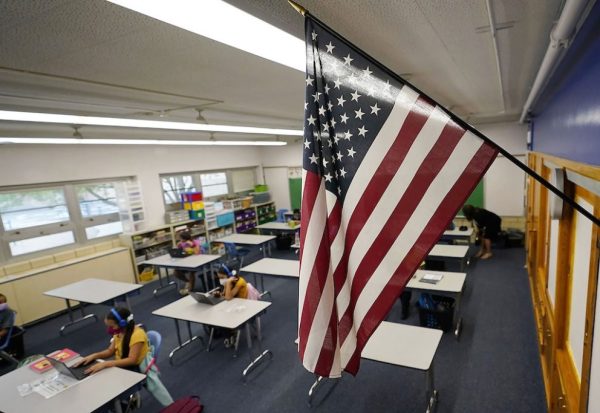
Despite these achievements, too many students and their parents find themselves stuck in public schools run by local school boards that are not meeting their needs or aspirations. Curricula neglect the fundamentals of reading, writing, and arithmetic. Primary school libraries and course materials promote books that are inappropriate for young children or that undermine the sincerely held religious beliefs and practices of their parents. Many public schools are still missing the mark.
TWENTY-FIVE STATES SUE TRUMP ADMINISTRATION OVER STUDENT LOAN CAP FOR GRADUATE PROGRAMS
We need to go to the source of the problem: lack of responsible oversight. Some governors and state legislators have recently enacted electoral reforms to ensure greater participation in school board elections by the parents whose children the boards are meant to serve. For example, legislators in 10 states from California to Florida have proposed or passed laws to align the timing of school board elections with other state-level elections and to permit early voting. These reforms enable more parents to participate in selecting school board members, ensuring that elected school board members serve the needs of parents and children.
Reformers in New Jersey, California, and Colorado have also begun to extend the franchise to those most directly affected by school board elections: students themselves. These states now allow teenagers who are 16 and older to participate in elections. The wisdom of allowing minors to vote in these elections is a reasonable topic of debate. Nevertheless, who can doubt that minor students have a compelling interest in the composition of school boards, the superintendents they hire, and the policies they make?
State electoral reforms should consider what is known as Demeny voting (named for demographer Paul Demeny). The approach enables parents to exercise by proxy the right to vote for each of their minor children. The parents of minor children would serve as voting trustees for each child and would cast that child’s vote in school board elections. Voting trusts and proxy voting are familiar institutional arrangements in corporate governance. It ensures recognition of a beneficiary’s rights or interests. Why not apply this mechanism to school board elections? A minor may lack the age or competence to make the decision for themselves. It’s fitting for a parent to act as a proxy.
This may seem like a radical innovation. But it fits our nation’s history. The history of representative republican government in the United States is one of gradual expansion of suffrage to a broader group of Americans: to white men without property, first in Vermont, New Hampshire, and Kentucky in the 1790s; to black men, including in New York, after the Revolutionary War (though rolled back in the 1820s) and later with the 15th Amendment after the Civil War; to women, first in Wyoming in 1869 and later with the ratification of the 19th Amendment in 1920; and in the 20th century, to those old enough to fight for their country in war, with the Vietnam-era ratification of the 26th Amendment in 1971.
QUALITY EDUCATION NEEDS AN ACT OF CONGRESS
The time has come to extend representation in school board elections to children — one child, one vote. Students and their parents have suffered from poor governance of our public schools for too long. Enabling parents to vote as proxies for their children in school board elections will strengthen accountability for excellence in public education.
The shortcomings of public education are dire; the remedy must be bold.
Thomas Lehrman is an adjunct professor of law at Vanderbilt and serves on the Tennessee Public Charter School Commission. Andrew Oliver is a former articles editor of the National Review.