Restoring America

Conservative values, National renewal

Menu

Don’t let government regulators kill local media

Published June 5, 2026 9:00am ET


One of the dumbest antitrust lawsuits in recent memory — and that’s saying a lot — is the blockage of Nexstar Media Group’s $6 billion bid to acquire local news broadcaster TEGNA. The merger was approved three months ago by the antitrust cops at the Justice Department and the Federal Communications Commission. President Donald Trump has given the deal his blessing. 

But now, a federal judge, along with 13 state attorneys general, is doing the bidding of rival broadcasting powerhouse DirecTV and other media giants to stall the deal in court. 

As a business deal, it makes all the sense in the world. Wall Street analysts estimate the economies of scale from these acquisitions will save local broadcasters roughly $300 million and keep them financially in the green.

CARR ESCALATES MEDIA CRACKDOWN AMID NEXSTAR-TEGNA BACKLASH

Ironically, a merger that should be up and running and already benefiting local broadcasters and the consumers of local news are the big losers while the mega media companies use antitrust laws to solidify their own power. The courts are siding with Goliath to prevent upstart David from competing on a fairer playing field.

The state attorneys general and federal judges have this story all backward. Local TV stations are dying. They need scale, capital injections, technology, and negotiating strength to keep their news and community programming on the airwaves. Nexstar’s strategy is to recapitalize and promote these stations instead of allowing them to completely disappear from the media landscape.

The legal theory that Nexstar will monopolize local news broadcasting is rooted in mid-20th-century jurisprudence. While it is true that Nexstar Media Group is the largest owner of local stations in the United States, it has a close competitor in Sinclair Broadcast Group and DirecTV.

But the real competition today isn’t one local news station versus another. It’s local broadcasting versus the modern media behemoths: national cable news networks, the internet, social media platforms, bloggers, TikTok, and the ever-present big three national TV networks.

If the courts or attorneys general block this merger, it is likely to diminish access to local news broadcasts.

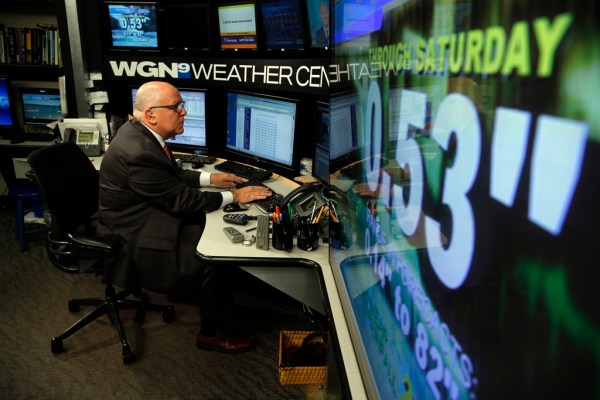
This raises the question of why anyone should care about small-market local news. Among other things, local news outlets in small-town America provide access to tornado warnings, wildfires, public-safety emergencies, election reminders and results, and major local events — such as whether the hometown high school or the local college won the big football game, or a deranged killer is on the loose.

Local broadcasts are the ideal advertising outlets for small businesses. These small news outlets allow hometown shops to compete against the superstores like Lowe’s or Home Depot.

Today in America, we are bombarded with national news, and anyone with a camera and a cellphone can be a media source. The challenge for legacy local broadcasters is to get a word in edgewise in a fiercely competitive media industry bombarding Americans with choices. These are homegrown local employers trying to compete with the big boys and somehow make money doing it.

BIPARTISAN UNEASE SURFACES AT SENATE HEARING ON NEXSTAR-TEGNA MERGER

The Nexstar deal tosses these broadcasters a lifeline. Government lawyers and courts are using loopy legal theories to foolishly cut off that rope.

How that’s in the national interest or the interest of local communities across the country is anyone’s guess.

Stephen Moore is a senior fellow at America First Policy Institute and a co-founder of Unleash Prosperity.