
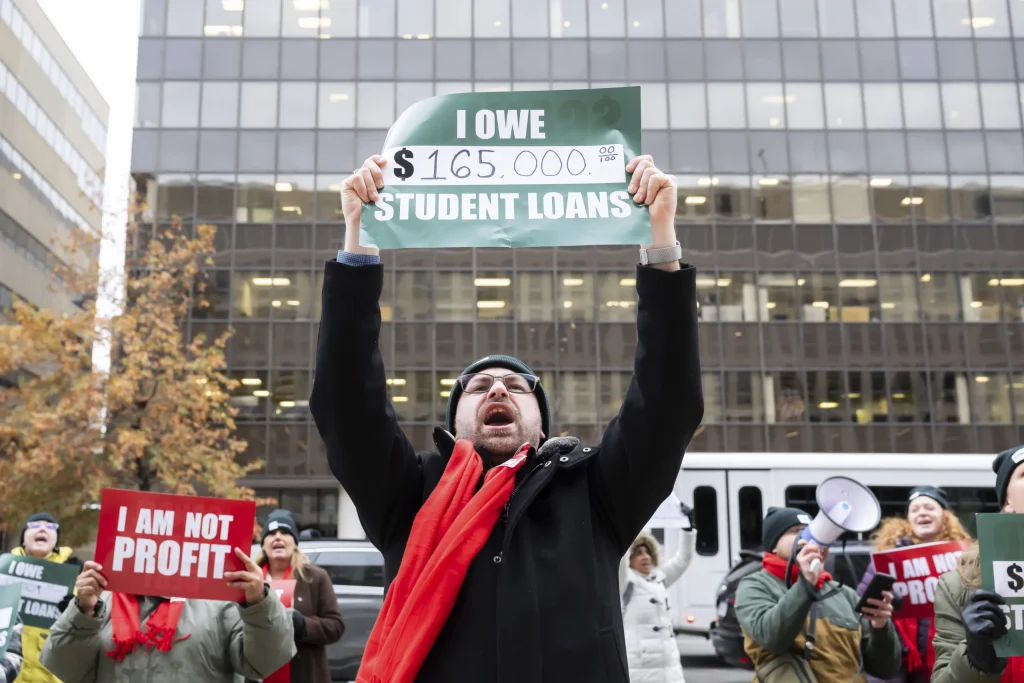
For a decade, the student loan debate in America focused on two options: cancel all loans or continue to pretend the current system is working. Neither actually happened or were true. Neither option fixed the problem or the system.
Meanwhile, the federal government sits on roughly $1.7 trillion in student loans, operating one of the largest consumer lending books in the country through a servicing apparatus that is slow, inconsistent, technically backward, and politically exhausted. Borrowers are stuck. Taxpayers are completely exposed. The arrangement delivers too little to either group.
Recommended Stories


Voters, it turns out, are well ahead of Washington on this.
In a national survey of 1,017 registered voters conducted July 14-15 by the Joseph Rainey Center for Public Policy, 68% said they would support a limited pilot to manage part of the federal student loan portfolio more responsibly, improve repayment, protect borrowers and taxpayers, and return capital to the Treasury. Ten percent opposed. Support reached 71% among voters who backed President Donald Trump in 2024 and 69% among those who backed then-Vice President Kamala Harris. This level of cross-party agreement barely exists anywhere else in American politics right now.
The individual pieces poll even better. Rewarding borrowers who make consistent, on-time payments with a lower interest rate over time drew 81% support, with just 6% opposed. Repayment protection for borrowers hit by job loss, illness, caregiving obligations, or military service drew 70%. Asked which features would matter most, voters ranked those two at the top.
This is not narrow self-interest talking. Roughly half the sample reported no close personal exposure to student debt. But 37% of voters said student loans have hurt a credit score or made it harder for someone in their household to qualify for a mortgage, a car loan, or a credit card. That is the part Washington keeps missing. The damage is not confined to the monthly payment. It shows up when a borrower who has never missed a payment is told he cannot buy a house.
So, here is the third path.
Launch a $200 billion pilot that securitizes eligible, better-performing federally held student loans into a standardized bond platform, and pair that platform with real borrower protections: a repayment assurance layer for defined life shocks, servicing continuity and disclosure requirements, financial counseling and wealth-building support, and a structure that incentivizes employers to help workers pay down debt using tax-free educational assistance rules already on the books.
Federal standards, consumer borrower protections, and federal oversight stay in place. Bond investors participate in the platform. They do not replace the federal framework or stand between borrowers and their protections. Expansion happens only after the pilot proves pricing, operational readiness, and protection integrity.
Conservatives have argued for years that the federal government has no business running a $1.7 trillion consumer lending operation. That argument is correct, and it is also incomplete. The obligation is to replace the current failing system with something that works better, not merely to complain about what exists.
EVERYONE BOUGHT THE COLLEGE LIE. NOW WE’RE ALL PAYING FOR IT
A pilot of this size is large enough to matter and, even if imperfect and small, will provide deep learning on how to help borrowers in the workforce move from debt to wealth building. It reduces execution risk while preserving the upside of a much larger reform. It rewards people who invested in themselves and then kept their word. It is neither a bailout nor a shrug.
The administration should approve the immediate development of this plan. The public is already there.
Sarah Hunt is president and CEO of the Joseph Rainey Center for Public Policy. Kahlil (KB) Byrd is founder & CEO of Shur.