

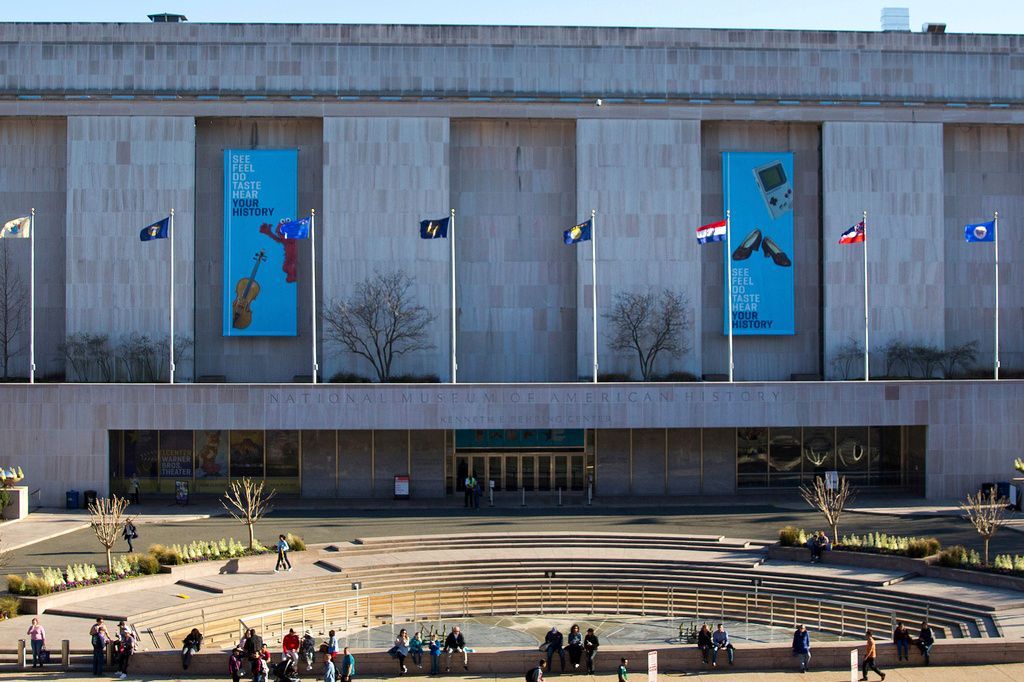
EXCLUSIVE — On July 4, the White House issued a scathing report on the Smithsonian Institution and how its National Museum of American History presented America as a shameful society in need of a systemic overhaul. A 2022 video presentation by four museum leaders reveals how deeply committed they are to this viewpoint.
The presentation reveals that NMAH leadership views America as a place of “national horror and pain,” comparable to Nazi Germany, apartheid South Africa, and the Latin American dictatorships of the 1970s and ‘80s. The NMAH has three conceptual plans to guide staff through using the museum for national transformation, one of which is the “decolonization plan.”
Recommended Stories

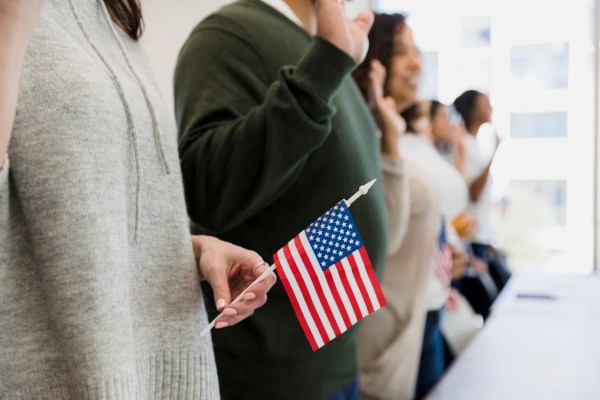
The leaders also openly discuss how they use the NMAH — which the public has entrusted to them to ensure the transmission and thus continuity of American culture — to support illegal immigration, open our borders, and upend the concept of citizenship.
These leaders reveal, in their own words, that they see the world in terms of power dynamics, who has power and how to wrest it from them, and how to “dismantle the narrative” of the United States — all deeply Marxist and Gramscian constructs.
Lastly, the NMAH is used, through educational materials that reach millions, to promote the LGBT agenda and Marxism to kindergarteners.
The four individuals who took part in the presentation were Anthea Hartig, the NMAH’s director, or chief leader, and a main focus of the White House report; Patricia Arteaga, program coordinator at the NMAH’s Center for Restorative History; Modupe Labode, curator, NMAH Division of Cultural and Community Life; and Orlando Serrano, Manager of the NMAH’s youth and teacher programs. All four are mentioned in the White House report.
The call was moderated by Ms. Hartig. It appears this presentation has not been written about yet. It has 127 views.
Ms. Hartig opened the conversation with a fulsome land acknowledgement that thanked three separate Algonquin tribes “for the opportunity to work in this territory.”
Hartig then explained the three plans: the collections plan, the interpretive plan, and the decolonization plan, and how they fit into the overall mission statement that Hartig created in 2019. That is when she was appointed and scrapped the old mission statement, which removed the words “American History” to “get out of the ‘America First’ Mentality.”
The new mission statement is “to create a more just and compassionate future by exploring, preserving, and sharing the complexity of our past.”
The collection plan starts by trying to understand “what the power of our collections are, where that power lies, who’s created that power, how is that shared, and then really how are they brought into utility.”
The interpretative plan delves into how “cultures have come together, where they’ve resisted, where they’ve revolted.” It tries to “understand the structures and the strictures of power, of conflict, and to arrive at an understanding of agency and power throughout time.” For good measure, Hartig noted that “loving America is very complicated.”
The decolonization plan, she revealed, was what gave birth to the NMAH’s Center for Restorative History. It also birthed the “Decolonization Working Group,” which, at least in 2022, continued “to meet, continues to read, continues to think, and continues to inform our work.”
When it was Arteaga’s turn, she identified herself by saying, “I’m here representing the Undocumented Organizing Collection Initiative,” which was launched to document illegal immigrants.
Except, as Arteaga revealed, the museum doesn’t just chronicle how the illegal immigrants who participate in the project are “mobilizing and influencing legislation and becoming their own political force in the 21st century.” The NMAH also “allowed them to feel ownership” of the project by giving the leaders of the illegal organizers the opportunity to review the project and redact it.
To avoid putting the illegal immigrants who cooperated in “legal risk,” the NMAH chose “only to do oral histories with undocumented organizers,” Arteaga said.
“In our research, we were recognizing that we are living in a very pivotal point, right?” added Arteaga, who was speaking as President Joe Biden had opened the nation’s borders, allowing anyone to come in. She compared their experience to “emancipation, women’s suffrage, and also during civil rights. Now we were witnessing another singular moment and movement such as this one in our history where the very nature of citizenship is being challenged.”
Serrano, for his part, explained how educational material called “History Time” that the museum shares with schools, which targets pre-K through third grade, “positions immigration and migration as not just a territorial border-crossing issue, but movement within the United States and the movement of boundaries.”
“We’ve also talked about LGBQT-LGBTQ+ matters, through particular objects in our collections. This month, our History Time episode focuses on the work of Dolores Huerta,” he said.
And it wasn’t just sex and the socialist Huerta that the Smithsonian is pushing onto little children, but also, Serrano explained, “Black Lives Matter in School, which is a wonderful resource for the kinds of curriculum we want to develop,” and the Golden Gulag by Ruth Wilson Gilmore, which uses a Marxist lens to tell children that prisons became a way for the state to manage the contradictions of capitalism, race, and class.
According to its 2025 Smithsonian impact report, all Smithsonian education programs had “20 million participations in educational programs and 15.7 million educator-created publications.”
Hartig closed the podcast by asking how countries like “Germany, South Africa” dealt throughout their collective public history sites, with “that level of national horror and pain” that the U.S. has had to deal with.
THE SMITHSONIAN HAS BETRAYED THE PEOPLE
Arteaga added that one place the Undocumented Organizing Collection Initiative “really looks at” is Latin America’s “Museos de Memoria” — sites that document the crimes of the region’s dictatorships. Left unmentioned: Cuba and Venezuela.
This is what Smithsonian leadership thinks of the American public — the same public that funds the institution to the tune of $1.1 billion a year.