
New York officials on Thursday sought to reassure residents and visitors that the city is prepared for the security challenges posed by the 2026 FIFA World Cup, unveiling a plan that includes increased police deployment, National Guard support, drone surveillance, cyber threat analysis, and extensive transit security measures.
Speaking at a press briefing, Gov. Kathy Hochul (D-NY) and New York City Mayor Zohran Mamdani emphasized that preparations have been underway for years, arguing that New York’s experience hosting high-profile events, ranging from the U.S. Open to the United Nations’ General Assembly, has positioned the city to handle an estimated influx of roughly 100,000 additional daily transit riders on match days.
Recommended Stories
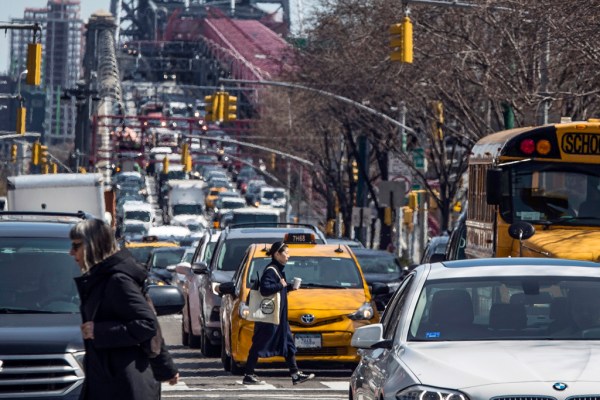

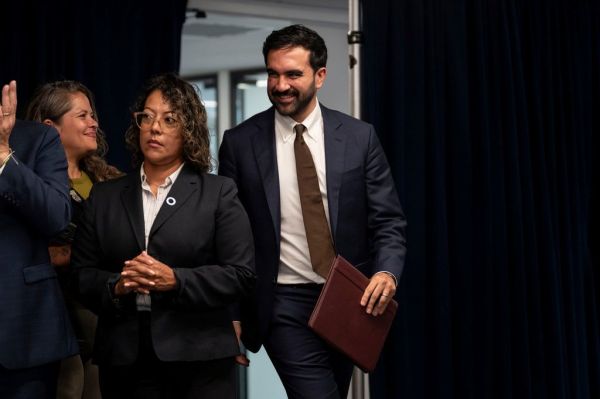
Hochul highlighted several security measures already taking place in the city’s transit system. According to Hochul, more than $150 million in state funding has gone to transit law enforcement. She also touted the installation of 33,000 security cameras, including cameras in every subway car and expanded platform barriers at nearly 150 subway stations.
“We’ve been planning for this for years, table-topping this exercise as we’re ramping up our police presence — more transit police, NYPD, state police, our National Guard, Joint Task Force Empire Shield,” Hochul said.
The governor also announced that drones will be deployed around critical transportation infrastructure, including bridges, tunnels, and transit hubs.
When asked directly whether officials were concerned that the World Cup would make New York a target for terrorism, Hochul said security agencies are continuously monitoring threats.
“We work with federal, state, and local partners to monitor online threats incessantly,” she said.
She pointed to the Joint Terrorism Task Force, cyber analysts, and intelligence-sharing efforts between agencies, while urging the public to remain vigilant and report suspicious activity.
“You’ll see more of a police presence, but also know that behind the scenes, our cyber analysts and experts are focused on this with every fiber in their being,” Hochul said.
New York City Emergency Management Commissioner Christina Farrell said officials have conducted more than 30 interagency tabletop exercises over the past year, simulating scenarios including blackouts, flash floods, coastal storms, and crowd surges.
The city’s Emergency Operations Center will remain activated throughout the tournament, allowing agencies to coordinate responses in real time.
MTA Chair Janno Lieber said the agency will increase patrols throughout the subway system and Midtown Manhattan while monitoring its camera network in real time.
“There are going to be plenty of eyes and ears on the ground,” Lieber said.
Officials also confirmed that security screening will be implemented at Penn Station and at World Cup shuttle bus locations. A city official said the screenings will likely involve magnetometers and be “more detailed than just a bag check.”
Despite the heightened security posture, officials repeatedly sought to frame the tournament as a celebration rather than a disruption.
“No city is better prepared than New York,” Hochul said. “No city knows how to handle crowds, extra riders, intercept criminals, online threats [better].”
More than 1.2 million people are expected to visit New York and New Jersey during the tournament, bringing in a projected $3.3 billion through tourism, hospitality, and related sectors.
HIGH-PROFILE CONVICTS LOBBY FOR RUMORED TRUMP PARDONS AHEAD OF 250TH ANNIVERSARY
At the same time, some travelers and athletes are struggling to acquire U.S. visas before the tournament.
The Iranian soccer chief said the team’s visa applications have not been approved. Iran’s first match is in 11 days.