

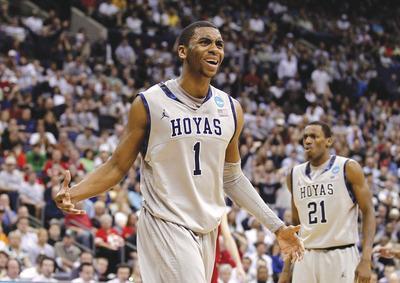
After third-seeded Georgetown lost to 11th-seeded N.C. State, judgment was fast and harsh as the Hoyas were ousted from the NCAA tournament by a double-digit seed for the fourth straight time. But when is an “upset” not really an upset?
What is it called when a team that tied for fourth place in the ACC beats one that tied for fourth in the Big East? What is it called when 11th-seeded VCU beats No.?6 Georgetown by double digits, then does the same to No. 3 Purdue and No. 1 Kansas. What is it called when you’re seeded No. 2 and lose by four to No. 10 Davidson, which goes on to beat No. 3 Wisconsin by 17?
Recommended Stories


It’s called parity. In today’s NCAA landscape, where the best players stay in school one or two years before chasing millions in the NBA, the gulf between the best and the rest has narrowed.
This is not to excuse Georgetown for underachieving in the NCAA tournament. It is to point out that seeding means little — except at the extremes. After selecting the bottom line and top line, the NCAA selection committee might as well draw the rest out of a hat.
What this NCAA tournament has demonstrated is the difference between a real upset and a paper one. No. 15 Lehigh over No. 2 Duke and No. 15 Norfolk State over No. 2 Missouri — those were upsets.
The same can’t be said however for the 12-5 matchups of VCU-Wichita State and South Florida-Temple or the 11-6 matchups of Colorado-UNLV and N.C. State-San Diego State, which produced victories for the lower seeds.
Anyone believing Georgetown underachieved this postseason needs to remember that the Hoyas were picked to finish 10th in the preseason by the Big East coaches. It was by overachieving in the regular season that Georgetown earned a seed higher than its talent warranted.
Several other teams that similarly overachieved this season were seeded high in the tournament and lost this weekend. No. 2 Missouri was not picked in the Sports Illustrated top 20 in the preseason. Neither was No.?4 Michigan. No. 6s Murray State and San Diego State weren’t even picked to make the 68-team field.
All are gone now, washouts in a sea of parity.
– Kevin Dunleavy
