

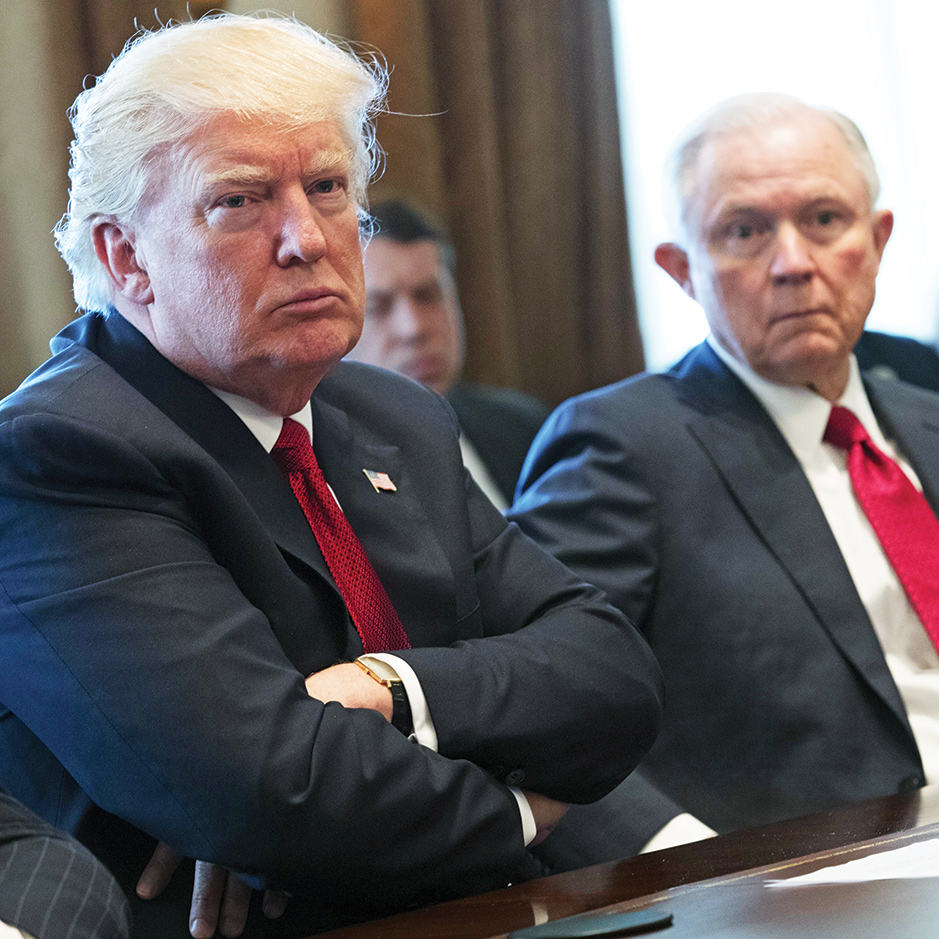
We’re not fans of adding “ism” to the names of presidents—“Reaganism” and “Jeffersonianism” make sense to describe those men’s political worldviews, but you wouldn’t use the formulations “Fordism” or “Clintonism” and expect to be understood. Nonetheless, “Trumpism” meant something definable to a substantial proportion of the people who put Donald Trump over the top last November: vastly increased border security, protection of domestic industries, a simpler and less burdensome tax code, a foreign policy oriented exclusively toward national interests, a restrained judiciary.
Many of Trump’s voters—maybe a majority—embraced his candidacy not for any specific set of policy goals but as an expression of contempt for Washington’s sundry dysfunctions and for the media mandarins’ political correctness. And of course many also chose Trump because they could not abide the thought of another Clinton administration. But any number of articulate, intelligent, and highly visible advocates of the candidate—you saw them often on your favorite cable news shows—embraced Trump because they believed he was redefining conservatism in fundamental ways, and because they agreed with the redefinition. They concluded that Trump’s combination of cultural and economic nationalism—which they dubbed “Trumpism”—was the future of conservatism and the Republican party, and some of them took personal and professional risks to align themselves with the change. We thought that conclusion was deeply misguided. But the hopes they invested in him would not have looked foolish or irrational were Trump to carry to completion the policy changes they desired.
Stay informed.Stay ahead.
Join Washington Examiner for unlimited access to the news, analysis, and commentary that matter most.
Already a member? Log in
