

A bipartisan group of Oregon lawmakers wants to create a trust fund to help communities along rail lines prepare for and respond to derailments of trains carrying oil.
The Community Protection and Preparedness Act would establish a $1,500 fee per railroad tanker car that doesn’t meet federal specifications that would be paid by companies transporting oil by rail. It would mostly go on older rail tanker cars transporting oil and ethanol.
Recommended Stories


That money would be deposited into a trust fund to help communities clean up when a derailment causes oil to spill.
The fund also would pay for more training for first responders on how to deal with hazardous-material situations involving gasoline, oil and other flammable liquids transported by rail.
Rep. Peter DeFazio, the top Democrat on the House Transportation and Infrastructure Committee, said in a statement that towns near railroad lines shouldn’t have to pay for the cleanup of spills that aren’t their fault.
“This legislation would help protect and prepare communities by providing funding to help states and Native American tribes develop and carry out emergency response plans and provide critical training for emergency responders,” he said.
In addition to DeFazio, Democratic Reps. Earl Blumenauer and Suzanne Bonamici and Republican Rep. Greg Walden have signed on to co-sponsor the bill, which was introduced late last month.
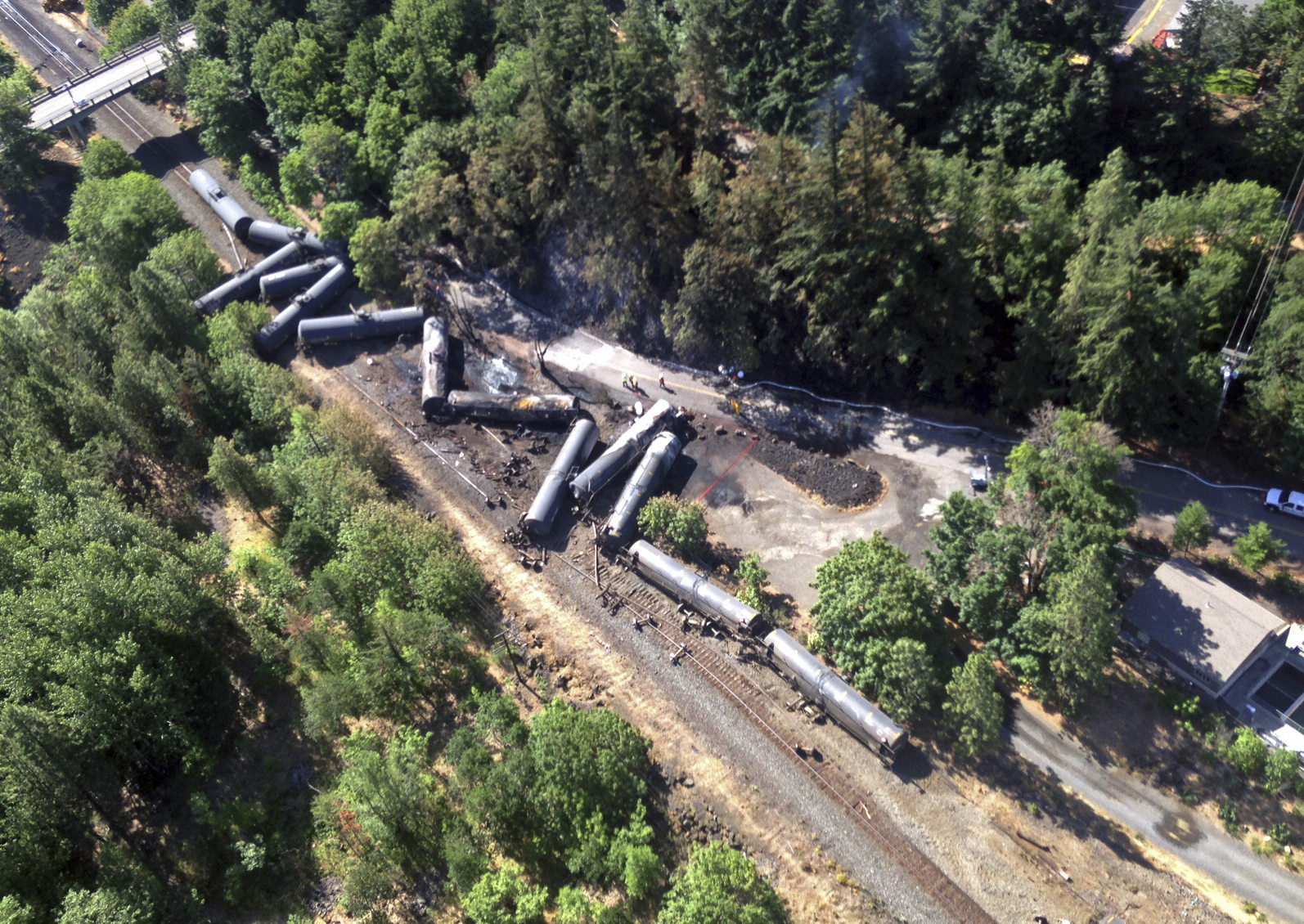
The lawmakers jumped on board the legislation after a Union Pacific train derailed near Mosier, Ore., in June 2016.
Sixteen of the 96 train cars derailed and spilled 42,000 gallons of crude oil, and some of it made its way into the Columbia River. The incident sparked a massive fire that burned for 14 hours, according to the Oregonian.
It was a wake-up call for lawmakers, Blumenauer said.
“Seeing our beautiful Columbia Gorge on fire last summer was an eye-opener for everyone on the dangers of how we transport oil and other hazardous materials,” he said. “We must do more to minimize the risk of future incidents like the Mosier oil train derailment and make sure communities are better prepared to respond.”
Calli Hite, director of corporate communications for Union Pacific, declined to comment on the bill put forth by the Oregon lawmakers.
“We have not yet reviewed and therefore don’t have a position on the bill,” she wrote in an email. The company lobbied against the bill when it was introduced in a previous form in 2016.
DeFazio, Walden and Blumenauer introduced the legislation in July 2016, and it died in committee. The bill had powerful opponents, including the American Petroleum Institute and Warren Buffett’s holding company, Berkshire Hathaway.
Representatives from API declined to comment on the newer bill when reached by the Washington Examiner.
According to the Association of American Railroads, more than 410,000 tanker rail cars were used in 2015 to transport flammable liquids such as oil and gasoline. That’s the last year full data was available.
The train that derailed in Mosier was bringing oil from the Bakken oil fields in North Dakota to Tacoma, Wash., which has become common since the surge of fracking in the Northern prairie state at the beginning of the decade. Due to a lack of pipeline infrastructure in the region, much of the oil produced in the Bakken had to be moved by rail.
The amount of oil moved by rail is expected to drop in coming years as more pipelines are built.
The bill also requires a study on how well the Department of Transportation is doing its inspections of tanker rail cars. That study would have to be done within six months of the bill’s passage.
Walden said he signed onto the bill because it makes upgrades to the inspections process and would mostly target older rail cars transporting oil. Federal authorities found that the Mosier derailment was caused by broken bolts on older rail cars that had a braking system that hasn’t had much technological advancement since the Civil War, according to the Oregonian report.
“The people who live in areas like the Columbia Gorge deserve peace of mind that, if an accident occurs, the proper emergency response and protection plans are in place and ready to be implemented,” Walden said.
He added, “Rail safety is critical as we work to protect the natural treasures in our state and the people who live here.”
Bonamici added that residents who live along the Union Pacific railroad corridor in Oregon still don’t entirely feel safe that an incident similar to what happened in Mosier won’t happen in their area. In a state known for its outdoor activities, it’s important to protect both Oregon’s towns and its wilder spaces, she said.
“Oregonians deserve to be safe and feel safe from this threat,” she said. “We also have a responsibility to protect Oregon’s forests, wetlands, streams and rivers from oil spills and fires. I support this legislation because it will help remove unsafe tank cars from the tracks and make sure that our firefighters and first responders are ready and equipped to respond.”
