

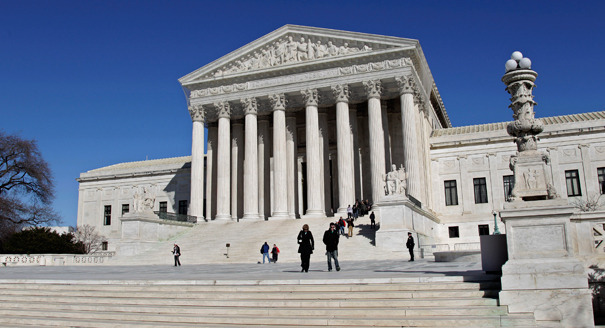
The Supreme Court agreed on Monday to hear two cases pertaining to President Trump’s immigration policies.
The high court did not specify when the justices will be hearing the cases, but the schedule for the rest of the calendar year is full, so it will not be until 2021, according to the Associated Press. The cases would likely be heard after the all-but-certain confirmation of Supreme Court nominee Amy Coney Barrett, but they could become a moot point if Democratic presidential nominee Joe Biden wins the election and opts to overturn the Trump administration policies.
Recommended Stories


One of the cases revolves around the Migrant Protection Protocols, which forces migrants hoping to get asylum status to remain in Mexico as they await their U.S.-based court date. An appeals court in February blocked the program, which forced tens of thousands of migrants traveling through Mexico to reach the United States to remain in tent encampments in Mexico, concluding that the policy violated federal law and international treaties.
The government sought a Supreme Court review in April, calling the program “enormously effective” given “the program has been an indispensable tool in the United States’ efforts, working cooperatively with the governments of Mexico and other countries, to address the migration crisis by diminishing incentives for illegal immigration, weakening cartels and human smugglers, and enabling D.H.S. to better focus its resources on legitimate asylum claims.”
Judy Rabinovitz, an ACLU attorney and lead counsel in the case, issued a statement following the court’s announcement saying, “Asylum seekers face grave danger every day this illegal and depraved policy is in effect. The courts have repeatedly ruled against it, and the Supreme Court should as well.”
The other case taken up by the Supreme Court has to do with Trump’s decision to reallocate military funds to help build the border wall. The 9th Circuit of Appeals ruled that the reallocation of money violated the Appropriations Clause of the Constitution, which gives Congress the exclusive power of the purse.
