

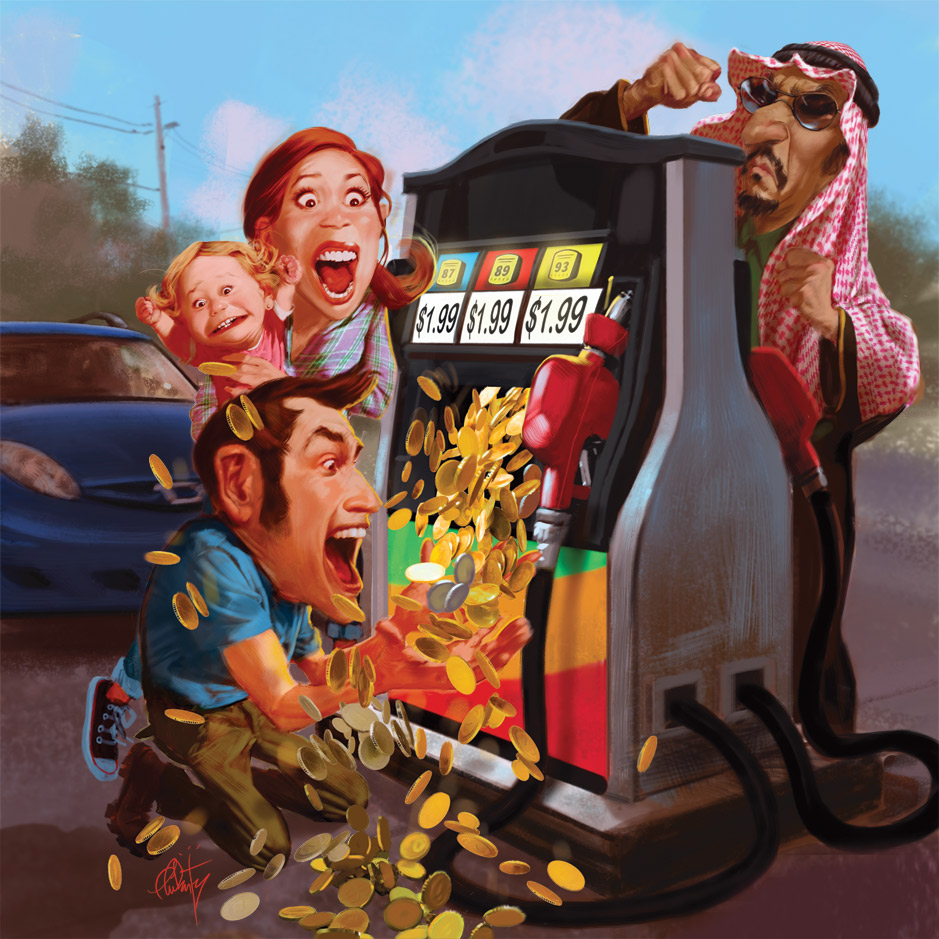
We are in a war with Saudi Arabia—and losing. The Saudis aim to regain substantial control of our oil supply by driving from the industry many of our shale-oil-producing frackers who have reduced the power conveyed to the kingdom’s rulers by the underground ocean of oil on which their palaces sit. And we seem prepared to let them do just that, by failing to do what is necessary to prevent a reversal of the major strides we have made to get out from under the boot of an avaricious oil cartel. Recall: That cartel is composed largely of countries that use their funds to sponsor, directly or indirectly, terror attacks on our country, and is led by Saudi Arabia, which uses its oil revenue to fund hate-teaching madrassas. As things now stand, if prices remain low we will find ourselves once again waiting for the Saudis to decide how much we should pay for oil, and watch the increased revenue from a price recovery flow into the Saudis’ overstuffed coffers, rather than being used to lower taxes here at home on work and risk-taking, providing relief for the middle class about which both parties profess such concern.
The application of our world-class technology to the drilling and production of crude oil produced what has come to be called the fracking revolution. U.S. production of crude oil increased 80 percent between 2008 and the end of last year, or by 4 million barrels per day. That increase is more than the total output of any OPEC country with the exception of Saudi Arabia. Until our drillers began extracting oil profitably from places previously thought to be beyond the reach of the drill bit, the Saudis controlled enough of the world’s oil production and reserves to have the power to set ceilings and floors within which the price of oil could fluctuate. They didn’t always use this power perfectly, but by and large sufficiently to assure crude oil prices—generally around $100 per barrel in recent years—that included significant monopoly profits. Perhaps even more important, the cartel led by Saudi Arabia had its hands on the spigots that could be turned off if some aspect of American foreign policy proved sufficiently distasteful to these Middle East autocracies and their fellow travelers. Of course, U.S. policy-makers have long known that, and factor that risk into their policy decisions; witness President Obama’s decision to cut short his trip to an important ally in order to pay homage to the departed King Abdullah, after failing to find an opening in his schedule to pay his respects to the fallen satirists and Jews of Paris.
Stay informed.Stay ahead.
Join Washington Examiner for unlimited access to the news, analysis, and commentary that matter most.
Already a member? Log in
